Flexibility improves through patience and calm breathing, not by forcing the body into intense stretches. The focus should always be on allowing muscles to lengthen naturally over time. Slow yoga is one of the safest and most effective ways to improve flexibility, especially for people who feel stiff, spend long hours sitting, or are returning to movement after a break. The five slow yoga poses below prioritize controlled movement, mindful breathing, and gentle stretching to help the body open up without unnecessary strain.
How Slow Yoga Helps Improve Flexibility
Slow yoga gives your muscles the time they need to truly relax. Moving too quickly through poses can trigger tension as the body tries to protect itself. By entering and holding postures slowly and intentionally, the nervous system begins to settle, allowing muscles to release tightness more naturally. This method reduces injury risk while supporting long-lasting flexibility gains.

Beyond flexibility, slow yoga also supports joint mobility, healthy circulation, and body awareness. With consistent practice, even short daily sessions can create noticeable changes. Over time, you may find that everyday movements feel easier and your body feels more comfortable overall.

Seated Side Stretch for Spine and Waist Mobility
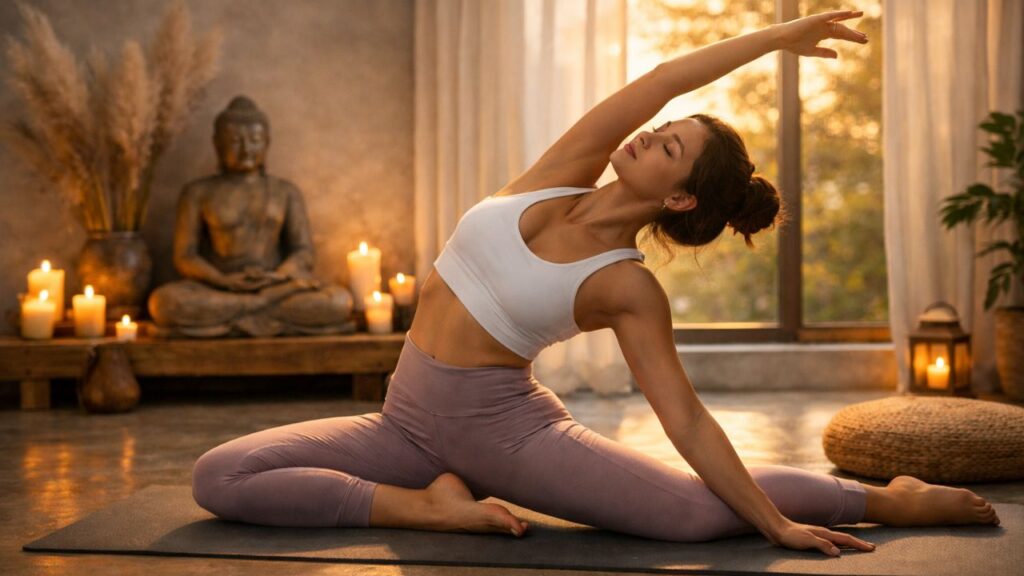
The seated side stretch gently opens the spine and the muscles surrounding the ribs and waist. It promotes upper-body flexibility while encouraging deep, steady breathing. Sit comfortably on the floor with your legs crossed or extended forward. Place your right hand beside you on the floor. Inhale and lift your left arm overhead. As you exhale, lean slowly to the right, keeping both hips grounded.
Hold the position for six to ten slow breaths, feeling the stretch along the left side of your body. Switch sides and repeat. This pose helps ease stiffness caused by prolonged sitting and supports smoother spinal movement.
Butterfly Pose to Release Hips and Inner Thighs
Butterfly Pose is especially effective for loosening tight hips and inner thighs, making it ideal for people who sit for most of the day. Sit upright and bring the soles of your feet together, allowing your knees to fall naturally outward. Hold your feet or ankles with your hands and maintain a straight spine while breathing slowly.
If comfortable, gently lean forward from your hips while keeping your back long. Avoid forcing the knees downward. Hold the pose for one to three minutes. Regular practice supports better hip flexibility and encourages improved posture.
Low Lunge for Hip Flexors and Lower Body Stretch
Hip flexors often become tight due to extended sitting. The low lunge offers a steady, controlled stretch that opens these muscles safely. Step one foot forward into a lunge position while lowering the back knee to the floor. Align your front knee directly over your ankle.
Slowly shift your hips forward while keeping your torso upright. Rest your hands on your hips or thighs. Stay for eight to twelve breaths, then switch sides. This pose enhances flexibility in the hips, thighs, and lower back.
Reclined Hamstring Stretch for Safe Muscle Lengthening
This reclined stretch gently targets the hamstrings while protecting the lower back. Lie on your back with one leg extended along the floor. Bend the opposite knee and hold behind your thigh or calf. Gradually straighten the raised leg toward the ceiling until you feel a comfortable stretch.
Keep your shoulders relaxed and breathe evenly. Hold for one to two minutes before switching legs. This stretch helps reduce lower-body tightness and supports improved hamstring flexibility.
Child’s Pose for Full-Body Relaxation
Child’s Pose is a restorative position that encourages the entire body to release tension. It gently stretches the spine, hips, and shoulders while promoting mental calmness. Kneel on the floor and sit back onto your heels. Fold forward, resting your forehead on the floor or a cushion.
You may extend your arms forward or let them rest beside your body. Hold the pose for two to three minutes, breathing slowly and allowing your muscles to soften. This deep relaxation supports flexibility by letting the body fully unwind.
Practicing These Yoga Poses Safely
Always enter each stretch slowly and with control. You should feel mild tension, not pain. If your breathing becomes strained, ease out slightly. Props such as cushions or yoga blocks can make poses more comfortable and accessible. Evening sessions often work well since muscles are naturally warmer, though gentle morning practice is also effective when approached carefully.
How Often to Practice for Noticeable Results
Consistency matters more than intensity. Practicing these five poses three to five times per week can lead to visible flexibility improvements within a few weeks. Short sessions are effective when done regularly. Flexibility develops gradually, so allow your body time to adapt without rushing progress.
Who Can Benefit from Slow Yoga
Slow yoga is well suited for beginners, older adults, and individuals seeking a low-impact way to stay active. It also supports recovery from injuries and helps ease muscle and joint stiffness. The gentle pace allows the body to release tension without force.
People experiencing high stress often benefit from slow yoga because it helps calm the nervous system. Athletes can also gain value from this practice by addressing tight muscles and improving mobility, creating a healthier balance between strength and flexibility. Always adjust poses to your current ability and stop if discomfort arises.
Setting Up a Calm Yoga Environment
Select a quiet area with enough space to move freely. Soft lighting and minimal distractions help create a relaxing atmosphere. Wear comfortable clothing that allows unrestricted movement and use a supportive mat to enhance comfort during practice.
Closing Your Yoga Session
After completing the poses, take a brief moment to lie down or sit quietly for about a minute. Observe how your body feels and notice your breathing. This pause allows the benefits of your practice to settle in. Slow yoga supports flexibility in a safe, gradual way, helping reduce stiffness and making daily movement feel easier and more comfortable.