Starting yoga without being naturally flexible can feel intimidating at first. You may worry about doing poses incorrectly or falling behind others in class. The truth is simple: yoga is designed for real people with real bodies. You do not need flexibility before you begin. Flexibility develops through consistent practice. When you start with gentle, beginner-friendly stretches, your body adapts gradually without pressure. Over time, you may notice improvements in how your body moves and feels during everyday activities. Yoga emphasizes steady progress rather than instant perfection. Every stretch and every breath supports better mobility and overall comfort.
Why Gentle Yoga Is the Smartest Way to Build Flexibility Safely
Beginning with a gentle yoga approach is one of the safest ways to improve flexibility. Simple stretches help you focus on proper alignment and body awareness. This reduces the risk of injury and builds a strong foundation for future growth. Gentle poses also strengthen the mind–body connection. Slower movements make it easier to notice physical limits and recognize when to ease off. This awareness builds confidence and encourages consistent practice. Research on exercise habits shows that people who start with manageable routines are more likely to stay committed long term. Gradual progression prepares your muscles, joints, and nervous system for more advanced poses while keeping your practice comfortable and sustainable.

Beginner-Friendly Yoga Stretches for Tight Muscles
This collection of beginner-safe yoga stretches focuses on areas that commonly feel tight, including the neck, back, hips, and hamstrings. Move slowly, breathe evenly, and stay within a comfortable range. The goal is not depth, but steady and relaxed movement.

Slow Neck Circles to Release Daily Tension
What it targets: Neck muscles and upper shoulders.
How to perform: Gently move your head in slow circular motions while maintaining steady breathing.
Why it helps: This stretch releases stiffness caused by screen time and prolonged sitting, allowing your neck to move more freely.
Beginner tip: Keep movements controlled and never push beyond what feels comfortable.
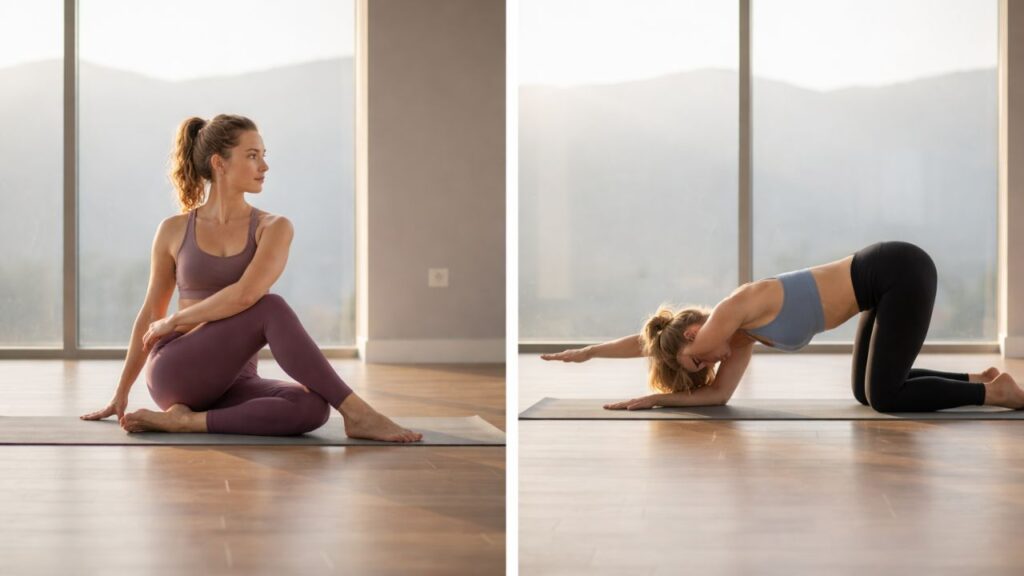
Seated Spinal Twist for a More Mobile Back
What it targets: Spine, waist, and oblique muscles.
How to perform: Sit upright with a straight back. Slowly rotate your upper body to one side while keeping your hips forward. Return to center, then switch sides.
Why it helps: This twist improves spinal mobility and reduces stiffness from prolonged sitting.
Beginner tip: Use your hands for light support and rotate only as far as feels natural.
Cat–Cow Flow to Gently Awaken the Spine
What it targets: Spine, core, and shoulders.
How to perform: Begin on hands and knees. Round your back upward, then slowly arch it while letting your belly drop. Continue alternating smoothly.
Why it helps: This flow increases spinal flexibility and helps release built-up tension.
Beginner tip: Match each movement with your breath and transition slowly.
Child’s Pose for Relaxation and Hip Comfort
What it targets: Lower back, hips, and shoulders.
How to perform: Sit back on your heels and extend your arms forward or rest them alongside your body.
Why it helps: This pose promotes deep relaxation while gently stretching the spine.
Beginner tip: Use cushions or folded blankets for added support if needed.
Thread the Needle Stretch for Shoulder Release
What it targets: Upper back, shoulders, and neck.
How to perform: From a hands-and-knees position, slide one arm under your chest toward the opposite side. Rest gently and breathe deeply, then switch sides.
Why it helps: This stretch eases shoulder tension and improves upper-back mobility.
Beginner tip: Place a pillow or block under your shoulder if reaching the floor feels uncomfortable.
Seated Butterfly Pose for Hip and Inner Thigh Flexibility
What it targets: Hips and glutes.

How to perform: Sit upright and bring the soles of your feet together. Allow your knees to relax outward while keeping your spine tall.
Why it helps: This stretch gently opens the hips and inner thighs.
Beginner tip: Sit on a folded blanket if your hips feel tight.
Reclined Figure-Four Stretch for Gentle Hip Mobility
What it targets: Glutes and hips.
How to perform: Lie on your back with knees bent. Place one ankle over the opposite knee and gently draw the supporting leg toward your chest. Switch sides after holding.
Why it helps: This stretch reduces hip tightness and eases lower-back discomfort.
Beginner tip: Keep the raised foot flexed to protect your knee.
Knees-to-Chest Pose to Ease Lower-Back Tension
What it targets: Hips, inner thighs, and lower back.
How to perform: Hug your knees toward your chest or hold behind your thighs while gently opening your hips.
Why it helps: This pose releases hip tension and reduces pressure on the spine.
Beginner tip: Hold behind your knees if reaching your feet is difficult.
Seated Forward Bend for Calm Hamstring Stretching
What it targets: Hamstrings, calves, and spine.
How to perform: Sit tall and hinge forward from your hips while keeping your spine long.
Why it helps: This stretch gradually improves hamstring flexibility and promotes relaxation.
Beginner tip: Bend your knees slightly and focus on lengthening your spine.
Standing Forward Bend for Full Back-Body Release
What it targets: Hamstrings, back, and shoulders.
How to perform: Fold forward from the hips with soft knees and relaxed arms.
Why it helps: This pose stretches the entire back of the body and calms the nervous system.
Beginner tip: Let gravity work naturally and avoid forcing the stretch.
Signs Your Body Is Ready for Deeper Yoga Practice
After about six to eight weeks of regular practice, you may notice positive changes. Simple poses feel easier to hold, tight areas move more freely, and your breathing feels more controlled. You may practice consistently and feel curious rather than anxious about new poses. At this stage, longer sessions or beginner flow classes can be explored. Small adjustments to familiar poses are often more effective than jumping straight into advanced yoga.
Building Flexibility Gradually and Comfortably
Flexibility develops with time, patience, and consistency. Trying to rush progress often leads to discomfort or injury. These gentle yoga stretches create a reliable foundation for better movement and reduced tension. Continue practicing regularly and remember that each comfortable stretch contributes to long-term progress.