Therapies & Support
Speech-Language Pathology: Questions Before a First Appointment
Bring everyday examples and clear questions to a first speech-language pathology visit.
Archive edition: 23 June 2026 · assigned for archive organisation
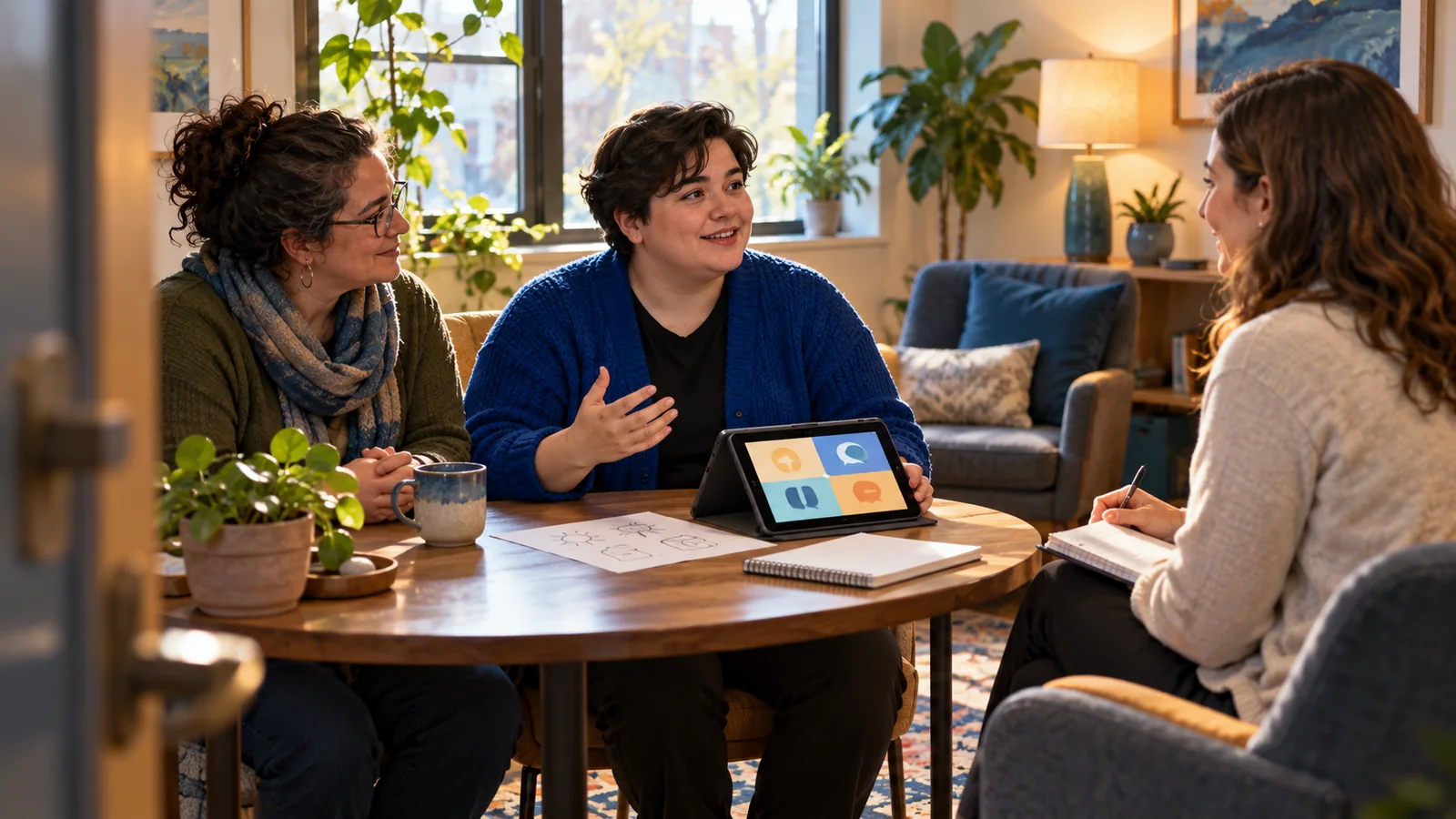
A first speech-language pathology appointment is an opportunity to explain what communication is like in everyday life and what you would like help with. You do not need a polished account or a list of technical terms. A few specific examples, your questions and information about communication preferences can provide a useful starting point.
This guide is for autistic adults and people preparing with a child or another person who wants support. It focuses on questions to ask, not exercises to prescribe. Assessment, recommendations and service arrangements depend on the person’s needs and the provider’s scope.
At a glance
- Describe the situations you want to make easier, including what already works.
- Ask how the appointment will accommodate the person’s communication methods.
- Clarify assessment, goals, reports, costs and the next decision before agreeing to a plan.
- Communication support can include more than spoken words.
Start with the purpose of the visit
The College of Audiologists and Speech-Language Pathologists of Ontario describes speech-language pathologists as professionals who assess communication difficulties, discuss options and make recommendations. Its public information also notes that referrals to other professionals may be appropriate. Local registration and service routes should be checked where you live.
Write down the reason for the appointment in everyday language. Perhaps conversations become difficult in a busy room, written instructions are easier to follow, or a child needs a more reliable way to express choices. Identify the activity and setting instead of relying only on a diagnostic label.
Include a strength or successful arrangement. You might communicate comfortably through messages, use pictures effectively or find one-to-one discussions easier. This helps the conversation begin with the communication already available, rather than only a list of problems.
Check practical arrangements before the appointment
Ask how long the appointment is expected to take, who will attend and whether it involves an interview, observation or particular assessment tasks. Find out whether the provider works with your age group and the kind of question you are bringing.
Ask which records are needed and how to send them securely. A relevant previous report may help, but you should understand why it is requested. Check whether the clinician wants a short description of communication preferences before the visit.
If you need a quieter waiting area, written questions, breaks or a chosen support person, discuss those arrangements in advance. Ask what is possible and whom to contact if plans change. Knowing the arrival process can be as useful as knowing the appointment time.
| Topic | Question to ask | Information you can bring |
|---|---|---|
| Everyday purpose | How will this assessment address the activity that matters to me? | A specific situation and desired change |
| Communication access | How can I use my preferred ways of communicating? | Current tools, formats and useful arrangements |
| Assessment | What will each task help you understand? | Questions about unfamiliar activities |
| Recommendations | What options follow from the findings? | Your priorities and practical constraints |
| Follow-up | What will I receive, and what happens next? | A place to record contacts, dates and decisions |
Bring the communication methods that work
ASHA’s linked public AAC information explains that augmentative and alternative communication can supplement speech or provide another way to communicate. It includes low-tech and technology-based options, and a person may use several methods. An SLP can help assess needs and identify appropriate supports.
If you already use a communication board, writing, a device or another method, ask how to include it in the appointment. Describe when speech is available and when another method is more useful. Do not assume that speaking during one part of the visit fully represents communication across the day.
For someone accompanying the client, agree how you will help. You may supply background information or take notes while leaving time for the person’s own response. Avoid answering automatically when the person is preparing a message or has asked for more time.
The National Joint Committee’s Communication Bill of Rights sets out principles for meaningful communication access and participation. It is a professional rights statement, not a description of Canadian legislation. Its person-centred focus is useful when discussing how the appointment will respect choices and communication.
Ask how the assessment will be interpreted
Ask the clinician to explain the purpose of a task in language you understand. If a task is uncomfortable, unclear or hard to access, say so or use an agreed signal. Discuss whether a break, explanation or alternative approach is possible and how any limitations will be recorded.
Tell the clinician if the appointment differs substantially from everyday conditions. A quiet room, unfamiliar person or tiring journey may affect what happens. Offer a concrete example of communication elsewhere without assuming that one setting is the complete picture.
If information from a teacher, partner or family member is relevant, clarify what is being requested and how consent and sharing will work. Distinguish the person’s own account from another person’s observations. Both can be recorded without treating them as interchangeable.
Connect recommendations to the person’s priorities
- Describe: bring one everyday situation, a strength and a question.
- Discuss: ask how assessment and communication access will work.
- Decide: clarify the options, practical commitments and next step.
Ask what each proposed goal would make possible in daily life. A useful discussion connects the recommendation to a real activity: expressing a preference, understanding an appointment or participating in a conversation that matters to the person.
Ask how the person’s priorities will be identified when they communicate without speech or need support to consider options. Avoid assuming that an adult’s convenience is the same as the child’s or client’s goal. Describe any disagreement so it can be discussed openly.
In a fictional example, Alex can speak but finds rapid group discussions difficult. Alex brings a written account and asks about ways to follow the discussion and contribute without rushing. The first conversation focuses on that activity and communication access rather than treating more speech as the only possible outcome.
Leave with a clear next step
Before leaving, ask what is known, what needs further assessment and when recommendations will be discussed. Find out whether you will receive a report or summary and how to ask questions about it. Record the clinician’s contact route rather than relying on memory.
If ongoing sessions are proposed, ask about frequency, review points, expected work between visits and costs where applicable. Clarify who will provide each part of the service. You can request an explanation of an option before agreeing to it.
Keep the plan manageable. A first visit does not need to resolve every communication question. A useful outcome may be a clearer assessment question, an agreed access arrangement or a specific follow-up appointment.
Common questions
Is speech-language pathology only for children?
No. Speech-language pathologists may work with people across the lifespan, although an individual provider may focus on particular ages or needs. Ask whether the service fits your circumstances before booking.
Can I bring written notes instead of explaining everything aloud?
Ask to use the format that helps you communicate. A short note can identify the main question, relevant examples and preferred arrangements. Let the clinician know if you also need time to respond during the visit.
Should an existing communication device come to the appointment?
Ask the service how to include the tools you already use. Explain when and how they help. The appointment should consider communication in everyday settings, including methods other than speech.
What if my child communicates differently at home?
Describe specific examples and ask how information from different settings will be considered. Check before recording or sharing videos, including who will receive them and whether everyone shown has appropriate permission.
Will the first visit always produce a complete plan?
Not necessarily. Ask whether more assessment or information is needed and when findings will be discussed. Keep the next step and contact details clear even if recommendations are not final yet.
Do I have to accept every proposed goal?
Ask for the purpose, options and implications of each recommendation. Explain your priorities or concerns and discuss them before agreeing. Specific consent arrangements should be explained by the provider.
Can a support person attend?
Check the service’s arrangements and agree the person’s role with the client where possible. They might help with notes or background information while preserving time and access for the client’s own communication.
Does using AAC mean giving up speech?
AAC can add to speech as well as provide another way to communicate. Ask about the combination of methods that fits the person’s needs and preferences rather than assuming there is only one acceptable approach.
What should I ask about fees?
Ask which activities are charged, whether reports or consultations cost extra, and what any coverage requires. Confirm these details directly; a general guide cannot establish a particular service’s price or funding eligibility.
What if the provider recommends another professional?
Ask what question the referral is intended to address and how it relates to the current assessment. Record who will arrange it and what information should be shared. A referral should lead to a clearer next action.
Sources
- CASLPO: When to see a Speech-Language Pathologist.
- ASHA-linked public information: Augmentative and Alternative Communication.
- National Joint Committee: Communication Bill of Rights, third edition.
The appointment questions and fictional example are editorial preparation aids, not an individual assessment or therapy plan.