Assistive Technology
Questions to Ask During an AAC Assessment or Device Trial
Make the trial answer meaningful questions about communication, access and ongoing support.
Archive edition: 24 August 2026 · assigned for archive organisation
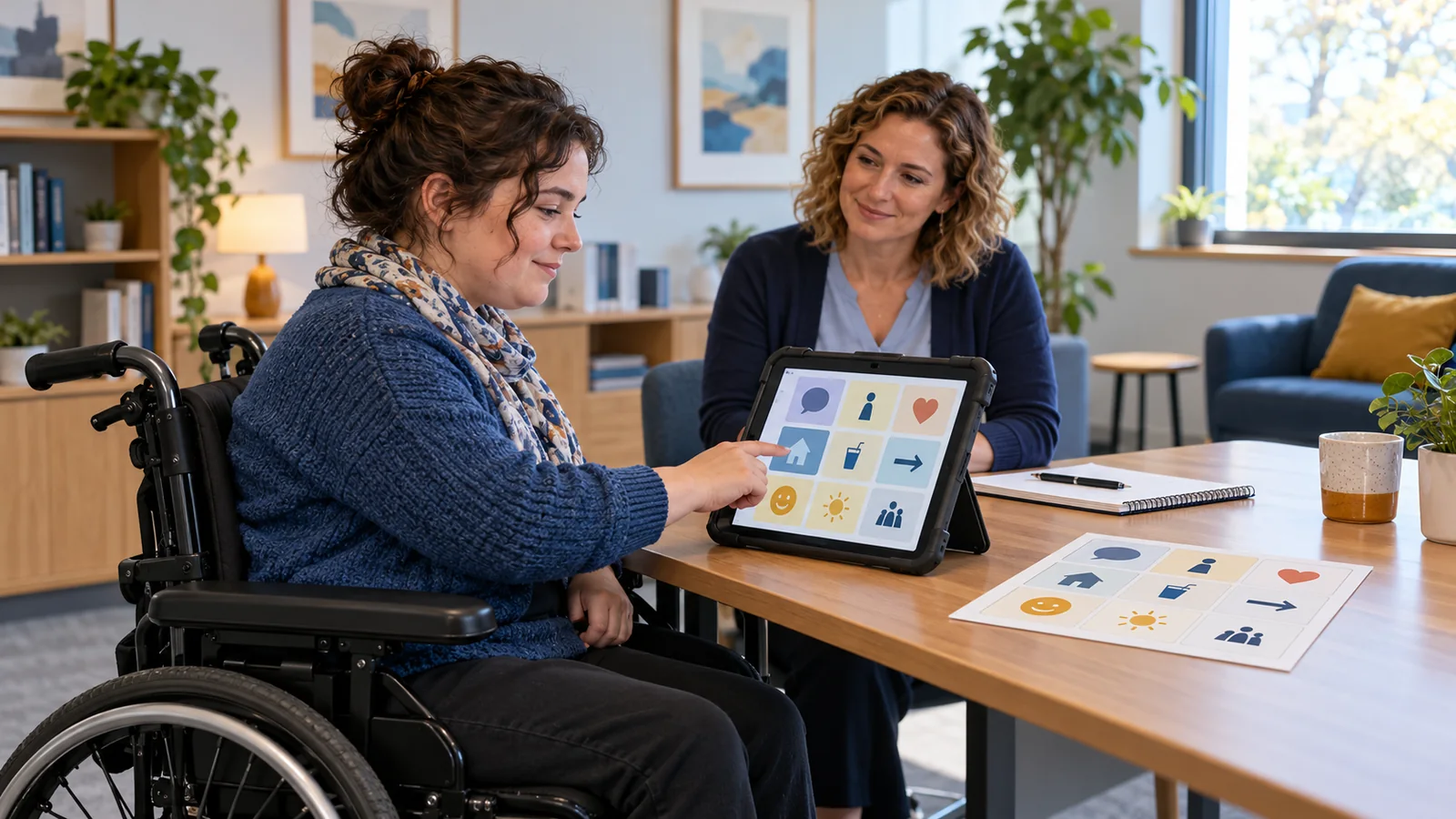
An AAC assessment or device trial is an opportunity to investigate how a person can communicate more effectively in the situations that matter to them. It should help answer practical questions about language, access, support and everyday use. A successful appointment is not simply one in which someone presses the expected button.
Bring the questions you want answered, including uncertainties. You do not need to arrive with a preferred brand or a complete technical vocabulary. This guide provides an original preparation and observation checklist to discuss with a speech-language pathologist or AAC team. It is not a clinical assessment tool or a score for choosing a device.
Prepare a few meaningful communication priorities
Think of conversations the person wants to have. These might involve contributing in class, telling a friend about an interest, asking a follow-up question at an appointment or directing personal assistance. Include enjoyable and ordinary interactions, not only moments of difficulty.
Ask the communicator how they want to contribute to the assessment. They may prefer to share examples beforehand, use their existing system during the meeting or have a trusted supporter help record questions. Explain the purpose in an accessible format and allow room to disagree with a proposed option.
The National Joint Committee’s AAC overview emphasises considering individual strengths, communication contexts and partner support when choosing aided AAC. Use those areas to prepare examples rather than trying to prove that the person matches a predetermined product.
Ask what the assessment will cover
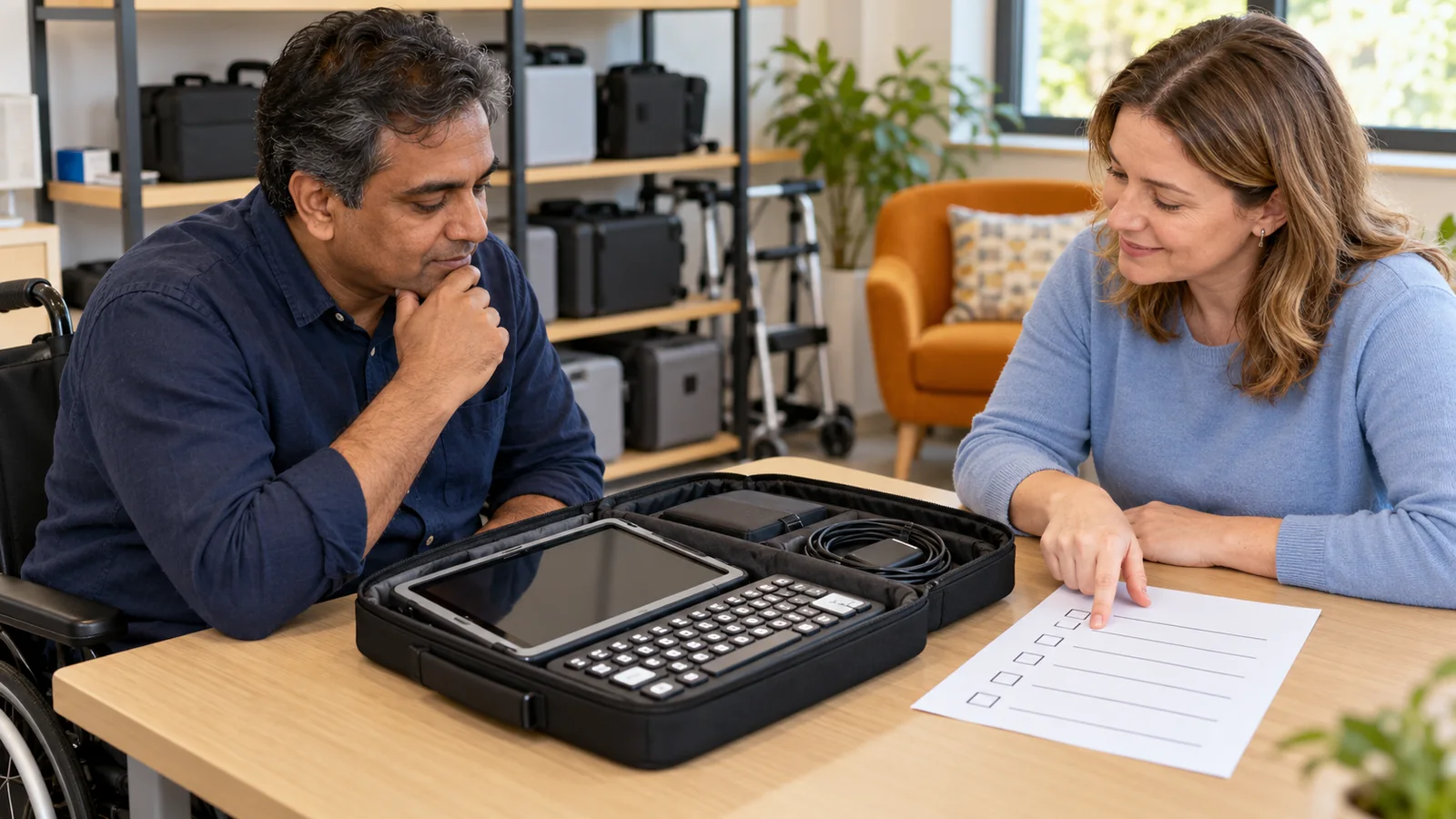
Ask who will participate and what each person contributes. If access involves vision, movement, positioning or specialised equipment, find out how the relevant expertise will be included. Clarify whether the appointment is an initial consultation, a comprehensive assessment, a configuration session or a review of an existing system.
Holland Bloorview’s Communication and Writing Aids overview describes assessment, goals, consultation, intervention and training as parts of its service. This is a local example of the different activities that can surround equipment selection, not evidence that every service offers the same pathway.
Ask what can realistically be answered in the available time. A first appointment may identify questions for later exploration. Request a clear account of what has been observed, what remains uncertain and how the next stage will address that uncertainty.
Make the purpose of a trial specific
A trial should have a question. For example: can the person access the display comfortably in their usual position, find vocabulary relevant to a favourite activity, or communicate with an unfamiliar partner? Different questions may require different settings or periods of supported use.
ASHA’s AAC Practice Portal describes feature matching that includes access, communication functions, environments, user preference and maintenance. It also notes that an initial assessment may not establish how well a specific device will work. Ask how the planned trial will investigate the particular uncertainties identified for this person.
| Area | Question | Useful record |
|---|---|---|
| Purpose | What are we trying to learn from this trial? | A small set of real communication situations |
| Setup | Who configures access, vocabulary and positioning? | Settings used and who can change them |
| Support | How will the communicator and partners learn? | Training provided and remaining questions |
| Observation | What should we notice without interrupting conversation? | Brief examples with context |
| Practical terms | Who owns the equipment and what are the return conditions? | Loan terms, contact and review date |
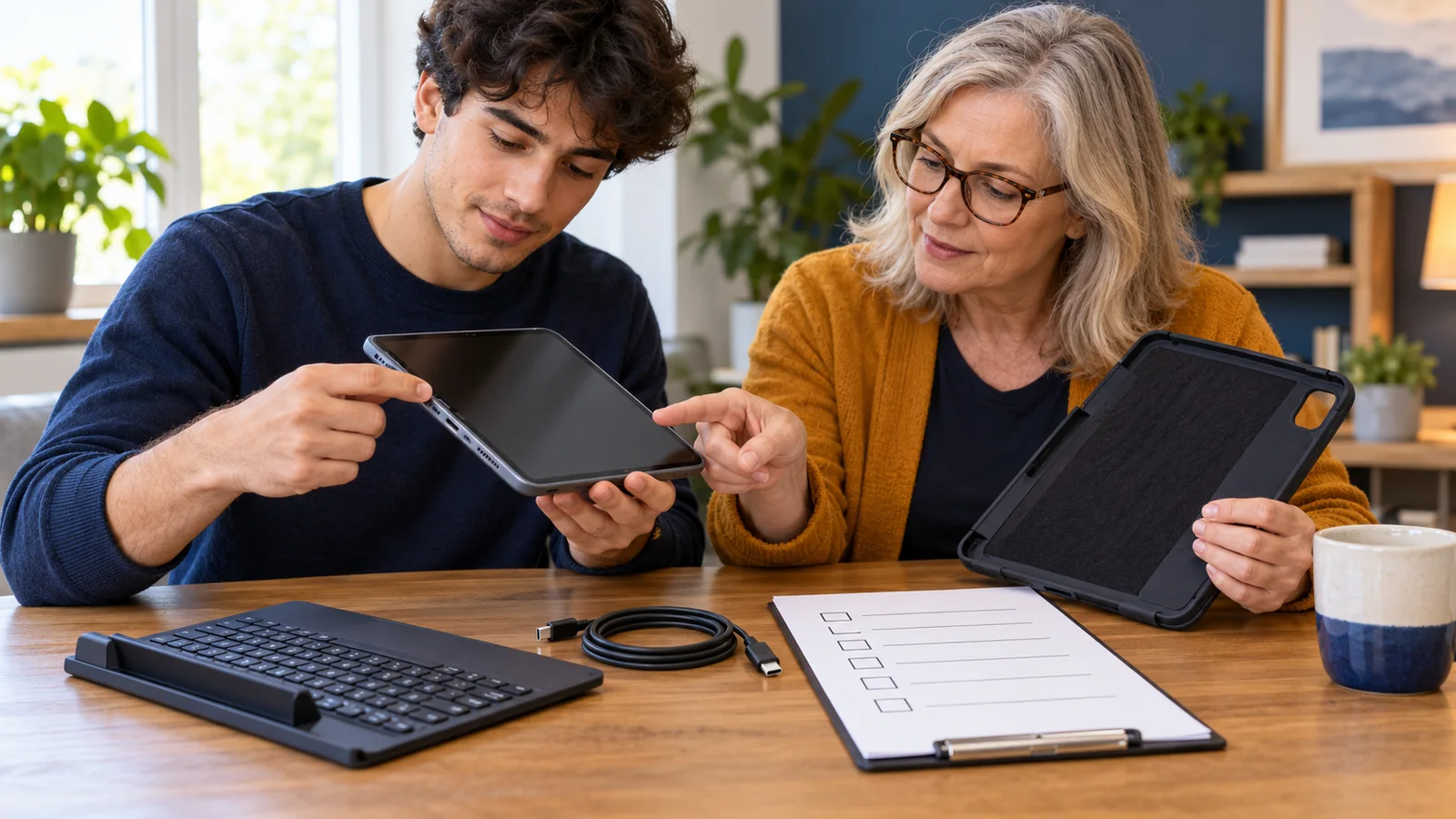
Ask whether the loan includes the accessories needed to make the trial meaningful. Testing a screen without an appropriate stand or access method could answer the wrong question. Clarify whether the configuration can be adjusted during the trial and who should make those changes.
Observe with context
Record what the person was trying to say, the setting, the support available and any difficulty encountered. A short note such as “could not reach the top row when seated at this table” is more useful than “did not cooperate.” Include the communicator’s own account wherever possible.
Notice partner behaviour too. Was enough time allowed? Did someone interrupt, guess the message or repeatedly turn the exchange into a question-and-answer exercise? A device may appear unused when the conversation gives its user no meaningful opportunity to contribute.
In a fictional example, Priya tries a device during a craft group. The first observation records difficulty selecting symbols. A later discussion shows that the device shifted on the table and the relevant vocabulary had not been prepared. The team adjusts the setup and agrees on another supported opportunity. The initial difficulty is kept as useful information, without being treated as a verdict on Priya’s communication potential.
Avoid recording private conversations or filming someone simply because a review might be easier. Ask the person and service what information is necessary, how consent is handled and where any record would be stored. A concise written observation may answer the question without creating a sensitive video archive.
Review the result and the support plan
- Question. Identify the communication situation and uncertainty.
- Prepare. Arrange access, vocabulary and partner support.
- Observe. Record meaningful use and barriers in context.
- Review. Decide what was learned and what still needs exploration.
At the review, ask which observations support the recommendation and which limitations remain. If two options were tried, compare them under reasonably similar conditions. An extensively customised system and an unconfigured demonstration app are not an informative comparison unless that difference is explicitly acknowledged.
Discuss what happens after selection. Who provides training, vocabulary updates, repair support and follow-up? What communication option is available during a repair? Ask for a written account of responsibilities and any costs or funding applications that still need confirmation.
A trial can lead to a further question rather than an immediate purchase. If the person’s priorities were not addressed, say so and ask how they will be included in the next stage. The goal is an arrangement that supports communication, with enough explanation for the person and their team to use and review it.
Common questions
What should we bring to the first appointment?
Ask the service for its current preparation instructions. Useful items may include existing communication tools, a short account of relevant situations and questions about access. Bring only the records requested or clearly relevant, and ask before sending sensitive material through an ordinary email channel.
How long should a device trial last?
Ask what period is available and why it is suitable for the trial questions. There is no universal duration established by this checklist. Consider whether the person has enough supported opportunities to become familiar with the setup and use it in the settings being evaluated.
Should we compare several products?
Ask which options are clinically and practically relevant and what a comparison would clarify. More products do not automatically produce a better assessment. A focused comparison with appropriate setup can be more useful than rapidly trying many unfamiliar interfaces without support.
What if the person does not use the device during the appointment?
Describe the context and ask what can be learned from it. Unfamiliar people, access difficulties, missing vocabulary or limited opportunity may matter. Discuss further observation and support instead of treating one appointment as proof that the person has nothing to communicate.
Can we change the vocabulary during a loan?
Check the service’s loan and configuration rules. Ask who should make changes, how to preserve the original setup and whether customised content can be retained later. Avoid making many unrecorded changes that leave the review team unsure which version was used.
Should the trial focus only on requesting?
Include the communication purposes the person identifies, such as commenting, refusing, asking questions or discussing an interest. If the available vocabulary supports only a narrow activity, record that limitation. The trial should not mistake a restricted setup for a restricted range of ideas.
What if the device works in the clinic but not at school?
Compare the relevant conditions: positioning, noise, available time, vocabulary and partner support. Ask whether the team can observe or discuss the actual school setting. A useful review investigates the difference rather than assuming the person is choosing to fail in one location.
Does a recommended device automatically qualify for funding?
Ask the relevant funding programme and assessment service about their separate requirements. A clinical recommendation and a funding decision are not interchangeable. Confirm eligible items, approval sequence and any loan arrangements before making a purchase you expect someone else to reimburse.
Who should decide whether the trial was helpful?
The communicator’s experience should be central, alongside appropriate professional assessment and practical observations. Ask how their preferences were gathered and represented. If a supporter or professional draws a different conclusion, discuss the evidence and context rather than silently replacing the person’s view.
What should the written follow-up contain?
Ask for the recommendation, its reasons, unresolved questions, next actions and relevant responsibilities. Include any planned training or review. A product name alone leaves too much unclear about how communication will be supported after the equipment arrives.
Sources
Primary professional and hospital service pages opened and checked on 21 October 2026. The ASHA Practice Portal was read in the browser after automated retrieval failed. The checklist is original editorial preparation material, not a validated assessment instrument.
- National Joint Committee, hosted by ASHA: AAC — individual and contextual considerations.
- Holland Bloorview: Communication and Writing Aids virtual tour — assessment and support activities.
- ASHA Practice Portal: Augmentative and Alternative Communication — feature matching and assessment considerations.