The moment you notice your eyebrows looking thinner can feel unexpectedly important. It might happen under bright bathroom lighting or in a casual selfie where your eyes suddenly seem less defined. The tails appear sparse, the arch fades from certain angles, and no amount of pencil seems to help. That’s usually when the idea of a salon brow lamination pops up. But then come the thoughts of booking, paying, traveling, and sitting through strong chemical smells. So you close the tab, rinse your face, and decide there has to be a simpler way.
Simple Lamination Techniques
The Subtle Power of Shaping Your Own Brows
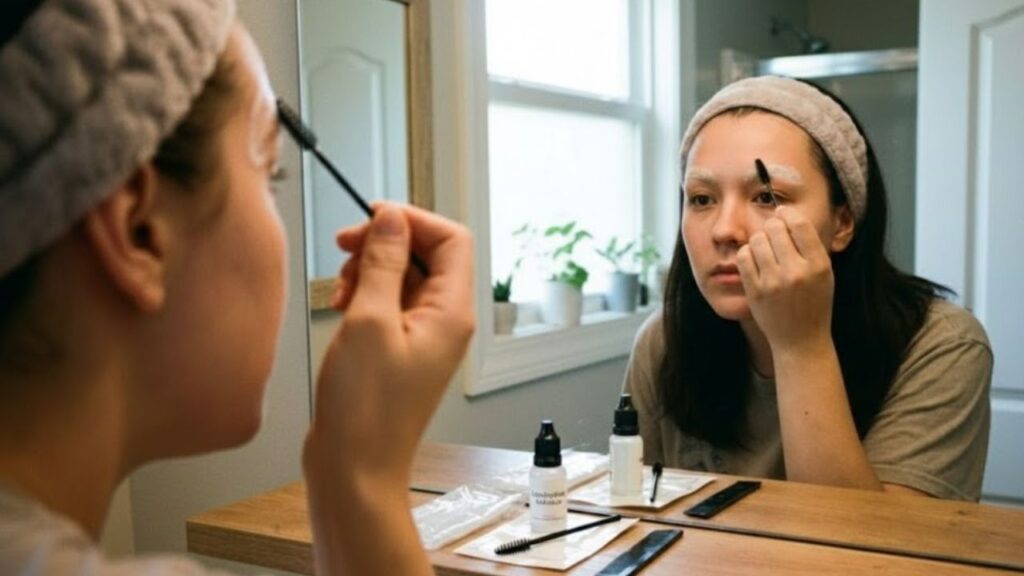
There is a quiet satisfaction in sitting at your bathroom counter late at night, the fan softly humming and music playing low, realizing you can transform your brows with just a few careful steps and patience. No harsh salon lights. No awkward conversation. Just you, a mirror, and a small brush. Home brow lamination sounds technical, but the idea is simple. You gently guide your natural brow hairs to sit in a flattering direction for longer, creating a fuller and more defined look. You aren’t drawing a new brow. You’re letting your own brows show their best side. Once you break lamination down into simple steps—soften, shape, set, and nourish—it feels less intimidating and more like a routine you can repeat every few weeks.

Preparing Your Tools: A Small, Calming Setup
Before touching your brows, take a moment to prepare your space. Clear a section of the counter and line up your tools in the order you’ll use them. This small act creates a sense of calm that makes the process feel surprisingly soothing. Most at-home lamination methods rely on just a few essentials. Some people choose complete brow kits, while others prefer gentle alternatives already at home. Whatever you choose, the principle stays the same: use minimal product and always opt for the gentlest option possible.

- Soft facial cleanser to remove oil and residue without irritation
- Brow spoolie to guide hairs into place, even a cleaned mascara brush works
- Brow lamination formula to relax hairs for reshaping, always patch test first
- Setting or fixing solution to hold the new shape without weighing brows down
- Hydrating oil or serum to nourish hair and skin, applied lightly overnight
Standing in front of the mirror with these tools feels less like a procedure and more like everyday care. You aren’t trying to master a professional skill overnight. You’re simply learning how your brows grow and shaping them into a look that feels right for you.
A Step-by-Step, Unhurried Brow Reset
Your first at-home lamination should be slow and intentional. Pay attention to small details—the cool water on your skin, the gentle scratch of the spoolie through brow hair. This isn’t just about results. It’s about giving yourself a few calm minutes.
Clean the Brow Area Completely
Brows collect sunscreen, moisturizer, makeup residue, and natural oils. Start by cleansing the area with a gentle, fragrance-free cleanser. Rinse with lukewarm water and pat dry using a soft towel. A final swipe with a cotton pad ensures no residue remains. Clean brows stand up more clearly, making them easier to shape.
Study Your Natural Growth Pattern
Before applying any product, comb your brows upward with a clean spoolie and observe closely. Some hairs naturally lift, others lie flat, and some angle sideways. Notice sparse areas, the shape of your arch, and how the tail behaves. Understanding these patterns helps you decide how to guide the hairs rather than fighting against them.
Gently Soften the Brow Hairs
Apply a small amount of lamination or lifting solution to the brow hairs using a micro brush or cotton swab, keeping it off the skin. This step softens the hair structure, similar to warming clay before shaping it. Comb the solution through with a spoolie, brushing hairs upward and slightly outward. Let it sit for the recommended time, usually just a few minutes. If your brows are fine, less time is better than more.

Shape with Purpose, Not Perfection
Once the hairs are softened, use a clean spoolie to shape them. Brush the front upward for a fluffy effect, then angle the arch and tail toward the temples. Aim for balance, not exact symmetry. One brow may have a sharper arch, the other more fullness. The goal is an enhanced version of your natural brows, not a copied style.
Lock in the Shape
After removing excess lifting solution, apply a light layer of setting or neutralizing product. Comb through again and gently press stubborn hairs into place for a few seconds. When the setting time ends, wipe away any residue and step back. The result is often striking—brows that appear taller, fuller, and more defined without looking drawn on.
Aftercare: Letting Brows Ease Into Their Look
Freshly laminated brows can feel like a new haircut. For the first day or two, your reflection may look unfamiliar. Give it time. As natural oils return, the look softens. Avoid water, steam, and heavy creams on the brow area for 24 hours. If skin feels tight, use a light moisturizer around the brows, not directly on them. After a couple of days, most people find their routine simpler—often just a quick brush with a clean spoolie keeps brows looking lifted and full.
Feeding Your Brows with Oils and Gentle Habits
Maintaining fullness means treating your brows like something to nurture. Each night, apply a small amount of nourishing oil using your fingertips. Castor oil or lightweight brow serums work well. Massage gently in the direction of hair growth to condition hairs and support the follicles beneath. Just as important is knowing when to stop. Over-plucking can undo your progress. Remove only obvious stray hairs and leave the rest to maintain that naturally full look.
Finding Your Personal Brow Routine
With practice, you’ll develop your own rhythm. Some people laminate every six to eight weeks, pairing it with other quiet self-care habits. Others prefer softer, more frequent sessions supported by daily oil and brushing. Think of it as a cycle rather than a strict rule. Your brows will have phases of growth and rest. When they start drooping or losing shape by midday, it may be time for another gentle session. Doing this at home means learning what your skin tolerates, how long is enough, and where your natural arch truly sits. Over time, you become your own expert, responding to your reflection instead of chasing trends.