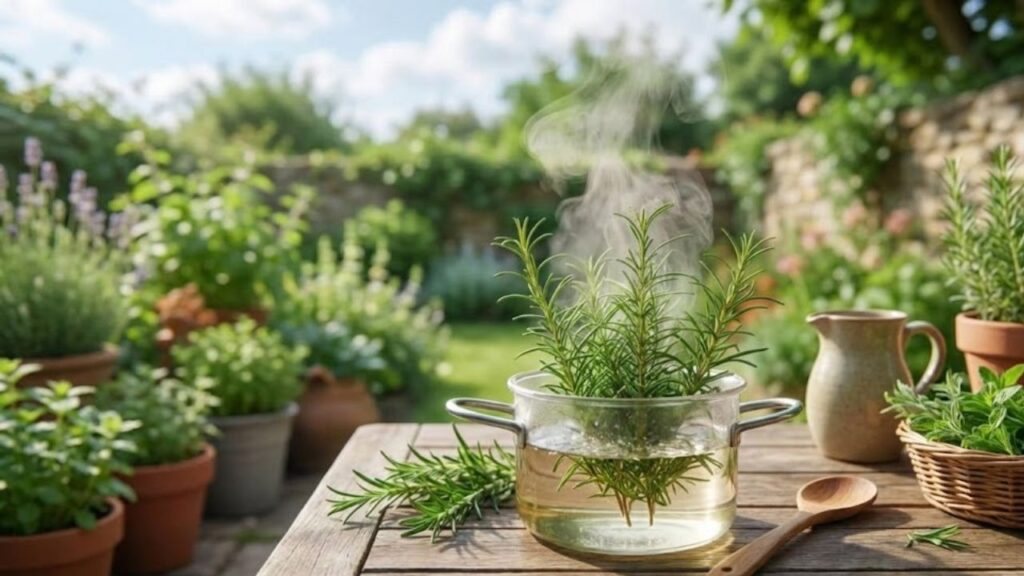
That moment often arrives when a forgotten kitchen habit quietly returns: a saucepan of rosemary gently simmering, releasing a crisp, herbal aroma that drifts through the house and creates a feeling that the space can finally breathe again.
Why rosemary continues to reappear in contemporary homes
From rocky Mediterranean slopes to compact apartments and family houses, rosemary has travelled through generations. It thrives in pots, rests on windowsills, seasons weekend meals, and increasingly finds a place in modern wellbeing habits. Long before words like aromatherapy or productivity entered everyday language, people were already boiling rosemary sprigs in water.

In many Brazilian households, grandmothers still share the tradition of simmering rosemary to “refresh the air” after tense moments or demanding days. Comparable practices exist across Europe and the Middle East, where the herb has symbolised memory, clarity, and protection for centuries.

Beneath the folklore lies a simple principle: natural aromas can influence mood and perception, gently shaping how a room feels. Today, this revived habit aligns with a global preference for affordable, low-effort ways to feel more comfortable at home, especially as living spaces double as offices, retreats, and places of concern.
How simmering rosemary interacts with mind and body
Rosemary leaves contain several volatile compounds, including 1,8-cineole, camphor, and borneol. Heating the herb in water releases these elements into the steam, allowing them to spread through the air and be inhaled naturally.
This is where science and tradition intersect. Research from Northumbria University in the UK showed that participants exposed to rosemary aroma performed significantly better on certain memory and attention tasks than those in a control group. The fragrance did not transform abilities overnight, but measurable improvements in focus were observed.
The explanation is relatively direct: aromatic molecules travel from the nose to brain regions linked to alertness and memory. Smell reaches the limbic system rapidly, influencing emotions and stress responses faster than many conscious efforts. The clean, sharp scent of rosemary often signals a mental reset, even before any cognitive effects are noticed.
Rosemary also offers mild antimicrobial and antioxidant qualities. While it does not replace cleaning or ventilation, it contributes to a general sense of freshness and renewal within the home.
The stove-top rosemary ritual, explained step by step
Creating a gentle, house-filling rosemary fragrance requires no special tools. A simple pot and water are enough to start.
Easy way to simmer rosemary at home
- Fill a small saucepan halfway with cold water.
- Add three to five fresh rosemary sprigs, or one tablespoon of dried leaves.
- Heat until the water reaches a boil.
- Reduce to a low simmer for 10 to 20 minutes, adding water if needed.
- Keep the pot uncovered so the steam can circulate.
The aroma spreads slowly, moving from the kitchen into nearby rooms. Many people associate this ritual with specific moments, such as before visitors arrive, during study time, or after a stressful call, allowing the scent to become linked to a calmer mood.
Once cooled, the liquid can be strained into a spray bottle and reused as a light fabric or room mist. In this way, one pot serves twice: first as steam, then as a subtle refresher for soft furnishings.
When a diffuser becomes the better option
For those who prefer not to monitor a stove or who share living spaces, essential oil diffusers offer a convenient alternative. A few drops of rosemary oil in water can produce a similar scent with minimal effort.

Common ways to use rosemary indoors
- Boiling fresh rosemary: creates a strong, natural aroma but requires supervision.
- Essential oil in a diffuser: provides consistent intensity, though oil quality varies.
- Spray made from rosemary infusion: allows targeted use but has a shorter shelf life.
Diluted essential oils can also be blended. Rosemary pairs well with citrus oils like lemon or orange for kitchens, or with lavender in bedrooms to soften its stimulating edge.
From “heavy energy” to modern stress science
Older generations often describe emotional tension in simple terms, saying a house feels heavy or stagnant. Modern psychology uses different language, yet addresses similar experiences. Ongoing stress, digital noise, and unfinished tasks all contribute to mental overload.
A small ritual, such as preparing rosemary on the stove, creates a deliberate pause. Repeating the same steps trains the brain to associate the action with slowing down, much like a familiar cup signals the start of tea time.
While it does not solve underlying problems, boiling rosemary frames the day with intention rather than reaction. Therapists often recommend cues like this, and scent works particularly well because it is subtle and screen-free.
Safety notes and practical considerations
Despite its gentle reputation, a few precautions are important. Individuals with asthma or fragrance sensitivity should begin with small amounts and brief exposure. Babies and pets may respond differently to strong scents, so keeping at least one unscented room is wise.
- Never leave a simmering pot unattended.
- Avoid applying undiluted essential oil directly to skin.
- Use food-grade rosemary or trusted oils.
- Seek medical advice before heavy oil use if pregnant or managing epilepsy or respiratory conditions.
The main risk often lies in unrealistic expectations. A pleasant aroma cannot replace professional care, but it can complement calming habits such as mindful breathing or tidying a space.
Beyond the saucepan: everyday rosemary uses
Rosemary easily extends into other small routines. Dried sprigs in linen cupboards add scent and help deter insects. A potted plant near a workspace allows for a quick sensory break by gently crushing a leaf.
Cooking with rosemary reinforces the same aromatic note, linking meals with comfort and continuity. Simple dishes like roasted vegetables or potatoes seasoned with the herb echo the fragrance used around the home.
Cooled rosemary water can also be added to basic homemade cleaners with vinegar and water, improving the smell of everyday chores without turning them into something complicated. Across all these uses, the pattern remains the same: a modest plant that quietly supports a clearer, more intentional home atmosphere, starting with nothing more than water, heat, and a handful of fragrant leaves.