In a world where work rarely slows down, many corporate professionals feel constant pressure to stay connected. This always-on work culture often results in burnout, persistent back discomfort, and ongoing mental exhaustion. With packed schedules, fitting in a full workout can feel unrealistic. Still, a focused yoga routine can become a powerful tool to restore balance, helping you recharge without demanding extra time.
Choosing the right yoga flow for professionals under intense pressure is not about advanced or extreme poses. Instead, it focuses on movements that counter long hours of sitting while soothing the nervous system. This guide introduces a carefully structured, science-supported yoga flow created specifically for the demands of modern corporate life.

Why High-Stress Professionals Benefit from a Targeted Yoga Routine
Spending eight to ten hours at a desk places heavy strain on the body. Over time, tight hip flexors, a collapsed chest, and a forward-leaning neck posture develop. This condition, often referred to as Tech Neck, contributes to chronic discomfort. At the same time, constant deadlines keep the body locked in a fight-or-flight state, increasing cortisol levels and reducing mental clarity.

A purpose-built yoga flow addresses these challenges through three core benefits:
Postural realignment by opening areas affected by prolonged sitting
Mental reset through controlled breathing techniques
Time efficiency by delivering meaningful relief in short sessions
The 20-Minute Corporate Reset Yoga Flow
This sequence is designed for flexibility and convenience. It can be practiced at home or in a small office, often without a mat. All you need is a quiet environment and, for some poses, a chair.
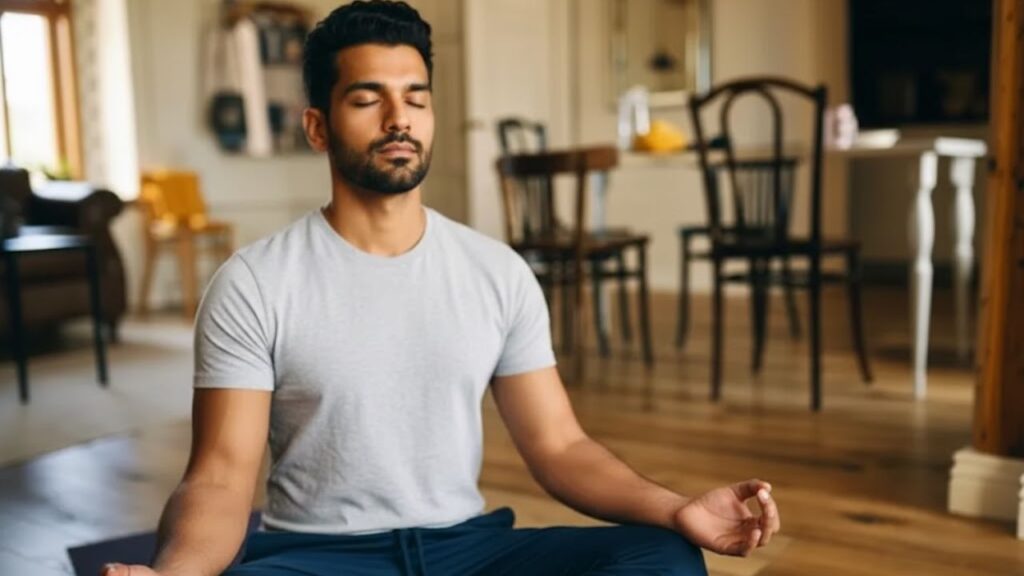
Seated Centering with Box Breathing (3 Minutes)
Before movement begins, calming the mind is essential. Stress commonly leads to shallow breathing patterns that reinforce tension.
Sit upright with both feet grounded. Close your eyes and practice a steady rhythm: inhale for four seconds, hold briefly, exhale for four seconds, then pause again. This technique helps lower heart rate and signals safety to the brain.
Seated Cat-Cow Spinal Flow (2 Minutes)
This gentle motion awakens the spine while remaining seated. Place your hands on your knees, arching the back on each inhale and rounding the spine on each exhale. The movement encourages spinal fluid circulation and eases lower-back stiffness caused by prolonged sitting.
Standing Forward Fold with Interlaced Hands (3 Minutes)
Stand with feet aligned under the hips and clasp your hands behind your back. Fold forward slowly, allowing the arms to release overhead. This pose delivers a deep hamstring stretch while opening the shoulders and chest. The mild inversion also promotes improved blood flow to the brain.

Warrior II for Strength and Concentration (4 Minutes)
Step your feet wide, bend the front knee, and extend your arms outward. Gaze steadily over the front hand. This posture builds lower-body strength and reinforces mental resilience. Holding the pose supports focused endurance useful during long meetings and high-stakes discussions.
Chair Pigeon Pose for Hip Release (4 Minutes)
From a seated position, rest one ankle over the opposite knee and lean forward gently. Maintain a flexed foot to protect the knee. This stretch targets deep hip tension, an area known to store both physical and emotional stress, while helping reduce discomfort linked to prolonged sitting.
Eagle Arms for Upper Back Relief (2 Minutes)
Cross one arm over the other, bend the elbows, and lift them to shoulder height. This position delivers a targeted stretch to the upper back and neck, areas where work-related stress frequently accumulates.
Legs-Up-The-Wall Restoration (2 Minutes)
Finish by lying down and placing your legs vertically against a wall. This restorative pose encourages lymphatic circulation, eases ankle swelling, and acts as a gentle full-body reset after a demanding day.
Making Yoga Part of a Busy Work Schedule
Identifying an effective yoga flow is only the first step. Consistency is what delivers results. Short sessions can be spread throughout the day using a micro-break approach. A few poses between calls or after meals can make a meaningful difference.
Morning practice helps establish mental readiness for the day ahead, while evening sessions support relaxation and better sleep. Scheduling a recurring wellness block on your digital calendar can protect this time from interruptions.
How Yoga Supports Productivity and Performance
Taking breaks often feels unproductive, yet research shows the opposite. Yoga helps reduce cortisol levels, improving creativity and decision-making. When stress is managed effectively, professionals experience sharper focus and improved leadership capacity.
By 2025, sustained success is less about long hours and more about energy management. This yoga flow supports that approach by protecting both mental and physical health.
Final Reflections
For corporate professionals, yoga is not an indulgence—it is a practical necessity. The demands of high-responsibility roles require intentional recovery. A well-designed yoga flow supports physical flexibility, maintains mental clarity, and keeps stress within manageable limits, allowing professionals to perform at their best.