Full-body stretching is one of the most effective ways to improve flexibility and reduce muscle tension while enhancing posture and supporting overall physical health. Whether you sit at a desk or walk regularly or play sports or simply want to feel more limber throughout the day a consistent stretching routine makes a real difference. Yoga offers a balanced approach to stretching because each pose links movement with breath. With mindful breathing muscles relax deeper and joints become more mobile & the nervous system shifts into a calm and receptive state. Stretching is not just about touching your toes or bending farther. It is about improving range of motion in muscles and joints throughout the body. When muscles are supple & joints move freely your posture improves and energy flows more smoothly and you are less prone to pain or strain. The four yoga poses below are chosen for their ability to stretch major muscle groups from head to heel. These poses work the spine & hips & shoulders & legs and core. They help with flexibility and contribute to better movement patterns in daily life.
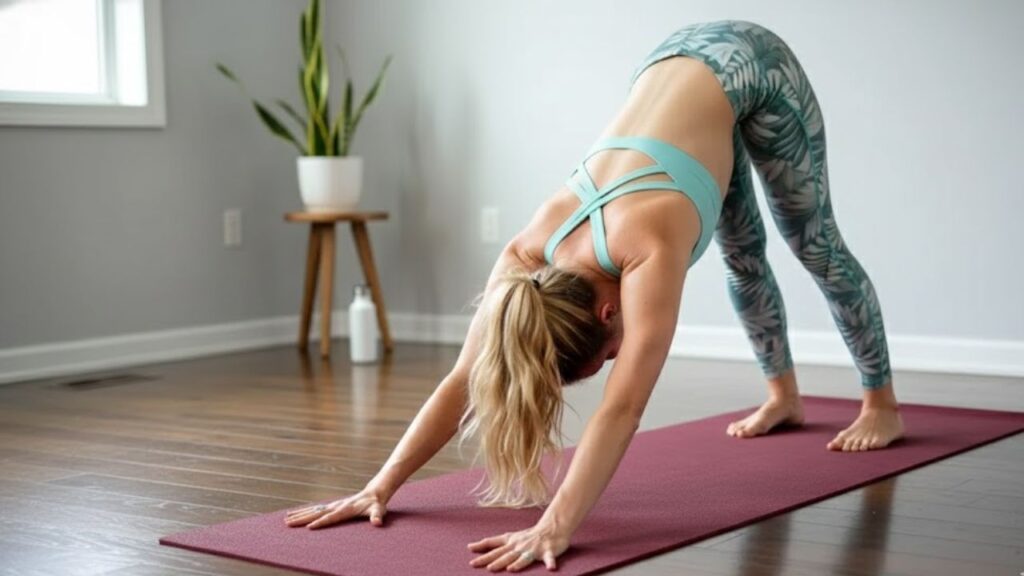
Downward Facing Dog Pose
Downward Facing Dog is a core yoga posture that offers a deep stretch for the hamstrings, calves, spine, and shoulders. At the same time, it builds strength in the arms and upper body as your weight is supported through the hands. This pose gently lengthens the entire back side of the body and helps release built-up tension from long periods of sitting or standing.

To practice this pose, begin on your hands and knees. Spread your fingers wide and press firmly through your palms. Curl your toes under and lift your hips up and back, creating an inverted V shape with your body. Keep your feet hip-width apart and allow your heels to move toward the floor, even if they do not touch. Relax your head and neck and breathe slowly through your nose. Hold the pose for thirty seconds to one minute.

This posture helps decompress the spine while stretching the backs of the legs. If your shoulders feel tight, slightly bend your knees and focus on lengthening from the hips down to the heels. Over time, Downward Facing Dog increases blood flow to the arms and shoulders, supporting improved upper body mobility.
Pigeon Pose for Hip Release
Pigeon Pose is a powerful stretch for the hips, glutes, and lower back. Tight hips can affect pelvic and spinal alignment, often leading to discomfort in the lower back or knees. Releasing the hips promotes greater ease in everyday movements such as walking, running, and bending.
Start in a tabletop position. Bring your right knee forward and place it behind your right wrist, then slide your right foot toward your left hip. Extend your left leg straight back with the top of the foot resting on the floor. Square your hips toward the front. Inhale to lengthen your spine, then exhale as you walk your hands forward and lower your torso over your right leg. Rest your forehead on the mat or a block. Stay here for one to two minutes before switching sides.
Pigeon Pose stretches deep hip muscles that often tighten from prolonged sitting or repetitive motion. As the hips relax, the lower back experiences a gentle release. This pose supports better posture, reduced back tension, and improved hip flexibility.
Cat Cow Spinal Flow
Cat Cow Flow is a gentle yet effective movement sequence that stretches the spine, neck, and torso. It enhances spinal mobility and boosts circulation in the back muscles. This flow works well as a warm-up before deeper stretches or as a simple practice anytime during the day.
Begin on your hands and knees with wrists aligned under shoulders and knees under hips. As you inhale, drop your belly toward the floor, lift your chest and tailbone, and look slightly forward for Cow Pose. On the exhale, round your spine, draw your chin toward your chest, and tuck your tailbone into Cat Pose. Continue moving smoothly with your breath for ten to twenty rounds.
This flowing sequence lubricates the spine and eases stiffness in the neck and back. It also gently activates the abdominal muscles while opening the chest. Practicing Cat Cow in the morning can help release sleep-related stiffness and support smoother movement throughout the day.
Standing Forward Fold Stretch
Standing Forward Fold deeply stretches the hamstrings, calves, and lower back while promoting a calm nervous system. With the head positioned below the heart, this pose increases circulation and encourages blood flow to the brain, supporting mental clarity and relaxation.
Stand with your feet hip-width apart. Inhale and lift your arms overhead, then exhale as you hinge at the hips and fold forward. Allow your arms to hang freely or hold opposite elbows. Keep a slight bend in your knees if needed. Relax your head and neck and breathe steadily through your nose. Remain in the pose for thirty seconds to one minute.
This posture helps ease tension in the backs of the legs and along the lower spine. Since tight hamstrings often result from extended sitting or limited movement, this fold gently counteracts those patterns. Deep breathing in this pose supports rib expansion and encourages a relaxed state.
Creating a Simple Full-Body Yoga Routine
These four poses combine to form a balanced full-body stretching sequence. Begin with Cat Cow Flow to warm and mobilize the spine. Transition into Downward Facing Dog to lengthen the back and legs. Practice Pigeon Pose on both sides to release the hips and lower back, then finish with Standing Forward Fold to stretch the hamstrings and calm the nervous system.
Practicing this sequence three to five times per week for ten to fifteen minutes can lead to noticeable improvements in flexibility and reduced tension within a few weeks. Focus on slow, steady breathing in each pose. Inhale deeply through the nose and exhale fully, allowing your body to soften. Consistent stretching supports better posture, balanced movement, and overall physical comfort when practiced mindfully and without pushing into pain.