Across the United States, kitchen design is entering a quiet but meaningful shift as homeowners rethink the dominance of traditional islands. Once considered a must-have feature, bulky islands are being replaced by smarter layouts that prioritize flow, flexibility, and visual calm. The 2026 kitchen trend leans toward refined planning rather than oversized centerpieces, reflecting how people actually cook, move, and gather at home. This change is not about losing function, but about gaining elegance and efficiency through layouts that feel lighter, more intentional, and better suited to modern living.
Why Kitchen Islands Are Fading From Modern Kitchen Layouts
For years, islands symbolized luxury, but many homeowners now see their limits in everyday use. Large islands often interrupt movement and dominate smaller kitchens, making spaces feel crowded instead of open. Designers are responding with layouts that emphasize space-saving flow and smoother transitions between prep, cooking, and dining areas. Storage is being redistributed into walls and tall cabinetry, offering integrated storage without blocking sightlines. The result is clean sightlines that visually expand the room. This shift reflects modern kitchen planning that values comfort and usability over oversized statements.

Smarter Kitchen Layout Trends Replacing the Classic Island
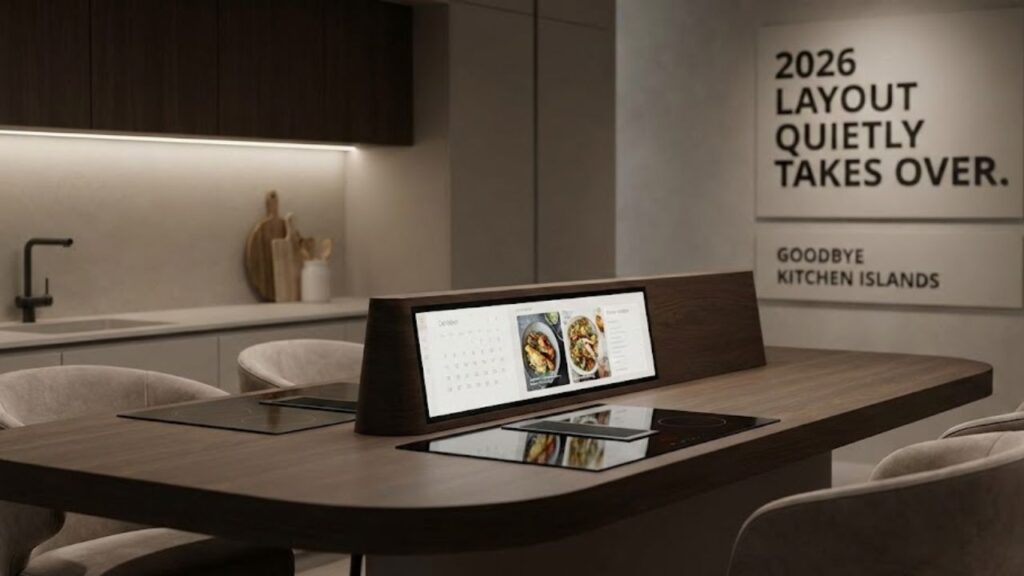
The new layouts gaining popularity focus on adaptability rather than one fixed centerpiece. Peninsulas, wall-facing workstations, and modular tables create flexible work zones that can change throughout the day. These designs support dining adaptability, allowing kitchens to shift easily from cooking to casual meals or remote work. By opening up central floor space, homeowners enjoy better social circulation when entertaining guests. This approach also improves compact efficiency, making it ideal for both apartments and larger homes seeking a calmer, more organized feel.

Elegant Kitchen Design Ideas Shaping Homes in 2026
Elegance in 2026 kitchens is defined less by size and more by subtle intelligence. Appliances are concealed, storage blends seamlessly into walls, and layouts emphasize hidden functionality that keeps surfaces uncluttered. Natural finishes and muted tones create material harmony, replacing visual noise with warmth. This understated approach supports quiet luxury, where quality is felt rather than displayed. By avoiding trend-heavy features, these kitchens achieve timeless appeal, ensuring they remain stylish and practical well beyond the current design cycle.
How the New Kitchen Layout Reflects Changing Lifestyles
The move away from islands highlights a broader design evolution shaped by how people live today. Kitchens are no longer just showpieces; they are workspaces, gathering spots, and everyday hubs. Layouts that remove obstacles improve everyday practicality while supporting multitasking and shared use. As homes adapt to long-term needs, these layouts feel like future-ready homes rather than short-lived trends. Ultimately, the success of this shift lies in thoughtful layouts that quietly enhance comfort without demanding attention.
| Layout Feature | Traditional Island | 2026 Smart Layout |
|---|---|---|
| Floor Space | Often restricted | More open movement |
| Storage Style | Centralized | Distributed cabinetry |
| Flexibility | Fixed structure | Adaptable zones |
| Visual Impact | Heavy focal point | Clean, minimal look |
| Long-Term Use | Trend-dependent | Lifestyle-focused |
Frequently Asked Questions (FAQs)
1. Are kitchen islands completely disappearing in 2026?
No, they are becoming less common, with smarter layouts preferred in many homes.

2. What is replacing kitchen islands most often?
Peninsulas, wall-based workstations, and modular tables are popular alternatives.
3. Do island-free kitchens reduce functionality?
No, functionality is often improved through better flow and smarter storage placement.
4. Are these new layouts suitable for small homes?
Yes, they are especially effective in smaller spaces where openness matters.