Most people only tackle the shower when limescale buildup and soap residue become impossible to overlook. Yet hotels somehow keep glass panels crystal clear day after day. The reason lies in how showers naturally combine hot water, cleaning products, and humidity. Minerals in hard water cling to glass, while shampoos and gels leave behind a greasy film. Warm, trapped air then creates the perfect environment for mold growth and bacteria, leading to dull glass and dark marks.
Because the shower is associated with cleanliness, it’s easy to miss how quickly it becomes one of the dirtiest zones in a home. Hygiene studies often place the shower area among the most contaminated indoor spaces. Mold usually starts as tiny grey or black dots around seals and grout. Left unchecked, these spread into stubborn stains that can affect airways, trigger allergies, and even make surfaces slippery.

Unpleasant smells follow soon after. A constant damp film on glass and joints traps odours, even with occasional cleaning. This is where hotel routines stand out: they remove residue early, before it has time to harden or spread.

The simple hotel secret: melamine foam sponges
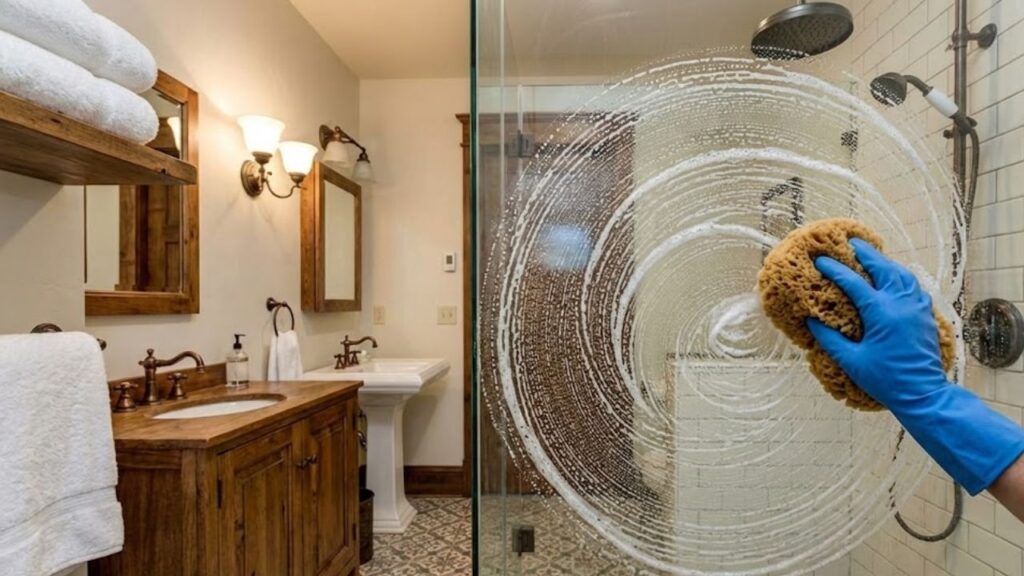
Instead of harsh chemicals, many hotel cleaning teams rely on a melamine foam sponge, commonly sold as a magic eraser. This low-cost tool restores glass panels between guests without strong smells or heavy scrubbing. It works on more than just glass, making it a staple in professional housekeeping.
How melamine foam cleans without chemicals
Although it feels soft, melamine foam has a rigid, microscopic structure. When dampened, it acts like ultra-fine sandpaper, removing dirt through mechanical abrasion rather than chemical reactions. This allows it to reach tiny surface grooves that cloths usually miss.
This unique texture helps lift soap film, mineral deposits, and fingerprints from glass, plastic, and ceramic surfaces. Instead of spreading grime, the sponge gently sands it away, leaving surfaces visibly clearer with minimal effort.
How to clean your shower like a hotel
You can easily copy the hotel approach at home by following a short, efficient routine:
- Rinse the glass with warm water to loosen surface dirt.
- Cut the melamine sponge into smaller pieces for better control.
- Dampen the sponge with clean water until it feels moist, not soaked.
- Wipe the glass using light pressure in straight strokes.
- Pay attention to dull patches and white streaks caused by limescale.
- Rinse thoroughly to remove residue.
- Dry with a microfiber cloth or squeegee for a streak-free finish.
Most hotels avoid strong acidic cleaners unless scale is severe. Using melamine foam speeds up cleaning while keeping chemical odours low, which guests generally prefer.
Surfaces to treat carefully with melamine foam
Because melamine foam is mildly abrasive, it works well on many surfaces but not all. Understanding its limits prevents damage.
- Tempered glass: Safe in most cases with gentle pressure.
- Ceramic tiles: Effective for soap scum and light scale.
- Acrylic panels: Use cautiously; test first for scratches.
- Painted walls: Risky, as it may dull or remove paint.
- Metal fittings: Limited use; avoid delicate coatings.
Always test a small, hidden area first. If the surface dulls, switch to a softer option like a microfiber cloth with diluted vinegar.
Daily habits hotels use to keep showers fresh
The sponge handles buildup, but hotels rely on consistent routines to keep showers looking new. Short, repeated actions focus on moisture control rather than infrequent deep cleans.

Managing moisture makes the biggest difference
After cleaning, hotel staff remove steam quickly by opening doors, windows, or running fans. At home, leaving the shower door slightly open and ventilating the bathroom helps moisture escape. A quick pass with a squeegee takes under a minute and slows both scale formation and mold spread.
When water doesn’t linger on glass, fewer minerals bond to the surface. This means less scrubbing, fewer chemicals, and clearer panels over time.
Easy hotel-style rules you can follow daily
- Squeegee glass and tiles after the last shower of the day.
- Run the bathroom fan for 15–20 minutes after use.
- Wipe seals and corners weekly with mild detergent.
- Switch to low-residue shower products if buildup is frequent.
These small habits reduce the need for harsh cleaners later. Hotels use them because they save time and extend the life of fixtures.
Extra home tricks that complement the hotel method
For tougher scale, pairing melamine foam with common household items can be effective.
Using vinegar and baking soda for stubborn buildup
In areas with very hard water, chalky deposits may appear near taps or along the base of glass panels. A simple approach works well:
- Spray white vinegar on the scale and leave it for 10–15 minutes.
- Wipe gently, then finish with a damp melamine sponge.
- For grout, apply a baking soda paste with a toothbrush and rinse.
This method tackles heavy buildup while limiting exposure to strong acids.
Health, safety, and sustainability considerations
Shower cleaning sits at the intersection of hygiene, air quality, and environmental impact. Strong cleaners often release lingering fumes in small bathrooms. Hotels deal with this daily, which is why many prefer low-odour methods that rely on physical cleaning rather than aggressive chemicals.
At home, the same approach reduces the number of specialised products under the sink. While melamine foam does wear down with use, it often replaces multiple bottled cleaners. Combined with basic ventilation and simple acids like vinegar, it supports a more balanced routine.
The key is moderation. Because the sponge gently abrades surfaces, reserve it for visible deposits and use a soft microfiber cloth for daily wipe-downs. Adopting a professional mindset — a minute of drying daily and a short refresh every few weeks — keeps your bathroom looking hotel-ready without exhausting cleaning sessions.