
The door closes with a soft click that signals the end of the day. You drop your bag on the floor & place your keys on the shelf. Without thinking you kick off your shoes and let your feet touch the cool living room floor. The tiles feel rough and the rug feels fluffy & the wooden floor feels slightly warm where sunlight touched it earlier. You walk to the kitchen barefoot while looking at your phone. Your feet are quietly working in the background by testing the ground and making small adjustments & sending signals to your brain. You do not notice this but your body does. Later when you bend down to load the dishwasher or step over a toy car you do not stumble. You sway for a moment and catch yourself and continue moving. There is no drama. These are just small victories that you barely notice. This is where the story of barefoot balance begins.
Why your feet quietly crave balance
Most people think of feet as basic tools — useful for moving from the sofa to the fridge and back. They work all day, hidden in socks or shoes, rarely noticed. Yet each foot contains thousands of nerve endings that constantly read the ground, track your weight, and sense how your body tilts and shifts.

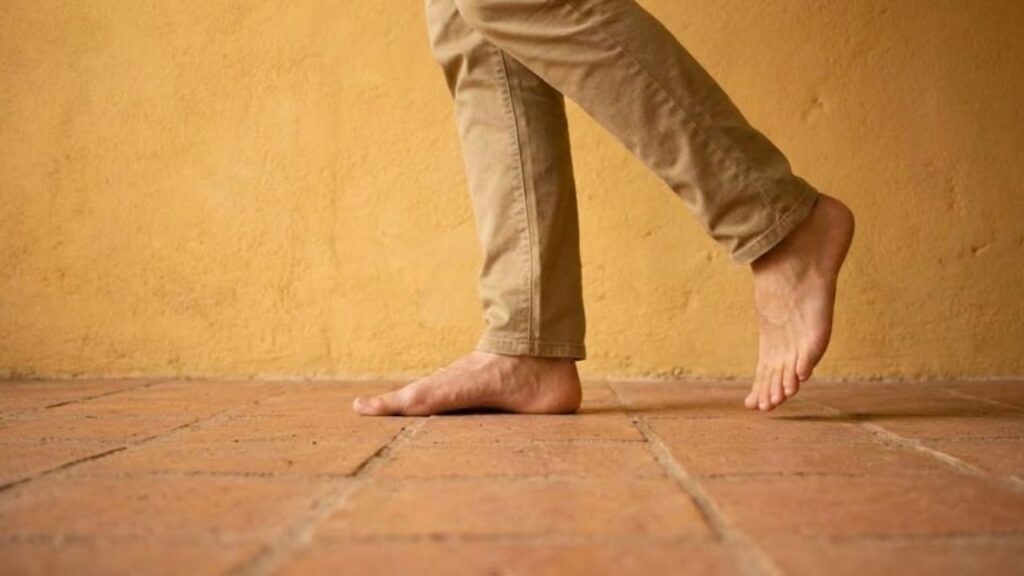
Walking barefoot at home reactivates that entire system. The sole of your foot finally reconnects with reality: cool hallway tiles, a slightly tacky kitchen floor, or the soft give of bedroom carpet. Instead of filtered, padded signals from thick soles, your brain receives clearer, more detailed information.

When sensory input sharpens, your body responds faster. Ankles make tiny corrections. Toes spread and grip. Small muscles activate in subtle ways you never consciously notice. That quiet adjustment is a hidden training session happening every time you cross the room barefoot.
A small personal shift that changed everything
Take Marta, 42. She noticed she was losing balance while carrying laundry down the corridor. No injury, no illness — just an unsettling wobble that felt new. One rushed morning, she forgot her slippers and walked barefoot across the hardwood floor.
She felt her toes engage slightly when turning. Her heel landed more softly stepping off the rug. Nothing dramatic, nothing worth photographing. Just a sensation that her feet felt more alert, more present.
Out of curiosity, she tried a simple test: one month without slippers at home, except in the bathroom. By week two, she could stand on one leg to pull on jeans without bracing against the wall. By week four, she could carry a full laundry basket and turn without that sudden, scary lurch. No gym, no equipment — she had simply removed a barrier between her body and the floor.
How barefoot feedback supports balance
From a practical standpoint, this adds up. Balance relies on a three-way system: vision, the inner ear, and the sensory receptors in muscles and joints. Going barefoot increases the volume of that third signal.
When your toes feel the precise angle of the floor, your nervous system reacts in milliseconds. It’s like switching from a blurry image to high definition. The small muscles in your ankles, arches, and calves get frequent, low-level stimulation as they respond to every slight sway.
Over time, those tiny corrections accumulate. Posture becomes steadier. Your centre of gravity feels easier to control. You don’t transform into a gymnast, but everyday movements begin to feel safer, smoother, and less accident-prone.
Turning barefoot moments into gentle balance practice
Start modestly. Pick one area of your home where you go barefoot daily — perhaps the bedroom and hallway. Walk slowly for a minute or two, noticing how your heel touches down, how your toes meet the floor, and how weight shifts across your foot.
Introduce variety. Stand on a folded towel while brushing your teeth. Move from a rug onto hard flooring and register the contrast. Let your toes spread on a yoga mat or thick carpet. These small changes force your body to recalibrate, quietly strengthening balance without feeling like exercise.

If it feels safe, try standing on one foot while waiting for the kettle — just a few seconds per side. Enough for your ankles to reconnect with the rest of your body.
Common mistakes and realistic limits
The biggest trap is doing too much, too fast. Switching from constant supportive footwear to barefoot all day can overload unprepared feet. Arch soreness or tight calves often come from rushing, not from barefoot walking itself.
Existing conditions matter too. Anyone with significant balance issues, chronic foot pain, or diabetes should approach barefoot time cautiously and seek guidance if needed. Sharp pain isn’t progress — it’s feedback that something is wrong.
There’s also a mental hurdle. For some, walking barefoot indoors feels strangely exposed, especially if slippers were the norm growing up. On tough days, cold floors can feel like one irritation too many. Let’s be honest: no one practices gentle habits perfectly every day.
As one hypothetical yet believable physiotherapist puts it: “The foot is often overlooked in balance discussions, even though it’s one of the body’s richest sensory organs. Using bare feet at home doesn’t just free the toes — it reactivates a feedback system that’s been neglected for years.”
What barefoot time at home can realistically offer
- Faster reactions to small shifts in body position
- Stronger stabilising muscles in ankles and arches
- Less fear of tipping during turns or bends
- A familiar space that quietly supports better balance
Letting your home become a balance laboratory
Once you start noticing how your bare feet move, it’s hard to ignore. The way toes spread on cold mornings. The subtle shift in weight when you reach for your bag. These sensations become part of an ongoing conversation with your body.
Your home turns into a low-key experiment. While coffee brews, you gently rock from heel to toe. Watching a show, you rest your feet on the floor instead of tucking them away. Nothing dramatic — just awareness in small moments.
Most people know that flash of panic from a near-slip in the kitchen. The plate that almost falls. The ankle that twists just enough to spike your heart rate. Barefoot walking doesn’t promise perfection, but it can change how your body responds when those wobbles happen.
You may never mention it to anyone. No one else may notice you’re barefoot more often. Still, over weeks, something shifts. Turns feel quicker. Standing feels easier. Recovering from missteps becomes calmer, less chaotic.
That’s the quiet nature of better balance. It doesn’t announce itself with milestones. It shows up in countless small moments where your body simply supports you — a little more steadily than the day before.

| Point clé | Détail | Intérêt pour le lecteur |
|---|---|---|
| Sensory feedback | Bare soles receive richer information from the floor | Helps your brain correct posture and avoid stumbles |
| Micro-muscle training | Small foot and ankle muscles work more with each step | Builds subtle strength for everyday balance |
| Everyday routine | Short barefoot moments during normal tasks | Makes balance training easy to fit into real life |
