The girl in the café restroom has no idea she’s being observed, yet several people waiting quietly watch her lips with curiosity. She glides a pencil across them in two quick strokes, presses them together, and finishes with a touch of gloss. There’s no dramatic overlining or complex contouring. When she looks up, her lips appear rested, soft, and naturally full, like she’s just returned from a relaxing trip. There’s no visible border or bold outline—just dimension that feels effortless. Later, you try to recreate it with the same pencil and gloss, but the result looks flat. The difference is subtle: where she placed the pencil. It’s a tiny detail that changes everything.
Lip Definition, Reimagined
It’s Not About Bigger Lips, It’s About Directing Attention
Why Traditional Lip-Liner Rules Stop Working
The classic advice is familiar: trace slightly outside your natural lip line, blur it, fill it in, and move on. For years, that method worked well enough. But on real faces in natural light, heavy overlining can feel disconnected. Instead of enhancing your features, it can make the lips seem out of sync with the rest of the face, especially when viewed up close.

The Subtle Change Modern Lip Artists Are Making
Today’s leading lip artists take a more restrained approach. Rather than chasing the illusion of a much larger mouth, they focus on guiding the eye to specific points. The fullness you notice isn’t the objective—it’s the result. This is why the technique photographs beautifully, whether in selfies, video calls, or everyday conversations. The adjustment is minimal, yet the effect is striking.

Why Millimetres Matter More Than Bold Lines
The real transformation comes from micro-level placement, not thicker outlines. Once you notice where the pencil actually goes, your understanding of lip lining shifts. It’s not about reshaping your lips into something new; it’s about enhancing the structure that already exists. This precision keeps everything believable and softly defined.
Where Makeup Artists Actually Apply the Liner
If you pay attention on social platforms, a pattern emerges. Artists barely emphasize the corners of the mouth. Instead, they concentrate pigment on three areas: the peaks of the Cupid’s bow, the center of the lower lip, and the small, pillow-like zones just off-center. Around the edges, the liner is diffused and barely there, creating an outline that feels more like a suggestion than a statement.
Why the Finish Looks Effortlessly Natural
A London-based makeup artist once shared that she uses the same lip pencil on every client, adjusting only the placement based on how light hits their lips. People often ask which filler clinic she recommends. She laughs and points to a £7 lip liner and a grainy video of her technique. The most common response is, “I don’t know what you did, but I look rested.” Fuller lips suggest health, but the true effect is balance—the mouth suddenly feels in harmony with the face.

The Simple Science Behind the Illusion
This method works because our eyes don’t scan faces evenly. They jump to contrast and subtle shape changes. The dip of the Cupid’s bow, the curve at the center of the lower lip, and the light-catching areas where gloss naturally sits all draw focus. By enhancing these points and softening the corners, the brain interprets the lips as fuller without any obvious outline.
The Exact Placement That Creates Fullness Without Overlining
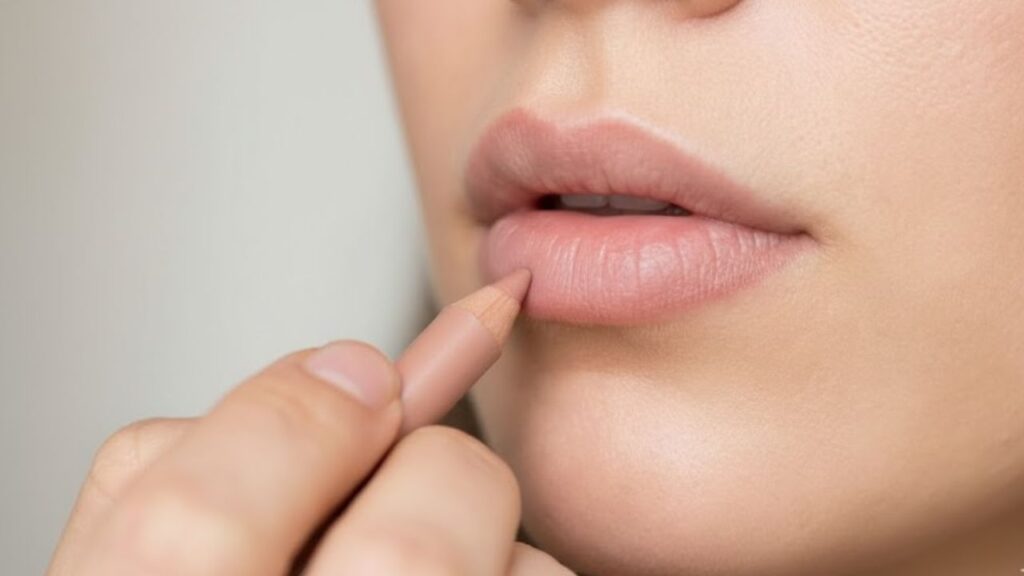
Begin with dry lips and keep your mouth relaxed—no posing. Take a sharpened nude liner that matches your lip tone. Draw a small bridge across the Cupid’s bow, gently connecting the peaks just above the natural dip. Think soft plateau, not a sharp M. Move to the center of the lower lip and place the pencil about a millimetre outside your natural line at the fullest point only. Sketch a short arc no wider than your iris. Leave the outer thirds almost untouched. Connect these central areas to the corners with light, feathery strokes that fade outward. Smudge softly with a fingertip, then tap a hint of gloss or balm in the center. The middle looks pillowy, the corners stay soft, and the result is hard to decode.
The temptation is always to add more. A little extra on the sides, a bit more height, and suddenly the look slips into obvious overlining. It may appear fine on a phone screen, but harsh lighting tells a different story. Restraint keeps it believable. Work in stages, check your reflection from a distance, and only connect to the corners where truly needed.
Why This Soft-Blur Technique Works in Real Life
What makes this placement so appealing goes beyond appearance. On a tough morning, drawing a sharp line around your lips can feel like armor. This gentler method feels like enhancing what’s already there. People notice that you look refreshed rather than heavily made up. It also allows room for imperfection—if your hand slips or the line isn’t exact, the overall effect still holds. Under different lighting, from bright bars to dim restaurants, the lips keep definition in the center while staying soft at the edges. They move naturally with your expressions instead of looking fixed. It’s makeup that works with real faces, not against them.