
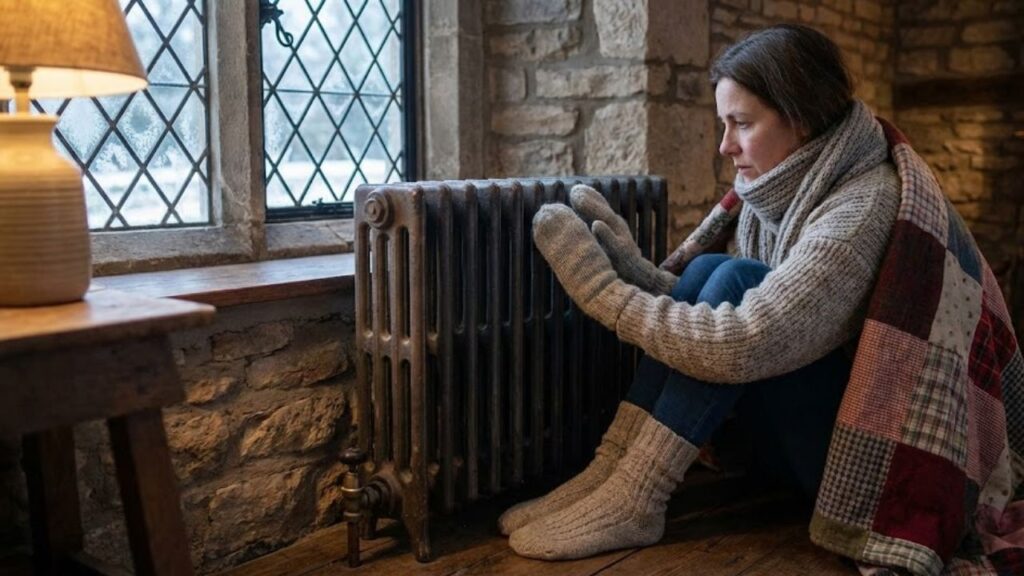
You check the thermostat and it reads 19 degrees Celsius. This is the temperature you have been told to maintain for years as a responsible citizen. The number has become fixed in everyone’s mind because of energy bills & environmental concerns & all those energy-saving campaigns. But your feet feel cold. Your teenager walks around the house wearing a hoodie. Your elderly mother is visiting for the weekend and she wraps a blanket around her legs while insisting that she feels fine. You begin to question whether 19 degrees Celsius is actually a perfect temperature for everyone or just an outdated guideline that people follow without questioning it. You are not alone in having these doubts. This winter across Europe doctors and building engineers and public health experts are quietly revising their recommendations. The new recommended temperature is different from what you might expect.
The 19°C Rule Meets Today’s Reality
For decades, 19°C has been repeated as the ideal indoor temperature — comfortable enough for daily life, yet low enough to limit emissions. It sounded like a sensible middle ground. However, the research behind this number dates back to a very different era. Homes were built differently, daily routines involved more movement, and demographics were not the same as they are today.

Modern houses are often better insulated but also far more airtight. At the same time, people sit longer at desks, work on screens, and spend evenings largely inactive. An aging population, including many with circulatory or respiratory conditions, often struggles at lower indoor temperatures. What once felt acceptable in the 1980s can now feel uncomfortably cold in 2025.

Energy poverty has also become widespread. Many households remain at 17–18°C not out of environmental concern, but out of fear of rising bills. As researchers revisited the evidence, a critical question emerged: are people under-heating their homes and paying the price with their health?
Recent UK surveys revealed that winter thermostat settings tell a different story. The average living room temperature sits closer to 21–22°C, even among people who are aware of the 19°C guidance. Real-world behaviour quietly exceeds the old benchmark.
Public health data reinforces this shift. Hospital admissions for respiratory illnesses, cardiovascular problems, and mental health issues rise during cold periods — not only during extreme cold, but in homes kept below roughly 20–21°C for extended times. The World Health Organization advises that healthy adults should avoid living in homes below 18°C, while vulnerable individuals often need around 20–21°C to stay safe.
Taking both comfort and efficiency into account, many energy specialists now converge on a new balance point: around 20–21°C in main living spaces. It is neither excessive nor austere — a practical, human-centered temperature rather than a rigid slogan.
A New Target: 20–21°C, But Not for Every Room
The updated guidance does not promote a single number for the entire home. Instead, experts increasingly recommend zoned heating. In simple terms, this means warming the rooms you actively use and allowing others to remain cooler.
For living rooms and work-from-home areas, many professionals suggest 20–21°C as a reasonable and healthy range. Bedrooms can remain cooler, often around 17–19°C, which many people find beneficial for sleep. Kitchens, hallways, and transitional spaces can sit somewhere in between, or even lower if they are only used briefly.
This approach creates a layered home: a warm core for daily living and cooler outer spaces. Achieving this usually involves thermostatic radiator valves or smart thermostats that allow room-by-room control. A guest room that is rarely used can comfortably stay at 16–17°C, provided dampness is avoided.
Specialists also emphasize a detail often missing from public messaging: perceived temperature. Cold walls, drafts near the floor, or icy surfaces can make 20°C air feel far colder. The thermostat reading is only part of the equation; comfort depends on the entire building envelope.
When campaigns cling to a single sacred number, they overlook differences in bodies, lifestyles, and buildings. Updated advice reflects this complexity: slightly warmer temperatures where people live, combined with smarter controls and improved insulation to prevent wasted heat.
Heating Smarter at 20–21°C Without Skyrocketing Costs
The hesitation to raise a thermostat from 19°C to 20–21°C is understandable. Energy bills already feel heavy, and each extra degree can seem expensive. Yet heating engineers highlight a counterintuitive reality.
Maintaining a stable temperature at 20–21°C can be more efficient than repeatedly letting a home cool down and then reheating it. Boilers and heat pumps perform best when they operate steadily rather than cycling on and off.

Many professionals now recommend a “low and slow” approach. Set living areas to around 20–21°C during occupied hours, while reducing the boiler’s flow temperature to approximately 50–60°C instead of 70–80°C. Radiators run longer at lower intensity, improving overall system efficiency.
Smart thermostats can support this strategy when used thoughtfully. A gentle overnight setback — for example, lowering living spaces to 18–19°C — avoids the energy spike caused by reheating a house from very low temperatures in the morning.
There is also a psychological barrier: guilt. Many people feel uneasy setting temperatures above 19°C, fearing they are acting irresponsibly. Yet those same individuals often increase the heat on particularly cold evenings and feel conflicted afterward.
Health experts are clear that living long-term in a cold home is not a virtue. For children, older adults, and people with asthma or heart conditions, persistent chill carries real risks. Chronic cold can lead to illness, missed work, and greater strain on healthcare systems.
Meaningful energy savings are often found elsewhere: sealing drafts, insulating lofts, upgrading windows, bleeding radiators, and closing shutters at night. Simple measures, such as adding foam tape to leaky frames, can deliver more benefit than obsessing over half a degree.
At the policy level, energy specialists increasingly frame the goal in clear terms: a healthy indoor climate for everyone. The aim is to keep people within a safe comfort band — typically 20–22°C in occupied rooms — while reducing waste through better buildings rather than enforced discomfort.
- Recommended range: Around 20–21°C in main living areas for most adults
- Lower where safe: Cooler bedrooms and unused rooms kept above 16°C to prevent damp
- Real savings: Focus on insulation, draft-proofing, and stable heating patterns
Rethinking Comfort, One Degree at a Time
The 19°C rule still appears everywhere — in old pamphlets, half-remembered advice, and everyday conversations. Over time, it has become more of a cultural reflex than an evidence-based standard.
Experts now present a more nuanced and humane picture. The message is not to ignore environmental concerns, but to stop treating 19°C as a moral ceiling. Instead, the focus shifts to zones, habits, and building quality.
Many people recognize the familiar winter scene: guests lingering in their coats, hosts pretending not to notice, and a shared sense of quiet discomfort. Updated guidance offers a subtle permission to adjust the dial slightly and concentrate efforts where they matter most.
Some households will remain comfortable at 19°C, whether due to preference, budget constraints, or habit. Others will settle closer to 21°C and notice immediate relief. The real change lies in moving away from a single “correct” number toward a flexible range shaped by health, home design, and daily life.
Heating is not only about energy units; it reflects how people live, rest, and age. Recognizing the value of comfort — balanced with efficiency and better infrastructure — marks a quiet but meaningful shift. The 19°C rule belongs to another time. Today’s task is to find a healthy, sustainable temperature that works for your life.

| Point clé | Détail | Intérêt pour le lecteur |
|---|---|---|
| La “nouvelle” température cible | Environ **20–21 °C** dans les pièces de vie pour la plupart des adultes, un peu moins dans les chambres | Savoir à quel niveau régler concrètement son chauffage sans culpabiliser |
| Fin du dogme des 19 °C partout | On passe à un chauffage par zones, adapté à l’usage réel de chaque pièce | Gagner en confort tout en gardant un contrôle sur la facture énergétique |
| Priorité à la santé et à l’enveloppe du bâtiment | Limiter les logements trop froids, agir sur l’isolation, les fuites d’air et la régulation fine | Protéger les plus fragiles, réduire les risques respiratoires et cardiaques, mieux investir chaque euro |
