At a certain point in your training, you realize that the goal isn’t about hitting a specific number on a scale or looking at a reflection in the mirror. You’re training to feel strong and capable in everyday life: climbing stairs with ease, lifting a suitcase effortlessly, or regaining your balance without a second thought. This is where athletic gymnastics shines. It’s a methodical, structured approach to building strength that benefits your life outside the gym. By following this training style, you’ll achieve strength in a sustainable and steady way.
Strength Beyond Just Muscles
Athletic gymnastics is more than just a muscle-building activity. It’s a form of strength training that emphasizes whole-body control, balance, and functional power. Unlike traditional weightlifting where the focus is on lifting maximum loads, athletic gymnastics prioritizes smooth execution, stable postures, and manageable resistance. The result is a body that feels agile and responsive, rather than stiff or overworked. This approach makes it accessible to individuals of all ages and fitness levels, especially when combined with light mobility exercises for the joints and spine.

Developing Functional Strength for Everyday Activities
The workouts in athletic gymnastics emphasize proper posture, coordination, and movement that is gentle on the joints. The goal is to train your body to perform everyday activities with ease, whether it’s carrying groceries, playing with your kids, rearranging furniture, or maintaining comfort throughout a long day of activity. The result is functional strength that enhances your lifestyle, rather than restricting it.

Core Components of Athletic Gymnastics Training
Athletic gymnastics integrates several types of exercises to create a well-rounded strength-building system. This combination allows for adjustable intensity without compromising on control and technique.
- Bodyweight exercises: Movements like push-ups, holds, and other strength poses using your body’s own weight. These are usually done for 8–15 repetitions or 10–30 seconds per hold to develop foundational strength and stability.
- Gymnastic apparatus work: Using bars, parallel bars, and rings to enhance coordination and body awareness. These exercises are deliberate and controlled, focusing on avoiding unnecessary momentum.
- Light equipment and accessories: Resistance bands and medicine balls are used to improve endurance, coordination, and reaction time. These tools are often used for solo or partner drills to introduce variety.
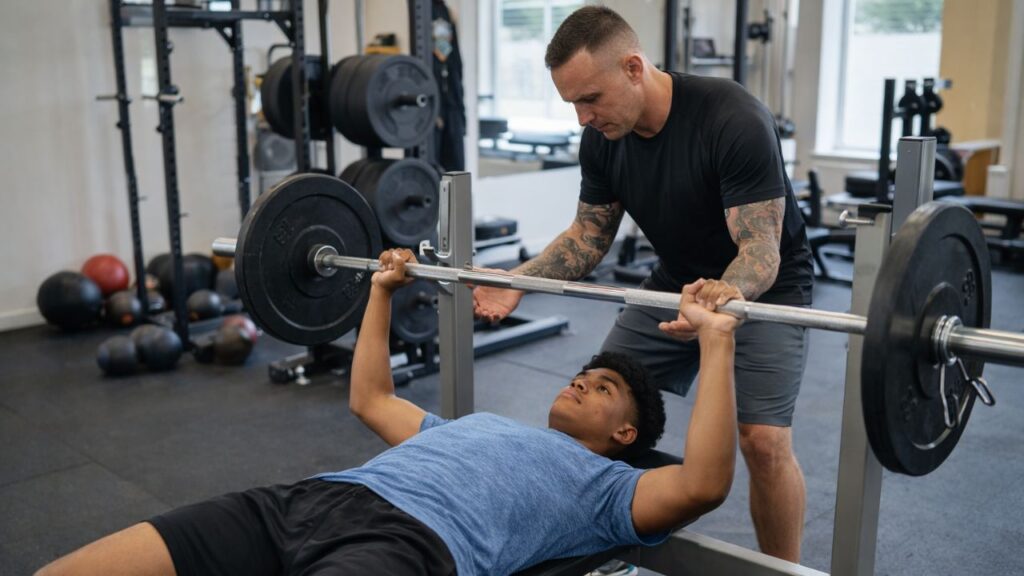
- Free weights: Moderate use of dumbbells, kettlebells, and barbells to build steady strength and muscular endurance, rather than focusing on maximum lifts.
- Partner and group drills: Working with others adds resistance and helps improve balance, building practical strength through shared movement.
- Machines: Used at a controlled pace, machines help target specific areas for strength, especially when focusing on stability and precise load management.
As strength becomes a skill rather than just a score, your training becomes more engaging and sustainable.
Training Frequency and Session Duration
For beginners, a practical training schedule includes 2–3 sessions per week, each lasting 20–30 minutes. As your body adapts, you can extend your sessions to 45–60 minutes and increase frequency. The key is to ensure your final repetition is challenging yet controlled, with proper technique and no strain.
General fitness guidelines align well with athletic gymnastics: strength training for all major muscle groups at least two times per week, with around 150–300 minutes of moderate aerobic activity or a mix of higher-intensity cardio. Athletic gymnastics fits perfectly into the strength portion of these recommendations.
Sample Weekly Training Plan
| Experience Level | Recommended Weekly Training Structure |
|---|---|
| Beginner | Train 2–3 days per week, 20–30 minutes per session. Focus on full-body workouts, performing 1–2 sets per exercise to build strength and correct technique. |
| Intermediate / Advanced | Train 3–4 days per week, 45–60 minutes per session. Include full-body or split routines, performing 2–4 sets per exercise while allowing 48 hours of recovery between intense sessions for the same muscle groups. |
Personally, I consider the “last clean rep” as my safety rule. If my form begins to slip, I stop the set, even if I feel like I can push further.

Recovery, Sleep, and Nutrition: Key to Progress
Muscle-building benefits are only realized when recovery is given the proper attention. Most adults perform best with at least seven hours of sleep per night, with many people thriving on 7–9 hours. Quality sleep supports coordination, energy, and motivation.
Between sessions, muscles and connective tissues need time to recover. Therefore, it’s recommended to leave about 48 hours between demanding sessions for the same muscle groups. Light activities such as walking or gentle stretching on rest days help maintain mobility without leading to fatigue.
For nutrition, simplicity works well. Most active individuals benefit from 1.4–2.0 grams of protein per kilogram of body weight per day, spread across meals. This typically means 20–40 grams of protein per meal. When combined with proper hydration and balanced meals, this supports consistent training.
- Aim for 7–9 hours of consistent sleep each night.
- Alternate harder and lighter training days to protect your joints and tendons.
- Include a source of protein in each meal.
- Incorporate light movement or stretching on rest days to aid recovery.
In my experience, treating recovery as part of training, rather than as downtime, improves progress. By planning for sleep, nutrition, and gentle movement just like workouts, both gym performance and everyday comfort improve together.
How Athletic Gymnastics Supports Daily Life
Athletic gymnastics does more than build visible strength. A well-structured exercise program can improve balance and movement efficiency, potentially reducing the risk of slips and falls, particularly as we age. When the entire body works together smoothly, you’ll feel more stable on stairs, more confident on uneven surfaces, and less fatigued from everyday tasks.
Ultimately, this approach aims to develop a body you can count on: stable joints, reliable grip strength, and calm breathing under effort. With regular functional strength work, sensible resistance training, and a focus on movement quality, training becomes a form of self-care. This strength carries over into daily life, long after leaving the gym.