Yoga offers a powerful way to build strength, enhance flexibility, and support mental calm without leaving your home. Whether you are just starting out or already experienced, adding these 15 foundational yoga poses to your routine can help create a balanced and effective practice. Each movement focuses on improving body awareness, increasing mobility, and encouraging mindfulness, making it easier to stay consistent even with a busy schedule.
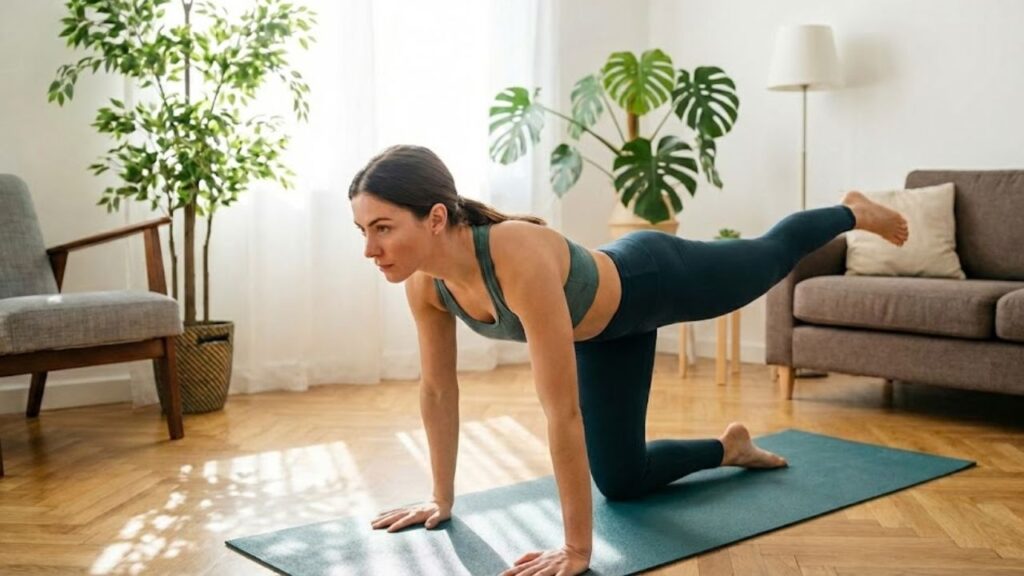
1. Mountain Pose (Tadasana)
Why it matters: This grounding posture supports alignment, balance, and posture awareness.

- Stand upright with feet hip-width apart.
- Activate your thighs and gently lift your chest.
- Rest your arms by your sides, palms facing forward.
- Ground through your feet while lengthening the spine.
Benefits: Improves posture, strengthens legs and core, and enhances stability.

2. Downward-Facing Dog (Adho Mukha Svanasana)
Why it matters: A full-body stretch that energizes muscles and improves mobility.
- Begin on hands and knees with proper alignment.
- Tuck toes and lift hips to form an inverted V shape.
- Press palms firmly and work heels toward the floor.
Benefits: Stretches the back and legs, strengthens the arms and core, and supports circulation.
3. Warrior I (Virabhadrasana I)
Why it matters: A strong standing pose that develops power and focus.
- Step feet wide apart from a standing position.
- Turn one foot outward and bend the front knee.
- Lift arms overhead and open the chest.
Benefits: Builds leg and core strength, improves balance, and opens the chest and shoulders.
4. Warrior II (Virabhadrasana II)
Why it matters: Encourages endurance while strengthening the lower body.
- Open hips and shoulders to the side from Warrior I.
- Extend arms parallel to the floor, palms down.
- Maintain a strong bend in the front knee.
Benefits: Strengthens legs and shoulders, increases stamina, and stretches hips.
5. Child’s Pose (Balasana)
Why it matters: A calming posture that promotes rest and release.
- Kneel and sit back on your heels.
- Fold forward with arms extended, forehead on the mat.
- Breathe slowly and deeply.
Benefits: Eases tension, calms the nervous system, and stretches the spine and hips.
6. Cobra Pose (Bhujangasana)
Why it matters: A gentle backbend that supports spinal mobility.
- Lie face down with hands under shoulders.
- Press lightly into palms and lift the chest.
- Keep shoulders relaxed and elbows soft.
Benefits: Strengthens the lower back, opens the chest, and improves flexibility.
7. Seated Forward Fold (Paschimottanasana)
Why it matters: A deep stretch that encourages relaxation and release.
- Sit with legs extended straight.
- Lengthen the spine on an inhale.
- Fold forward gently on the exhale.
Benefits: Stretches hamstrings and back, reduces stress, and improves flexibility.
8. Bridge Pose (Setu Bandhasana)
Why it matters: Strengthens the back body while opening the chest.
- Lie on your back with knees bent.
- Press feet into the floor and lift hips.
- Engage glutes and core gently.
Benefits: Strengthens glutes and legs, opens shoulders, and supports spinal health.

9. Triangle Pose (Trikonasana)
Why it matters: Combines strength and stretch in a single posture.
- Stand wide and turn one foot outward.
- Extend arms and hinge forward.
- Reach one hand down while the other lifts.
Benefits: Improves balance, stretches hips and spine, and strengthens legs.
10. Downward-Facing Dog Split (Eka Pada Adho Mukha Svanasana)
Why it matters: Builds balance while deepening flexibility.
- Start in Downward-Facing Dog.
- Lift one leg upward with hips steady.
- Engage the core for control.
Benefits: Stretches legs, strengthens arms and core, and enhances coordination.
11. Plank Pose (Phalakasana)
Why it matters: A foundational pose for total-body strength.
- Begin in a push-up position.
- Align body in one straight line.
- Hold while engaging the core.
Benefits: Strengthens core and limbs, improves posture, and tones muscles.
12. Pigeon Pose (Eka Pada Rajakapotasana)
Why it matters: A deep stretch for tight hips and glutes.
- Bring one knee forward from tabletop.
- Extend the opposite leg behind you.
- Lower the chest to deepen the stretch.
Benefits: Releases hip tension, stretches glutes, and supports pelvic flexibility.
13. Crow Pose (Bakasana)
Why it matters: Builds strength and confidence through balance.
- Begin in a low squat.
- Place hands on the floor and bend elbows.
- Lift feet and balance on hands.
Benefits: Strengthens arms and core, improves coordination, and sharpens focus.
14. Happy Baby Pose (Ananda Balasana)
Why it matters: Encourages relaxation and gentle release.
- Lie on your back and draw knees in.
- Hold the outer edges of your feet.
- Gently lower knees toward the floor.
Benefits: Eases lower back tension, stretches inner thighs, and promotes calm.
15. Shavasana (Corpse Pose)
Why it matters: Allows the body and mind to fully rest.
- Lie flat with arms relaxed by your sides.
- Close your eyes and focus on breathing.
- Release all remaining tension.
Benefits: Reduces stress, supports recovery, and enhances mental clarity.