Healthy digestion plays a key role in daily comfort, steady energy, and overall well-being. When your digestive system functions smoothly, meals feel lighter, metabolism remains active, and issues like bloating or discomfort are less frequent. What many people overlook is the connection between movement, posture, and breathing and how they influence digestion. Yoga includes specific postures that gently massage internal organs, improve abdominal circulation, and stimulate the nervous system in ways that naturally support digestive function. Practicing targeted yoga poses on a regular basis can help ease indigestion, reduce gas, and improve nutrient absorption.
Digestive balance depends on the coordination of movement, posture, and breath. Sitting or lying in a slouched position compresses the abdominal area, which can slow digestion. Gentle stretches and twists create space in the torso, allowing organs such as the stomach, liver, and intestines to operate with less restriction. Deep, controlled breathing further enhances this process by increasing oxygen flow and activating the vagus nerve, which plays an essential role in regulating digestive muscle contractions.

Below are four effective yoga poses that support digestion from different perspectives. Each posture engages core muscles and internal organs to encourage efficient digestive activity. Together, these poses combine stimulating twists and soothing stretches that help relieve tension and promote healthy movement within the digestive tract.

Seated Spinal Twist to Encourage Intestinal Activity
The Seated Spinal Twist is widely recognized for its digestive benefits. Twisting motions help release stagnant energy and increase blood flow to the abdominal organs. This action supports peristalsis, the wave-like muscle contractions that move food through the digestive system.
To practice, sit comfortably with your legs extended forward. Bend your right knee and place your right foot outside your left thigh. Inhale to lengthen your spine. As you exhale, rotate your torso to the right, resting your left elbow against the outside of your right knee for support. Keep your shoulders relaxed and gently turn your gaze over your right shoulder. Hold the position for 30 to 60 seconds, breathing slowly. Return to center and repeat on the opposite side.
This pose stimulates the liver and kidneys while encouraging deeper activity in the lower intestines. It also stretches the hips and lower back, areas that often tighten after prolonged sitting. Practiced after meals or during the afternoon, it can help relieve bloating and support a more consistent digestive rhythm.
Cat Cow Pose for a Gentle Digestive Massage
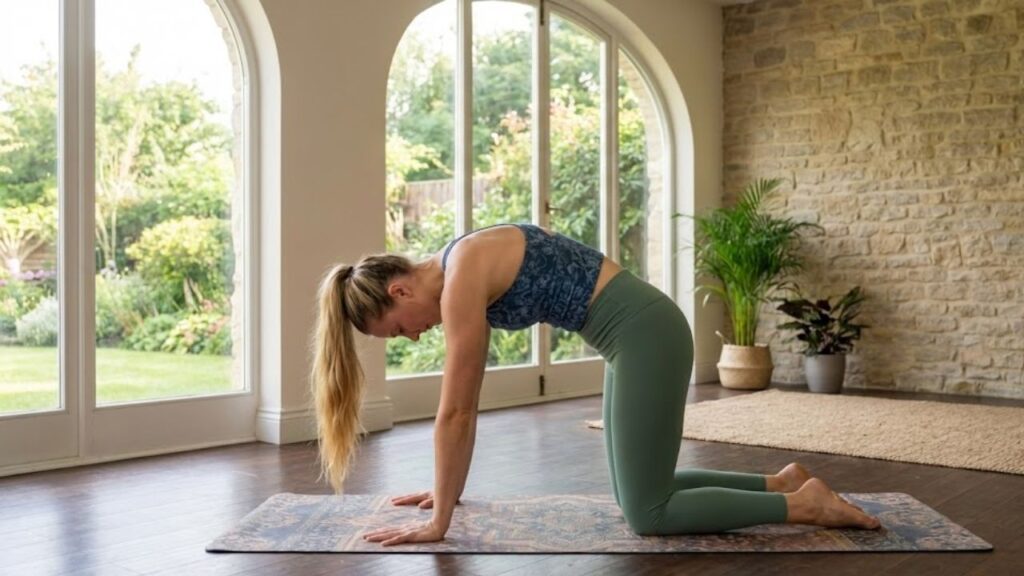
Cat Cow is a simple flowing movement that warms the spine while gently compressing and stretching the abdomen. This rhythmic motion improves circulation to digestive organs and strengthens core engagement.
Start on your hands and knees, aligning wrists under shoulders and knees under hips. On an inhale, allow your belly to soften toward the floor, lift your chest, and tilt your tailbone upward into Cow Pose. As you exhale, round your spine, draw your navel inward, and tuck your tailbone into Cat Pose. Continue flowing between these positions for 10 to 15 slow breaths.
The alternating movement increases blood flow through the abdominal region, supporting smoother digestion. Cat Cow also releases tension in the lower back, which can help ease discomfort often associated with digestive strain. Practicing this sequence in the morning or after long periods of sitting can refresh the body and reduce digestive sluggishness.
Wind Relieving Pose to Reduce Gas and Bloating
Wind Relieving Pose focuses directly on relieving gas and bloating. By gently compressing the abdomen, this posture helps release trapped gas and encourages movement within the colon.
Lie flat on your back with both legs extended. Inhale and draw your right knee toward your chest. Interlace your hands around your shin and gently pull the knee closer. Keep your left leg relaxed on the floor. Hold for 30 to 45 seconds while breathing deeply. Release and switch sides. For added effect, draw both knees toward your chest and hold for the same duration.

This pose helps ease tension in the lower abdomen and supports the natural movement of waste through the digestive tract. It also stretches the hips and lower back, which can relieve discomfort that may be mistaken for digestive pain. Practicing this pose after meals or in the evening can help minimize digestive discomfort and support restful sleep.
Bridge Pose for Digestive Activation and Calm
Bridge Pose is often associated with spinal flexibility, but it also provides valuable digestive support. Lifting the hips creates a gentle stretch along the front of the body while allowing the abdominal area to release, increasing circulation and stimulating organ function.
Begin lying on your back with knees bent and feet flat on the floor. Place your feet hip-width apart and rest your arms alongside your body. Press firmly into your feet and arms as you lift your hips upward. Keep your chest open and gently draw your shoulder blades together. Hold the pose for 30 to 60 seconds, breathing steadily, then lower down with control.
Bridge Pose promotes stimulation of the abdominal organs and encourages deeper breathing. Deeper breaths increase oxygen delivery and activate the parasympathetic nervous system, which supports digestion. A calm nervous system allows digestive processes to function more efficiently. Practicing this pose in the evening can help the body relax and maintain digestive regularity.
Simple Ways to Add These Poses to Your Routine
Incorporating these four yoga poses into your daily schedule requires minimal time while offering noticeable digestive benefits. The following sequence can be practiced after meals or whenever digestive discomfort arises:
- Begin with Cat Cow for two to three minutes to warm the spine and improve circulation.
- Move into Seated Spinal Twist on each side for one to two minutes to stimulate intestinal movement.
- Practice Wind Relieving Pose to release gas and reduce bloating.
- Finish with Bridge Pose for abdominal stimulation and relaxation.
Consistent practice of this sequence can help regulate bowel movements, reduce discomfort, and support a smoother digestive rhythm. For best results, combine yoga with mindful eating, proper hydration, and light activity such as walking after meals. Drinking water before practice can also support circulation and help flush stagnant fluids from the digestive system.
Breathing is a central element of digestion-focused yoga. Deep inhalations through the nose expand the diaphragm and relieve pressure on abdominal organs. Full exhalations help release waste gases and signal the nervous system to relax. When breath and movement are coordinated, the body naturally shifts into a state that supports healing and digestive efficiency.
Digestive wellness influences energy levels, mood, and overall physical comfort. Practicing these four yoga poses regularly can provide both immediate relief and lasting benefits. With consistency, the digestive system becomes more responsive and less prone to discomfort. By committing to mindful movement and breath, your digestive health reflects the care and attention you give your body each day.