Funding & Insurance
Assistive Equipment Funding: Questions Before Buying a Device
Match an equipment choice to the person’s needs and the funding programme’s purchase rules.
Archive edition: 17 August 2026 · assigned for archive organisation
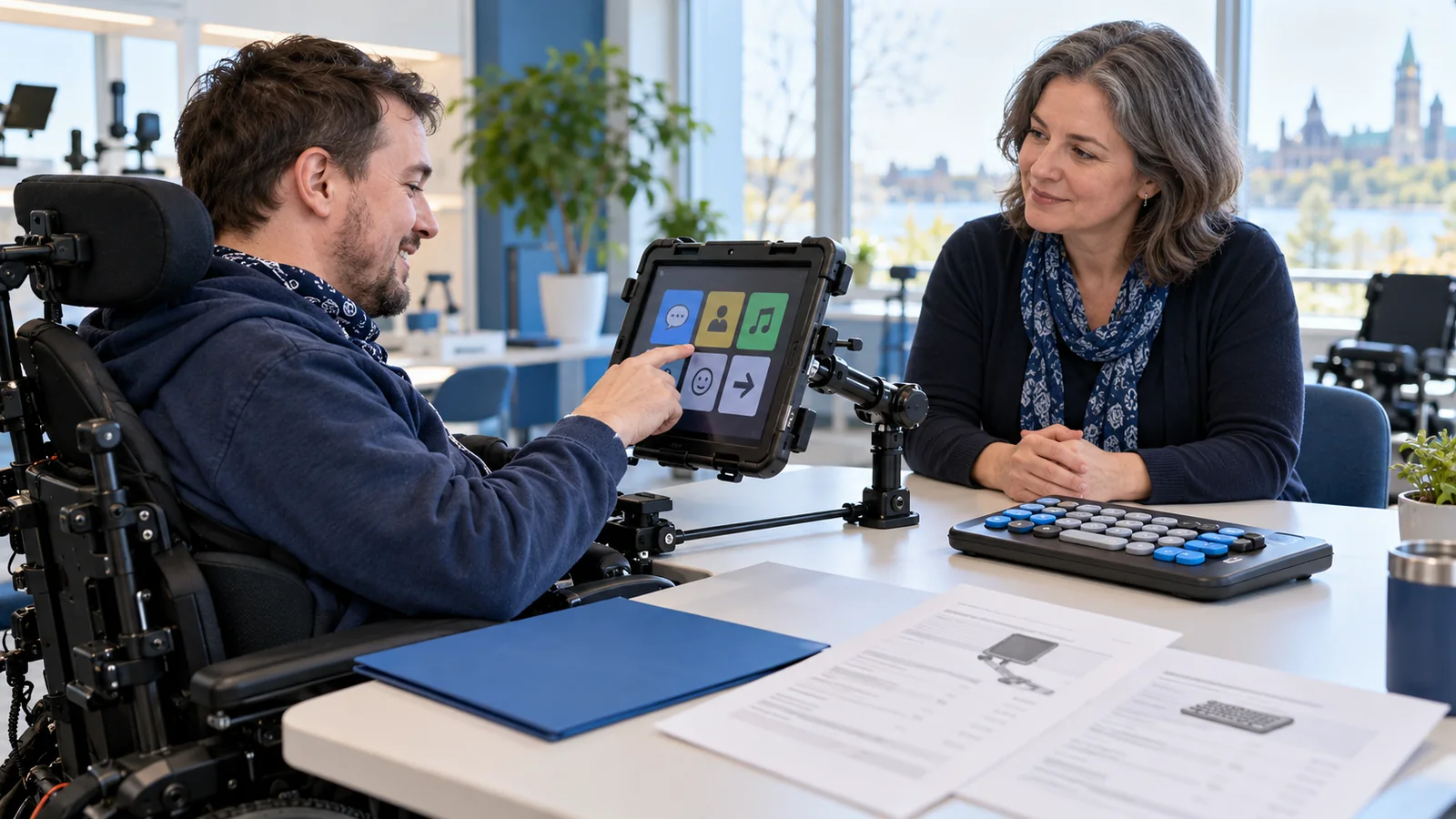
A device can be useful without being eligible for a particular funding programme. Before buying assistive equipment, check both questions: does it meet the person’s needs, and does the funding route accept this item, supplier and purchase process? A sale ending tomorrow is not a reason to skip those checks.
This guide offers a practical set of questions, with provincial examples showing why the details matter. It is not a device prescription or an approval decision. Include the person who will use the equipment throughout selection, trial and follow-up.
At a glance
- Describe the task and access need before choosing a product.
- Confirm assessment, authorisation, supplier and purchase rules.
- Compare the total cost, including training, accessories and maintenance.
Start with the task the equipment must support
Write a plain-language description of the difficulty and the setting. “I need to communicate with unfamiliar people at work” is more useful than “I need the newest tablet”. Include how the person currently manages, what is tiring or unreliable, and what they want to be able to do differently.
Consider where the device will be used: home, school, work, outdoors or several places. Ask about transport, charging, storage and compatibility with existing equipment. A product that works well during a short demonstration may need different positioning or support during a full day.
Keep preferences in the record. Size, sound, appearance, portability and the effort needed to operate a device can affect whether it is usable. Funding eligibility does not settle those questions, and a person’s reluctance should prompt discussion rather than be dismissed as a failure to cooperate.
Find a funding route that matches the purpose
Equipment funding may be connected to health, education, employment, insurance or a disability-support agreement. Ask the relevant programme what purpose it funds and whether another source must be considered first. Avoid assuming that an autism diagnosis makes every communication or sensory product eligible.
Ontario’s communication-aids guidance describes a specific Assistive Devices Program pathway with eligibility conditions, assessment and application steps. It distinguishes covered device categories from exclusions, and includes particular arrangements for registered businesses and certain non-registered purchases. It is not a general promise to pay for any consumer tablet.
Use such pages as the starting point for an item-specific enquiry. Give the exact proposed model and purpose, then ask which application process applies. If two programmes might contribute, ask how they coordinate and what evidence each requires. Do not submit the same cost as fully unpaid to both.
Resolve the assessment and approval sequence
Alberta Aids to Daily Living guidance requires an assessment and authorisation for its benefits and says it does not reimburse clients who independently purchase equipment or supplies. Approved vendors are part of its process. This illustrates why “buy now and claim later” is unsafe as a general assumption.
Ask who is authorised to assess your request, whether a referral is needed and what the assessment itself costs. A clinician’s recommendation and a programme’s funding decision may be separate steps. Confirm which document permits an order, especially if a vendor offers to arrange delivery before the funding decision.
Other programmes can have exceptions. The current BC autism-funding equipment page distinguishes items requiring justification from specified exceptions and gives agreement-related spending rules. Check the current item and agreement instructions rather than applying one approval rule or percentage to every purchase.
- Try: explore the task, fit and available trial options.
- Verify: confirm the item, supplier, authorisation and personal share.
- Plan: arrange training, receipts, maintenance and a review after delivery.
Request an itemised quote
A useful quote names the device, model, essential accessories, setup, training, tax and delivery separately. Ask whether a mount, protective case, switch or software licence is essential for the intended use. An apparently cheaper device can cost more once the necessary components are added.
Separate one-time costs from recurring charges. Ask what happens when a subscription ends, whether updates are included and whether the device remains usable without an internet connection. These are product questions to verify with the supplier, not assumptions to make from a funding brochure.
Obtain a clear explanation of your own financial responsibility. An approved maximum might not cover optional upgrades or every part of the quote. Ask when your contribution is due and what happens if the application is refused, reduced or delayed. Do not rely on a verbal estimate that leaves these conditions unexplained.
| Decision | Question | Why it matters |
|---|---|---|
| Suitability | Can the person try the proposed setup? | A demonstration may reveal positioning or access problems. |
| Funding | Is this exact item and supplier accepted? | A similar product’s approval may not apply. |
| Timing | What must happen before an order or deposit? | Early spending may be ineligible. |
| Total cost | Which charges remain ours? | Accessories and recurring fees can change affordability. |
| Support | Who handles training, repair and loan equipment? | Delivery alone does not ensure continued access. |
Clarify trial, ownership and return arrangements
If a trial or loan is available, ask how long it lasts, who sets it up and how feedback will be collected. Try the equipment in realistic situations where possible. Record what works, what is difficult and what adjustment might help; do not measure success only by how quickly someone learns the controls.
Ask whether the eventual device is owned, leased or loaned, and what happens when it is no longer needed. Check the return policy for customised items and opened software before purchase. A retail return policy may not apply in the same way to a specially configured or funded device.
Clarify responsibility for damage, loss, batteries, repairs and replacement. Ask whether there is a temporary option during repairs and keep the service contact somewhere accessible. Funding for the initial device does not automatically answer every future maintenance question.
Plan delivery and follow-up
Arrange enough time for setup and instruction in a format the person can use. Request written or visual steps if helpful, and make sure supporters understand how to assist without taking over. For communication equipment, include everyday communication partners in training with the user’s agreement.
Keep the approval, quote, invoice, proof of payment and serial number securely. Check the delivered model and accessories against the approved list. If something differs, contact the supplier and funding administrator before assuming a substitution is acceptable.
Schedule a practical review after the person has used the equipment. Ask whether it supports the intended task and whether the environment, positioning or training needs adjustment. If the device does not work for the person, raise that promptly while any trial, return or service options remain available.
Common questions
Does a diagnosis guarantee equipment funding?
No. Programmes have their own eligibility, purpose, assessment and item rules. Ask about the specific request.
Can I buy during a sale and apply later?
Check the funding sequence first. A lower retail price does not remove authorisation or purchase-timing requirements.
Is every tablet a covered communication aid?
No. The proposed use, assessment, device and programme criteria matter. A product category alone is insufficient.
Must every programme use the same approval process?
No. Some have defined exceptions or different purchasing models. Read the current rules for your exact route.
Should the person using the device attend the assessment?
Plan meaningful participation and accessible communication. Their experience and preferences are central to selecting a usable setup.
What if the recommended device costs more than funding?
Ask about the personal share, appropriate alternatives and any permitted additional funding before committing.
Can I change suppliers after approval?
Ask the administrator whether the approval must be amended. Do not assume that supplier conditions transfer automatically.
Are repairs included?
Check the warranty, programme and supplier terms separately. Ask who pays and what support exists during a repair.
What if the device is difficult to use?
Contact the assessment or support team promptly to review fit, settings, training and any trial or return options.
Which documents should I retain?
Keep the assessment or recommendation, funding decision, quote, paid invoice, warranty and service contact in a secure place.
Sources
Primary provincial programme guidance checked on 22 October 2026, including Ontario’s communication-aids page in the browser. Examples are jurisdiction-specific; current agreements and item rules govern individual purchases.