Autism & Neurodiversity
Sound Sensitivity, Hyperacusis and Misophonia: Understanding the Vocabulary
Clarify sound-sensitivity vocabulary and describe the actual experience before deciding on a label.
Archive edition: 2 May 2026 · assigned for archive organisation
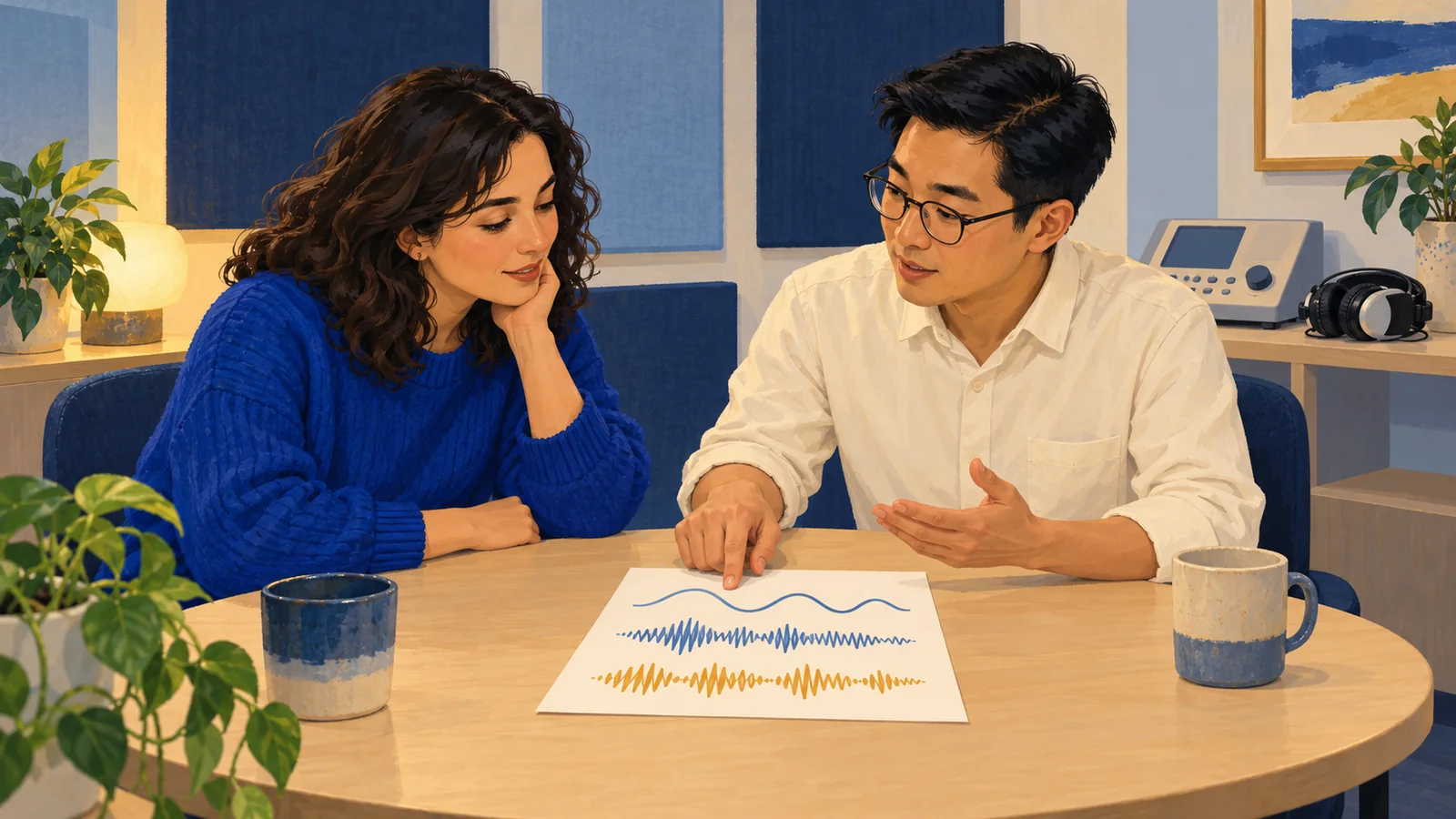
“Sound sensitivity” can describe several different experiences. Someone may find ordinary sounds painfully loud, react strongly to a particular repeated sound, or feel anxious about a sound that might happen. The vocabulary can help a conversation, but recognising a description online does not establish a diagnosis.
This guide explains commonly used terms and offers a way to describe your experience to a professional. It does not provide hearing tests, sound exposure exercises or a treatment plan. If everyday sounds feel excessively loud or painful, discuss this with a healthcare professional rather than trying to work out the cause from a vocabulary list.
At a glance
- Sound sensitivity is a broad description; ask what a clinician means by a specific term.
- Hyperacusis and misophonia are not interchangeable words.
- Describe the sound, your response, the setting and the effect on daily activities.
- Seek individual advice about assessment and management; do not force sound exposure to test a label.
Why the vocabulary matters
Clear language helps people understand the question being asked. “The hand dryer hurts my ears” is different information from “I become intensely distressed by this particular tapping pattern.” Both deserve attention, but the words suggest different points to explore rather than a single universal solution.
A 2022 audiology tutorial by Henry and colleagues notes inconsistency in the use of sound-tolerance terminology and recommends defining terms so that patients and professionals share an understanding. The summary here uses its published abstract, not a claim that every clinician uses exactly the same classification.
When you hear a new term, ask the person using it to explain the meaning in your case. You can also ask whether it is a confirmed clinical conclusion, a working possibility or simply a description being used while more information is gathered.
A practical vocabulary map
| Term | Main idea in the sources below | Useful question |
|---|---|---|
| Hyperacusis | Ordinary sounds can seem excessively loud, uncomfortable or painful | How should loudness or pain be assessed? |
| Misophonia | Specific sound patterns or meanings can prompt strong distressing responses | How does the particular trigger and context matter? |
| Phonophobia | Fear or anxiety related to sound; usage varies by specialty | What does this term mean in this consultation? |
| Sound or noise sensitivity | A broader description whose intended meaning needs clarification | Which part of the experience are we describing? |
The table is a starting point for communication. It cannot tell you which explanation fits, whether more than one concern is present or what intervention would be appropriate. Do not use it to categorise another person solely from how they react in one situation.
Hyperacusis: ask about loudness and discomfort
The NHS hyperacusis page, reviewed in May 2026, describes everyday sounds seeming much louder than expected and sometimes causing pain. It advises seeing a doctor when ordinary noises feel too loud or painful, with possible referral for specialist assessment.
For an appointment, describe what happened in your own language. Note whether the experience was new, whether it affected one or both ears, and which activities became difficult. You do not need to calculate a sound threshold or reproduce the uncomfortable sound to make the account legitimate.
Ask what assessment is being proposed and how you can communicate discomfort during it. If you have an existing plan, ask whom to contact about a change in symptoms. Avoid deciding that discomfort is harmless because another person says the same sound is not loud to them.
Misophonia: the particular trigger matters
The 2022 consensus definition developed by Swedo and colleagues describes reduced tolerance to particular sounds or associated stimuli, with strong emotional, bodily or behavioural responses. The pattern or personal meaning of a trigger matters; loudness alone does not explain the response.
The authors developed a working definition through a structured expert-consensus process. They explicitly expect it to be tested and revised as research develops. This makes it useful vocabulary, not a standalone diagnostic test or proof that any particular treatment works.
If a particular sound troubles you, describe the trigger and what you experience without judging yourself or the person producing it. A record might distinguish the immediate response, the effect on the activity and what communication helped afterward. It should not become a list of people to blame.
Phonophobia and broader descriptions
Phonophobia is often used for fear or anxiety associated with sound. The audiology tutorial cited above also points out that the term is used differently in neurology, including in discussions of migraine. Ask for clarification when the same word appears in different appointments or articles.
Similarly, “noise sensitivity” may be used casually to describe feeling overwhelmed in a busy setting, while a professional may use it more specifically. You do not need to settle the vocabulary before seeking help. Explain the experience first and ask the clinician how they would describe it.
Autism may be relevant background information, but it should not end the conversation about a new, painful or disruptive sound-related difficulty. Provide relevant history and let the professional explain what it does and does not establish in the assessment.
Prepare a short description of the experience
- 1. Describe Name the sound, setting and your experience in ordinary language.
- 2. Explain Say how it affects a meaningful activity and what has changed.
- 3. Clarify Ask about assessment, the meaning of terms and an individual next step.
Use naturally occurring examples. In a fictional account, Priya writes that a repeated sound during a meeting makes it difficult to follow the discussion. She notes what the sound was, what she felt and how the meeting was affected. She does not use a phone recording to provoke the same response at home.
Bring questions about practical participation as well as terminology. Could the appointment use a quieter waiting arrangement? How should a change in symptoms be reported? What should you explain to a teacher or employer while assessment is underway? The answers should fit the person and setting.
Keep management individual
The NHS page cautions against constant use of ear protection for hyperacusis and against avoiding all sound. That does not mean supporters should abruptly remove a person’s headphones or force uncomfortable exposure. Ask a qualified professional about appropriate protection and an individual management plan, especially when sound causes pain.
Generic online audio exercises cannot determine a suitable starting point, intensity or response to symptoms for you. Ask about the exact purpose, evidence, qualifications and review process for any proposed approach. A meaningful plan should explain how concerns or discomfort are handled and who can advise about changes.
Common questions
Are hyperacusis and misophonia the same thing?
No. The sources distinguish concerns related to perceived loudness or pain from responses associated with specific triggers. A professional needs to understand the actual experience. The distinction is useful for questions, but this article cannot decide which term applies to you.
Can a quiet sound still be distressing?
The misophonia consensus definition describes responses that are not explained simply by loudness. Tell the professional about the particular sound and context. Another person’s judgment that it is quiet does not describe your experience or settle the assessment question.
Does covering the ears identify a particular condition?
An observed action alone does not establish the reason behind it. Ask what the person is experiencing through an accessible communication method and describe the setting. A clinician can consider that information alongside the wider history and assessment.
Should I play example sounds to check my reaction?
Do not create distressing exposure as a self-test. Bring a description of experiences that have already happened and ask what assessment is appropriate. If a professional proposes testing, ask about its purpose and how to signal discomfort.
What should I say when booking an appointment?
Explain that sounds are affecting daily activities and describe loudness, pain or other responses in your own words. Mention if the issue is new or changing. Ask the service what information to bring and what accommodations can help you attend.
Should I stop using hearing protection immediately?
Ask for individual advice rather than making an abrupt change from a general article. Explain where, why and how often you use it. Discuss appropriate protection, daily participation and any treatment plan with a professional who understands the concern.
Does autism explain every sound-related difficulty?
It is relevant history to share, but it does not answer every question about pain, change or disruption. Describe the specific concern and ask what assessment is needed. Avoid dismissing a new problem as something the person must simply tolerate.
Can this article tell me which treatment will work?
No. Vocabulary and an individual treatment decision are different matters. Ask about the proposed approach, evidence for the intended goal, possible unwanted effects and review arrangements. A named condition or research definition does not guarantee a particular outcome.
How can family members respond helpfully?
Listen to the person’s description, avoid deliberately making a trigger sound and agree how to communicate during a difficult moment. Ask what practical help is wanted. Support a professional discussion where needed without taking over the person’s account.
What if different professionals use different words?
Ask each to define the term and explain whether they mean a confirmed finding or a possibility. Bring relevant reports to the discussion. The useful aim is a shared understanding of the experience, assessment and plan rather than matching labels without explanation.
Sources
Opened and checked on 22 October 2026. This is a vocabulary and appointment-preparation guide, not an assessment or exposure programme.
- NHS: Noise sensitivity (hyperacusis) — patient information reviewed 11 May 2026.
- Swedo and colleagues: Consensus Definition of Misophonia — original Delphi study, 2022; definition and limitations read.
- Henry and colleagues: Sound Tolerance Conditions — 2022 audiology tutorial; published abstract consulted for terminology and inconsistent usage.