Assistive Technology
Noise-Cancelling Headphones and Hearing Protection: Different Purposes
Separate sensory comfort, audio listening and protection from hazardous noise before choosing equipment.
Archive edition: 3 September 2026 · assigned for archive organisation
On this page
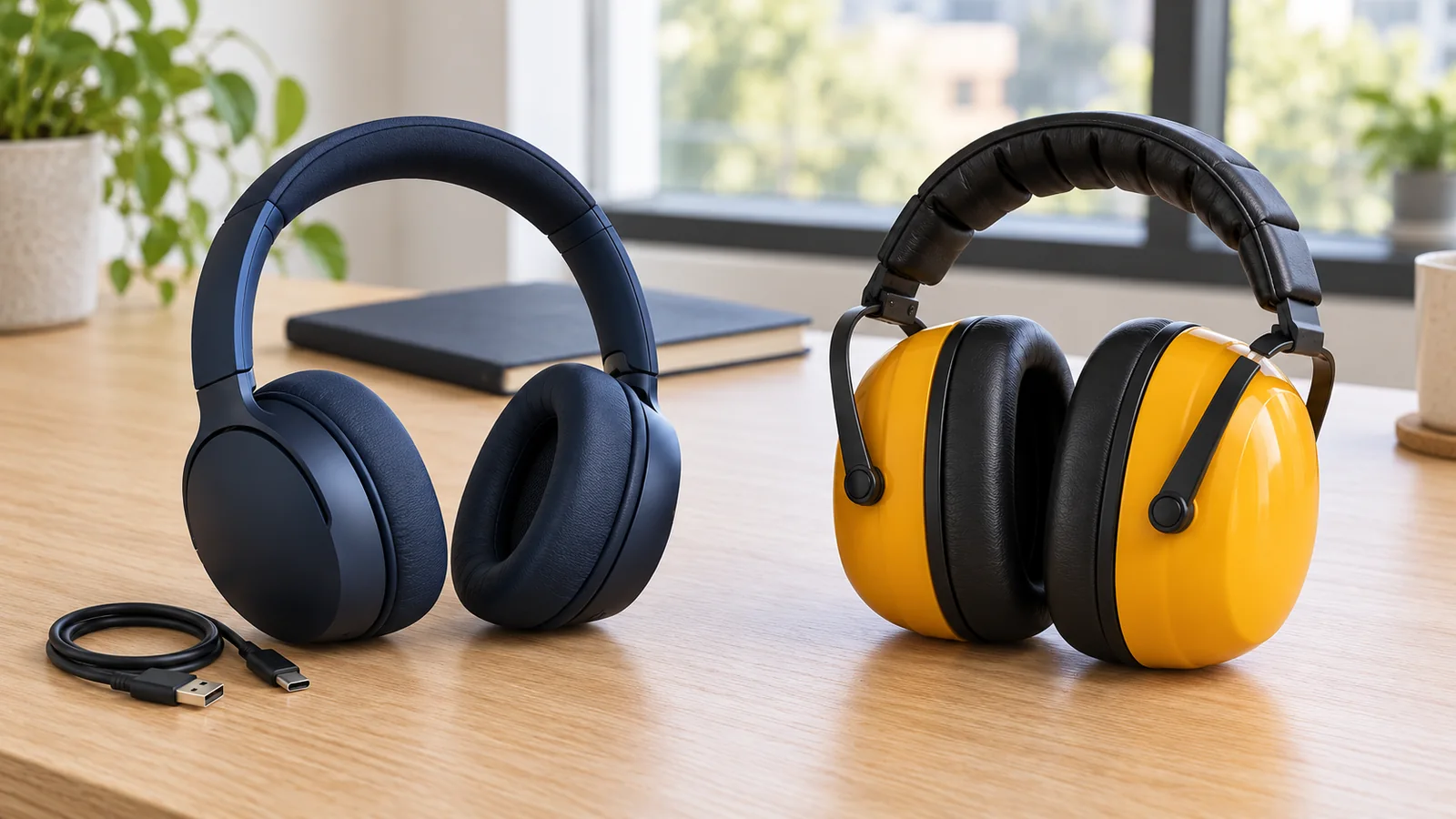
Two products can look similar while serving different purposes. Consumer noise-cancelling headphones may make listening or a busy setting more comfortable for some people. Hearing protectors are selected to reduce exposure to potentially damaging sound. A comfortable experience does not, by itself, establish that hearing is protected.
This guide explains that distinction and offers questions for a school, workplace, audiologist or supplier. It does not prescribe equipment for an individual, calculate a safe exposure or certify any pictured product. The right decision begins with the setting and purpose, followed by the exact product’s documentation and appropriate advice.
Start with the purpose, not the shape
Describe the situation before comparing products. Is a student trying to concentrate while classmates talk? Is someone listening to an audiobook? Is a worker entering an area where hearing protection is required? These questions lead to different decisions even if every option has two ear cups and a headband.
Ask the person what they experience and what they want to change. “The room feels overwhelming” and “I cannot hear the lesson clearly” are different problems. Equipment may be one part of the response, alongside changes to the environment or how information is provided.
Keep comfort and hazard assessment separate. A person may find a sound very uncomfortable without the situation being equivalent to an occupational noise hazard. Conversely, feeling comfortable is not proof that an exposure is harmless. Do not use apparent tolerance as a substitute for an appropriate assessment.
Understand what noise cancellation does not establish
NIOSH’s hearing-protection guidance explains that active noise cancellation uses electronics to reduce noise and warns against treating such headphones or earbuds as hearing protection unless they carry an appropriate noise-reduction rating. This occupational guidance is a reason to check the product’s intended purpose; it is not a recommendation to buy whichever device displays the largest number.
Marketing terms such as “noise cancelling,” “noise isolating” and “ear defenders” do not answer every practical question. Ask the supplier for the exact model, intended use and supporting instructions. A photograph, marketplace title or general claim about blocking sound is insufficient for a safety-related choice.
If protection is required in a workplace or supervised practical activity, follow the responsible organization’s assessment and equipment process. Do not replace the specified arrangement with personal headphones simply because they feel quieter. Seek clarification from the responsible safety contact before the activity.
Compare questions across three common situations
| Situation | First question | What should not be assumed |
|---|---|---|
| Everyday sensory comfort | What does the person find helpful or uncomfortable? | One device will suit every sound or setting |
| Listening to audio | How will volume, listening time and access be managed? | Noise cancellation makes any listening level safe |
| Potentially hazardous noise | Who assesses exposure and specifies suitable protection? | Consumer headphones are an equivalent substitute |
| Lessons or conversations | How will essential information remain accessible? | The wearer can hear every spoken instruction |
| Equipment purchase | What does this exact model’s documentation establish? | Appearance or a marketing category proves suitability |
Use the table to organize a conversation, not to diagnose a hearing or sensory condition. If several purposes overlap, name each one. For example, an audiobook arrangement may need both accessible controls and a plan for hearing the teacher’s instructions.
Ask about fit and communication
The Canadian Centre for Occupational Health and Safety emphasizes appropriate selection, correct fit, compatibility and the ability to receive necessary communication or warning sounds. Its guidance also explains that laboratory ratings do not automatically describe the protection achieved in an actual workplace. Use the relevant safety process rather than subtracting a package rating from a phone reading yourself.
For an everyday comfort trial, ask practical questions: can the person put the device on, adjust it and remove it? Do they like the pressure and materials? Can they manage the controls using their usual access method? Record their feedback instead of judging success only by how long they keep it on.
Agree a respectful way to get attention. In a classroom, this might involve an accessible visual cue and written instructions arranged with the student. Do not assume that touching a person or removing their headphones without warning is an acceptable communication method.
Where protection is required, communication arrangements must remain consistent with the safety plan. A generic classroom suggestion cannot determine whether an alarm or spoken warning will be adequately perceived in a particular hazardous setting.
Keep audio listening in view
Reducing background noise and playing audio are separate functions. Ask whether the person needs both, and check what happens when audio starts, a call arrives or a different device connects. An unexpected volume change can make an otherwise workable routine difficult.
WHO’s safe-listening guidance links risk to sound level and exposure time. It recommends lower listening levels, breaks and available exposure-monitoring features, and notes that well-fitting noise-cancelling headphones can reduce the temptation to turn audio up in noisy surroundings. That does not make every volume setting safe or replace hearing protection where it is needed.
Review the actual device’s controls together. Know how to lower or stop the audio and how to recognize a change in settings. If the person reports persistent ringing or difficulty hearing, seek assessment from an appropriate health professional rather than trying to solve the problem by buying another headset.
- Define: identify comfort, listening and protection needs separately.
- Check: read the exact product information and involve the relevant professional or safety contact.
- Review: confirm access, communication and the person’s experience in the intended setting.
Prepare a useful everyday trial
For a non-hazardous comfort or learning trial, choose a familiar setting and ask the person how they would like to start and stop. Do not create loud exposure to test a product. Keep a record of the task, settings and feedback so that a later decision is based on something more useful than a brief shop demonstration.
Check practical ownership questions before paying: who maintains the equipment, which accessories are included, whether replacement parts are available and what the return conditions allow. If the device is shared, establish appropriate care using its instructions. Do not make modifications to equipment intended for hearing protection without suitable guidance.
Include an alternative when the device is unavailable or unwanted. This might be a quieter workspace, written information or an agreed break from the activity. The alternative depends on the person’s needs and setting; it should not depend on treating headphone use as a reward.
A practical example
In this fictional example, Sam uses consumer noise-cancelling headphones while reading in a busy study area. Sam finds them helpful and agrees with a tutor how to receive questions and instructions. They also identify a quieter table for days when wearing the headset feels uncomfortable.
Later, Sam joins a supervised workshop where hearing protection is required for a particular activity. Sam’s study headphones are not automatically accepted as a substitute. The workshop’s responsible safety contact checks the activity and provides the appropriate equipment and instructions.
The two arrangements serve different purposes. The successful study-room experience helps describe Sam’s preferences, but it does not establish protection in the workshop or eliminate the need for a separate safety process.
Common questions
Are noise-cancelling headphones hearing protection?
Not automatically. Check the exact product’s intended purpose and rating, and use the appropriate safety process wherever hearing protection is required.
Does feeling quieter mean an exposure is safe?
No. Comfort is useful feedback, but it does not measure exposure or establish the protection achieved by a device.
Can headphones help someone study?
Some people find them useful, while others prefer another arrangement. Trial the actual task and include comfort, communication and the person’s choice.
Should we choose the highest rating on a package?
Do not use a single number as the whole decision. Appropriate protection depends on the setting, fit and other requirements assessed through the relevant process.
Is noise cancellation enough to make loud music safe?
No. Audio level and listening time still matter. Use available controls and safe-listening guidance rather than assuming the feature removes risk.
Can a student hear every instruction while wearing headphones?
Do not assume so. Agree accessible ways to receive important information and check the arrangement with the student.
Should someone be made to keep a headset on?
For everyday comfort support, listen to their feedback and consider alternatives. In a hazardous setting, resolve equipment problems through the safety process before exposure.
Can we test protection by playing loud sounds?
No. Do not deliberately create hazardous exposure. Obtain the appropriate assessment and product guidance instead.
What if the person reports ringing or hearing difficulty?
Seek advice from an appropriate health professional. A shopping comparison cannot assess the cause or determine suitable care.
When should the arrangement be reviewed?
Review when the activity, environment, device or person’s experience changes, and whenever the responsible safety or clinical professional advises.
Sources and scope
NIOSH and CCOHS provide occupational hearing-protection context; WHO provides general safe-listening guidance. The comparison questions and fictional example are editorial material. No individual exposure, product performance or clinical condition was assessed.
- NIOSH: Provide hearing protection — noise cancellation and protection distinction.
- CCOHS: Hearing protectors — selection, fit and workplace context.
- WHO: Safe listening — listening levels, exposure and hearing concerns.