Inclusive Education
Planning Inclusive School Trips With the Student
Plan travel, activities, communication and breaks with the student before a school trip.
Archive edition: 12 June 2026 · assigned for archive organisation
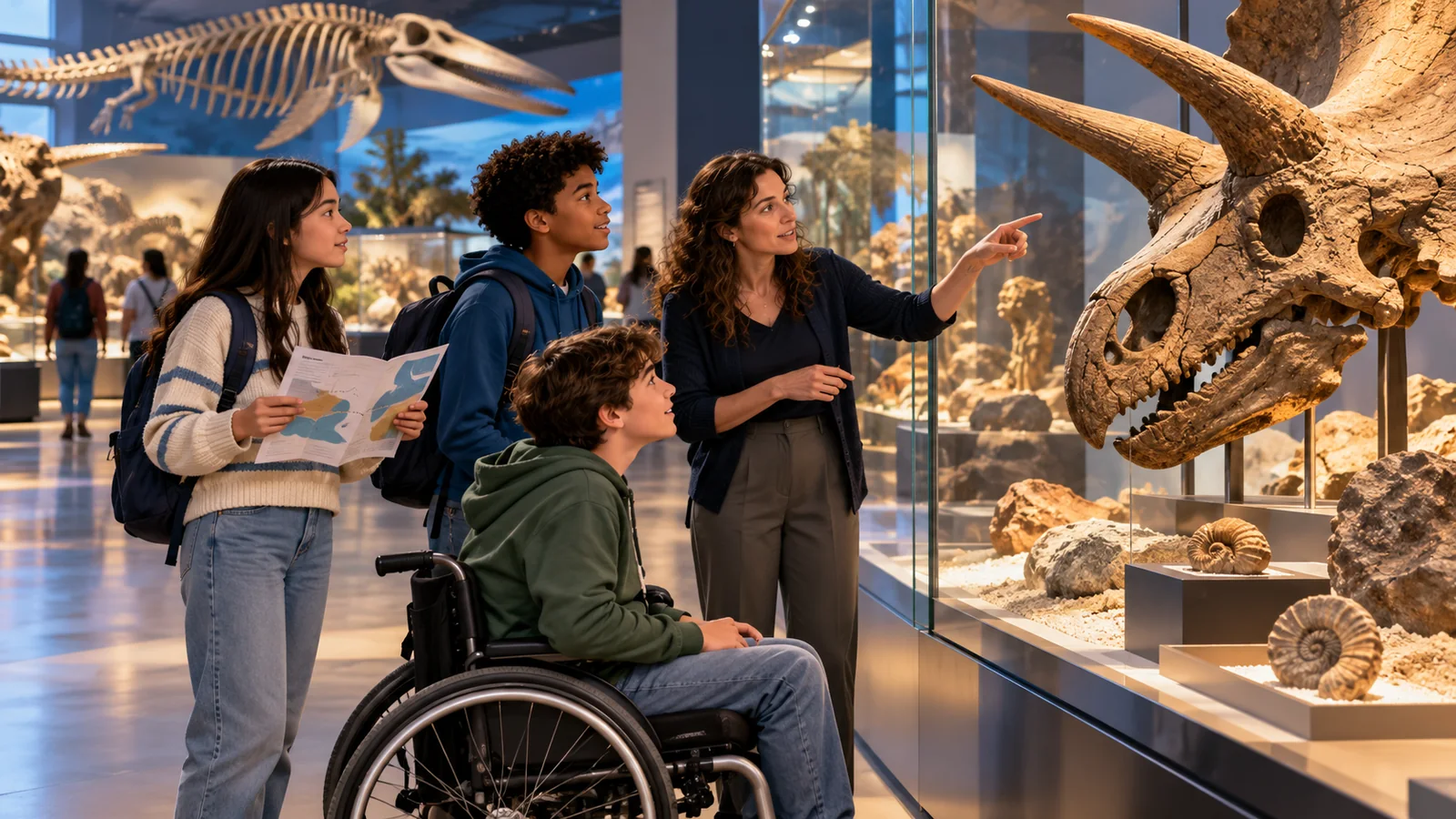
A school trip changes more than the location of a lesson. Travel, unfamiliar adults, busy entrances, meals and changes in routine can all affect participation. Planning an inclusive trip means considering the whole experience with the student, not waiting until departure to discover that an important arrangement is missing.
Begin with the learning purpose and the student’s interests. Then identify the practical conditions that will help them participate. This guide provides a planning conversation, with clearly limited Toronto examples. Schools must check their own current excursion procedures, venue arrangements and individual support responsibilities.
Start with participation and the learning purpose
Ask what students are expected to learn and which activities support that purpose. A clear focus helps the team identify where access matters most. It also makes it easier to avoid an overfilled itinerary that leaves little room for questions, transitions or rest.
The Royal Ontario Museum’s teacher’s guide advises choosing specific learning goals instead of trying to see the whole museum in one visit. This is venue guidance, not a requirement for every trip. It illustrates the value of a manageable plan that connects the visit to classroom learning.
Ask the student what interests them and what they want to know beforehand. They might be excited about an exhibit but uncertain about the bus, lunch arrangements or how to ask for a break. Address those questions without assuming that uncertainty means they do not want to attend.
Check school and venue arrangements separately
The school is responsible for explaining its excursion process. Ask which staff coordinate the trip, how individual access needs are considered and how unresolved questions can be raised. Do not assume that a venue’s general accessibility statement settles transport, staffing or school supervision arrangements.
The Toronto District School Board’s published P033 Excursions policy overview, dated 19 June 2019, states an objective of equitable inclusion in curriculum-based excursions and removal of barriers. That overview is a local policy statement, not a complete operational checklist. Ask the school for the current procedures that apply to the actual trip.
Contact the venue through the school’s planning process about specific arrangements. At ROM, the school-visits page provides a route to request communication supports or accommodations and says some services may require at least three weeks’ notice. This is a venue-specific notice requirement, not a guarantee that a request is approved or a universal deadline.
Walk through the whole day
Follow the trip from the usual morning routine to the return home. Include waiting for transport, boarding, arrival, the entrance route, activities, meals, washrooms and rejoining the group after a break. An accessible gallery does not resolve a barrier at the school’s chosen drop-off point.
Check current travel and venue information close to the visit. Construction, entrances, lifts and programme locations can change. If a route is essential, confirm it with the relevant operator or venue rather than relying on an old photograph or a general map.
| Part of the day | Question to clarify | Record before departure |
|---|---|---|
| Travel | How will the student board, travel and arrive with the group? | Confirmed transport arrangement and contact |
| Arrival | Which entrance and meeting point will be used? | Current route and any known changes |
| Activities | How will instructions, materials and communication be accessible? | Agreed supports and responsible adults |
| Breaks and meals | What options exist and how does the student request them? | Location, supervision and rejoining plan |
| Unexpected change | Who responds if an arrangement is unavailable? | Named decision-maker and communication route |
Prepare with the student
Share useful information in a format the student can access. This might include a short sequence of the day, current photographs, a map, a conversation or a written list of what is known and what may change. Do not present uncertain details as promises.
Explain how to ask for help, clarification or a break. If the student uses AAC, plan how it remains available during travel and activities, including any appropriate backup. A communication system stored with luggage may not be accessible when the student needs to speak up.
Discuss what personal information needs to be shared and with whom. Venue staff may need practical instructions about communication or access, while sensitive records should remain within the appropriate school process. Avoid announcing a student’s diagnosis to the group as a substitute for preparing staff.
If health or personal-care arrangements are relevant, use the school’s established process and qualified guidance. This general checklist does not replace an individual health plan or authorise a volunteer to take on a role they have not been assigned and prepared for.
Make responsibilities clear
Confirm who carries relevant information, who checks the agreed supports on arrival and who responds if the itinerary changes. Clarify the role of teachers, education assistants, volunteers and venue staff. A person being present does not necessarily mean they know what support they are expected to provide.
Do not assume a family member must attend to make access possible. If family participation is proposed, ask the school to explain the reason, available arrangements and applicable process. Families should be able to raise practical constraints without the planning conversation ending at an unexamined assumption.
In a fictional example, Ben’s class plans a gallery visit. Ben wants to see the fossils but asks how to leave a crowded activity briefly. The school checks the venue’s available space, agrees on the supervising adult and explains how Ben can rejoin the group. The plan also confirms transport and communication access. It does not reduce the whole visit to whether Ben can tolerate the busiest room.
- Focus. Identify the learning purpose and student priorities.
- Check. Confirm transport, venue and school arrangements.
- Prepare. Explain the day and agree on help, breaks and responsibilities.
- Review. Use the student’s experience to improve the next visit.
Review the experience
After the trip, ask what the student learned, enjoyed and found difficult. Separate a missing arrangement from an activity that needs a different design. A factual account of a crowded entrance or unavailable support is more useful than a broad conclusion that trips do not work for the student.
Keep the review focused on improvements. Record what should be repeated, what needs checking earlier and who will act before another visit. The student’s account belongs alongside adult observations, including when the adults thought the day went well.
Common questions
When should access planning begin?
Begin while the school is choosing and organising the trip, so relevant arrangements can influence the plan. Some venue services need advance notice. Ask about the actual deadlines and confirmation process instead of assuming a request can be resolved on arrival.
Does an accessible venue guarantee an accessible trip?
No. Check transport, entrances, the specific programme, communication and school supervision as well. A venue may offer useful facilities while a particular route or activity still needs planning. Ask about the exact itinerary rather than relying on an overall accessibility label.
Should the student visit beforehand?
Ask whether a preview would be useful and feasible, and what other preparation options exist. Current photographs, a virtual resource or a conversation may answer some questions. A preparatory visit should not become an automatic requirement or an additional unexamined cost for the family.
How can we plan for sensory differences?
Ask the student about specific situations and discuss the actual environment with the venue. Clarify possible breaks, quieter areas or adjustments without promising silence. Include a way to communicate discomfort and an agreed response rather than expecting the student to manage every change alone.
What if a parent cannot attend?
Tell the school about the constraint and ask it to explain the support arrangements and relevant procedures. Do not assume that a family’s availability alone determines participation. Seek a concrete planning discussion about responsibilities and unresolved barriers.
What should volunteers know?
Provide the instructions they need for their assigned role, such as the group plan, help route and relevant communication arrangements. Share sensitive information only through the appropriate process. Check that volunteers understand their responsibilities instead of giving them an unexplained folder of records.
Can the student take a break from the group?
Discuss the possibility in advance, including location, supervision and how to rejoin. The answer depends on the trip and school arrangements. A break plan should support participation and safety rather than leaving the student isolated or requiring them to improvise a route back.
What if the venue changes the activity?
Ask who will assess the change and confirm whether the agreed access arrangements still work. Tell the student what is known in a usable format. If an essential support becomes unavailable, use the planned school and venue contacts to resolve the issue.
Should a virtual visit replace an in-person trip?
Consider the learning purpose, the student’s preference and the actual barriers. A virtual option may be useful, but should not automatically become the answer to an unresolved access problem. Ask what each option offers and what planning would make participation meaningful.
How do we use feedback after a difficult trip?
Describe the particular barrier, its impact and the arrangement that was expected. Include the student’s view and identify a practical change for next time. Avoid turning one difficult experience into a permanent judgement about the student’s ability to take part.
Sources
Primary school-board and museum pages opened and checked on 21 October 2026. TDSB’s page is a policy overview dated 19 June 2019; the linked full policy and current operational procedures were not reviewed. No trip, support service or transport route was booked or individually verified.
- Royal Ontario Museum: Teacher’s Guide to School Visits and Programs — learning focus and visit preparation.
- Toronto District School Board: P033 Excursions policy overview — stated inclusion objective.
- Royal Ontario Museum: School Visits — accommodation request route and possible advance notice.