Family & Everyday Life
Planning Seasonal Celebrations Without Assuming Everyone Enjoys the Same Things
Make room for different ways to enjoy, adapt or decline seasonal traditions.
Archive edition: 18 October 2026 · assigned for archive organisation
On this page
A seasonal celebration can be enjoyable, tiring, meaningful, uninteresting or a mixture of these things. There is no single autistic experience of holidays, festivals or family traditions. Some people enjoy lights, music and busy gatherings; others prefer a familiar meal, a small visit or no celebration. Planning starts with asking rather than assuming.
This guide offers a way to discuss the whole season: invitations, changes at home, travel, food, gifts and recovery time. Use the parts that fit your household’s culture and preferences. A successful plan gives people usable choices about participation instead of making attendance or visible excitement the measure of belonging.
Choose what matters this year
List the traditions or events under consideration, then ask which are important to each person. Someone may value decorating but dislike a large meal. Another person may want to see a particular relative without staying for the full gathering. A preference from last year is useful information, not a permanent commitment.
Try three simple categories: keep, adapt and leave out. Explain any practical limits honestly, such as travel time or cost. Where preferences differ, explore separate activities or different participation times. One person’s decision to skip an event does not have to remove everyone else’s opportunity, provided the alternative arrangements are suitable and agreed.
The National Autistic Society’s Christmas guidance discusses planning around sensory preferences, changes and expectations. Although that page concerns a particular celebration, its practical questions can prompt discussion about other seasonal events. Do not assume that every family celebrates Christmas or wants to adopt its traditions.
Look at the season as a whole
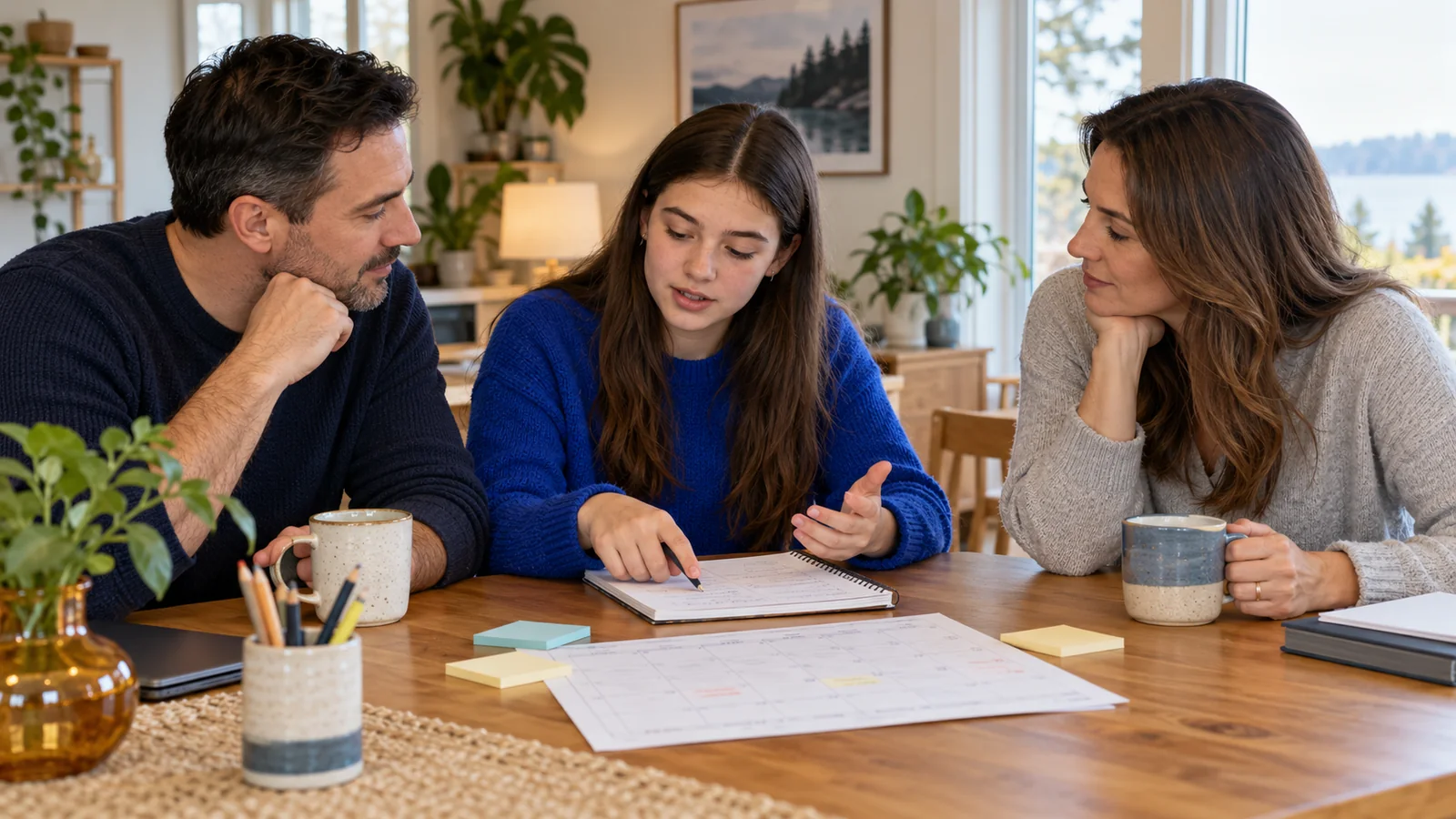
Several manageable events can still make a crowded week. Put invitations, school or work changes, travel and visitors on one accessible calendar if that helps your household. Include ordinary commitments too, so an evening gathering is not planned as though the rest of the day is empty.
Separate confirmed plans from possibilities. A tentative invitation should not look like a fixed appointment. Mark who will confirm details and when. If an event changes, update the shared plan and tell the people affected directly; changing a calendar silently may not be enough.
Leave space for familiar activities and time without social obligations. Ask what that time should look like. It may mean being alone, spending time with one trusted person, engaging in an interest or keeping a usual routine. Do not turn “recovery time” into another compulsory activity.
Prepare changes to the home together
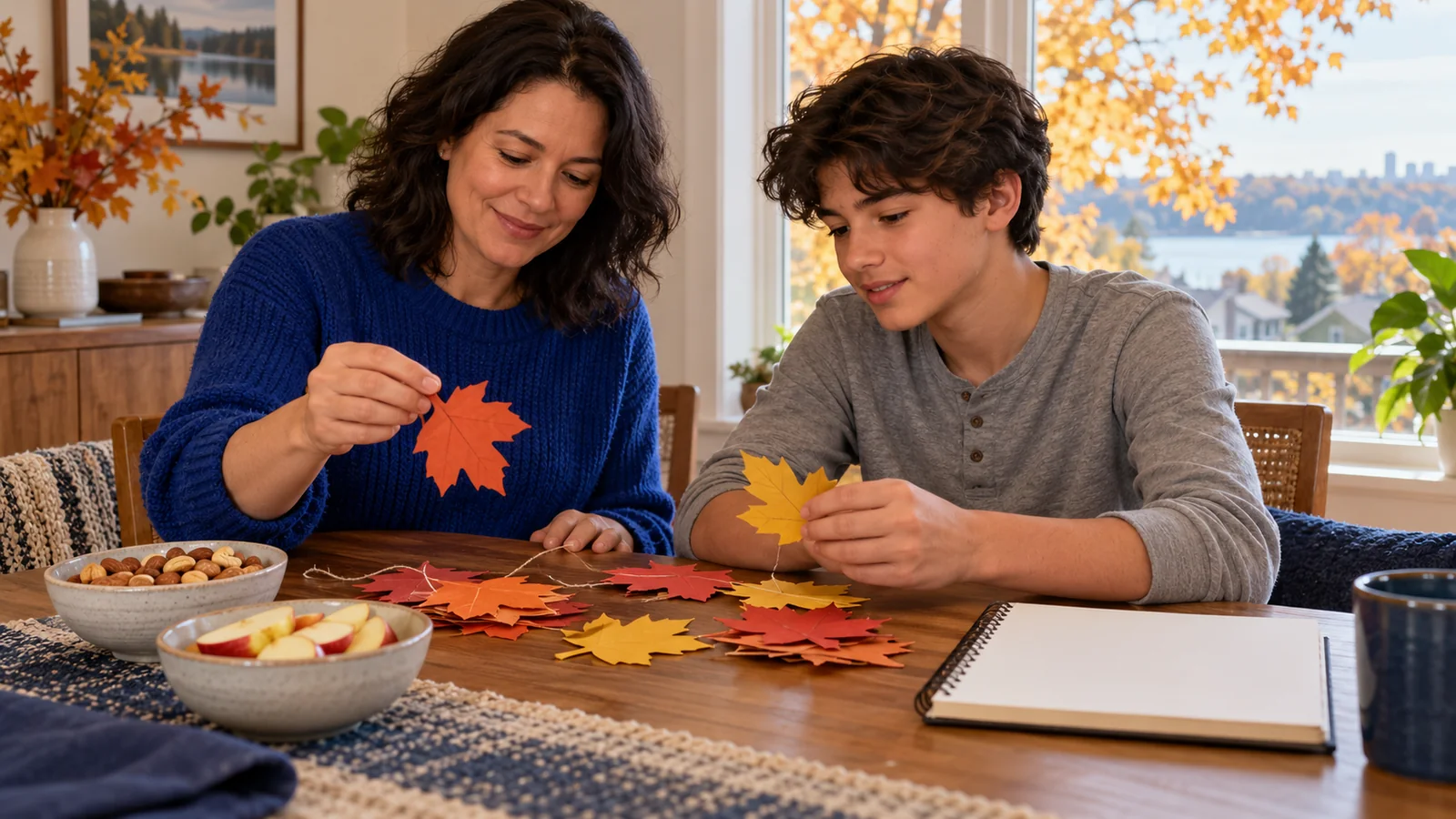
Decorations can change lighting, smells, sound and the location of familiar objects. Discuss what will change, where and for how long. Someone may enjoy choosing one area to decorate while wanting their bedroom or usual quiet space left as it is.
The National Autistic Society’s routine and predictability guidance advises involving autistic people in planned changes and allowing time to process them. It also says harmless routines do not need changing simply because they are routines. That supports a planning question: which familiar parts of home life can remain dependable during the season?
Where useful, show decorations before putting them up, agree on lighting settings and explain when visitors will arrive. Check whether a proposed quiet room will actually be available or will become a coat-storage area. A space is not a reliable option if people repeatedly enter it without warning.
Make participation choices concrete
- Choose: Identify the parts people want to join.
- Explain: Share the sequence, setting and expected changes.
- Adapt: Agree on food, space, communication and timing options.
- Review: Check what to keep or change next time.
“You can leave if you need to” is more useful when leaving is practically possible. Who has the keys? Is transport available? Can someone leave with a supporter without ending the event for everyone? Work through those details before the gathering, particularly when travelling to another home or venue.
Partial participation can mean arriving for one activity, joining a smaller meal, sending a greeting or meeting a relative on another day. Ask whether the person wants these options; do not automatically exclude them from the main event because a quieter alternative exists.
Discuss food, greetings and photographs
| Situation | Question to ask | Option to agree |
|---|---|---|
| Shared meal | What food and seating arrangements work for you? | Include a familiar option or an agreed separate serving |
| Greetings | How would you like to greet people? | A wave, words, a message or another preferred approach |
| Gift exchange | Would you like surprises or advance information? | Choose a predictable format and whether to open gifts publicly |
| Group photograph | Do you want to be photographed and have the image shared? | Ask separately about taking and posting the image |
| Travel | What information or support would make the journey easier? | A clear route, timing and backup plan |
A celebration is not a useful setting for pressuring someone to try a food or accept unwanted touch. Let hosts know the relevant arrangements with the person’s agreement. Share what helps participation without distributing a diagnosis or personal history to every guest.
The NHS guidance on supporting an autistic child emphasises understanding individual needs and avoiding pressure to take part in uncomfortable social situations. For a family event, ask which aspects are difficult and what the child wants, rather than interpreting quietness or taking a break as ungrateful behaviour.
Reduce surprises around gifts and visitors
Some people enjoy unexpected presents; others prefer knowing what is inside or choosing the item themselves. Discuss wrapping, noise, the order of opening and whether an audience is wanted. Thanking someone does not require a particular facial expression or an immediate public performance.
For visitors, share the expected number of people, arrival window and likely activities. Tell guests about household arrangements that affect everyone: knocking before entering private rooms, respecting a declined greeting and checking before taking photographs. Explain these as ordinary expectations rather than presenting one person as the reason the celebration has rules.
Keep a workable backup and learn from the day
Weather, illness and transport can change plans. Decide which elements can move, which can be cancelled and how the change will be communicated. A backup might be a shorter local visit or a familiar activity at home. It should be an option people understand, not an elaborate second event that creates more preparation.
Afterward, wait until people have space to reflect. Ask what they enjoyed, what was difficult and what they would change. Avoid turning the conversation into a score for staying longer, eating more foods or appearing sociable. Record a few useful details for next time while recognising that preferences may change.
The aim is not a flawless celebration. It is a plan that makes room for different ways of enjoying, marking or declining an occasion, while keeping communication and practical support clear.
Common questions
Should we avoid all busy celebrations?
No. Ask the person what they enjoy and what support they want. Preferences vary, including among autistic people.
What if someone wants to attend only part?
Plan the timing and transport so partial attendance is a real option rather than a promise that cannot be carried out.
Can we keep some rooms undecorated?
Yes. Discuss which spaces should remain familiar and how shared areas can work for everyone.
Should familiar food be available?
Discuss food preferences in advance and agree on a workable option. Do not use the event to pressure someone to eat something unwanted.
Does declining a hug mean someone is being rude?
No. Offer another greeting and respect their choice.
Are surprise gifts always a bad idea?
No. Ask whether surprises are enjoyable and whether the person wants to open gifts privately or with others.
Can I explain a guest’s diagnosis to the host?
Ask what the person wants shared. Often the practical arrangement can be explained without personal diagnostic details.
Is a quiet room enough on its own?
Not necessarily. Confirm access, privacy and how the person can use or leave it. Other aspects of the event may also need adapting.
What if the plan changes unexpectedly?
Communicate the change clearly, allow time to process it where possible and use the agreed backup options.
How do we decide whether the celebration went well?
Ask people about their experience and choices. Attendance length or visible excitement is not the only measure of a meaningful occasion.
Sources
Primary autism organisation and NHS guidance checked on 22 October 2026. Seasonal examples and planning tools are original editorial suggestions; preferences are not assumed from diagnosis.