Inclusive Education
Planning the Move From Preschool to Kindergarten
Prepare the child, school routines and adult responsibilities for a supported start.
Archive edition: 2 June 2026 · assigned for archive organisation
On this page
- At a glance
- Start the conversation with the receiving school
- Share information that adults can use
- Walk through the day, not only the classroom
- Make familiarization manageable
- Confirm the first-day arrangements
- A practical example
- Review after entry, while the details are fresh
- Common questions
- Sources and scope
Starting kindergarten changes a child’s surroundings, routines and relationships. A useful transition plan prepares the adults and the environment as well as helping the child become familiar with school. The aim is participation, communication and a workable day, not a test of whether the child can manage every new demand without support.
Registration ages, programs and support processes vary across Canada. This guide offers practical questions for families moving from preschool, child care or home into kindergarten. The British Columbia and Ontario examples are labelled; confirm the current arrangements with the receiving school.
Start the conversation with the receiving school
Ask which school or office handles registration and who coordinates support planning. Registration and a transition meeting may be related but are not the same task. Confirm both rather than assuming that completing an online form tells the classroom team everything it needs to know.
TDSB’s entry-to-school guidance encourages families of children with special education needs to contact their local school promptly, discuss registration and meet with the principal about strengths, needs and relevant documentation. This is a local route, not a promise of a particular placement or staff assignment.
Prepare a short description of what helps the child participate. Include interests, communication methods, useful routines and situations needing support. A diagnosis may be relevant to a process, but it does not explain how the child asks for help, joins play or experiences a busy lunch space.
Share information that adults can use
A one-page introduction can be a starting point. Use concrete examples: “A picture of the next activity helps explain a change,” or “They point to their bottle when they want a drink.” Describe the child’s actual communication without assuming that every gesture has the same meaning in every situation.
Ask preschool or child-care staff what they have observed and which supports are useful. Where information will be shared between organizations, clarify permission, recipients and the approved route. Avoid sending a complete private history when a relevant summary would answer the planning question.
Ontario’s support-for-students-with-autism guidance describes planning with families, school staff and relevant community personnel when children enter the publicly funded system. Ask how existing providers can contribute locally; do not assume that a community service automatically continues unchanged in school.
Walk through the day, not only the classroom
| Part of the day | What to clarify | Practical preparation |
|---|---|---|
| Arrival and departure | Entrance, handover, transport and contact person | A clear sequence and confirmed adult responsibilities |
| Play and learning | Interests, materials and ways to join activities | Familiar choices and accessible communication |
| Meals and drinks | Time, space, assistance and school procedures | Agree relevant arrangements with staff |
| Toileting and personal care | Privacy, assistance, equipment and trained staff | A specific plan through the school’s process |
| Changes and breaks | How changes are explained and help is requested | A recognizable signal and a supported response |
Do not rely on “we will work it out” for an essential arrangement. Ask who will do the task, what information they need and what happens if the usual adult is absent. Questions involving medication, allergies, positioning or other safety-sensitive care should go through the school’s appropriate professional and administrative procedures.
Think about the whole day from the child’s perspective. Before-school care, transport and after-school care may involve different staff or registration processes. Confirm who shares the necessary information and whether those settings have their own planning requirements.
Make familiarization manageable
British Columbia’s full-day kindergarten guidance suggests visiting the school and classroom and meeting staff to discuss strengths and needs. A visit can be useful, but its format should fit the child and the school’s arrangements. A short quiet visit may reveal more than a crowded event that becomes overwhelming.
Ask what the child most needs to recognize: the entrance, classroom, washroom, a familiar adult or the place to keep belongings. With the school’s permission, a few photographs may help explain these places. Avoid collecting or sharing images of other children.
Offer information without turning every day at home into school practice. You could look at a simple route picture, read a familiar story or choose a bag together. Let the child’s response guide the pace. If a visit is difficult, record what made it difficult and ask what can be adjusted; do not treat the visit as a pass-or-fail assessment.
- Connect: identify school contacts and share useful information.
- Prepare: make routines and essential supports concrete.
- Review: check the child’s experience and adjust the arrangements.
Confirm the first-day arrangements
Before the start date, ask for the current arrival instructions and the name or role of the person meeting the child. Check whether earlier information has changed. Keep the essential instructions available in a form the adults involved can use.
Discuss how the child can communicate discomfort, ask for a break or indicate a need for help. A support is only useful if adults recognize the signal and know how to respond. Do not remove a familiar communication method because school uses a different preferred format.
If a gradual entry or altered schedule is proposed, ask about its purpose, duration, educational access, review date and the applicable local process. Do not assume that all autistic children need the same schedule or that a temporary arrangement should continue without review.
A practical example
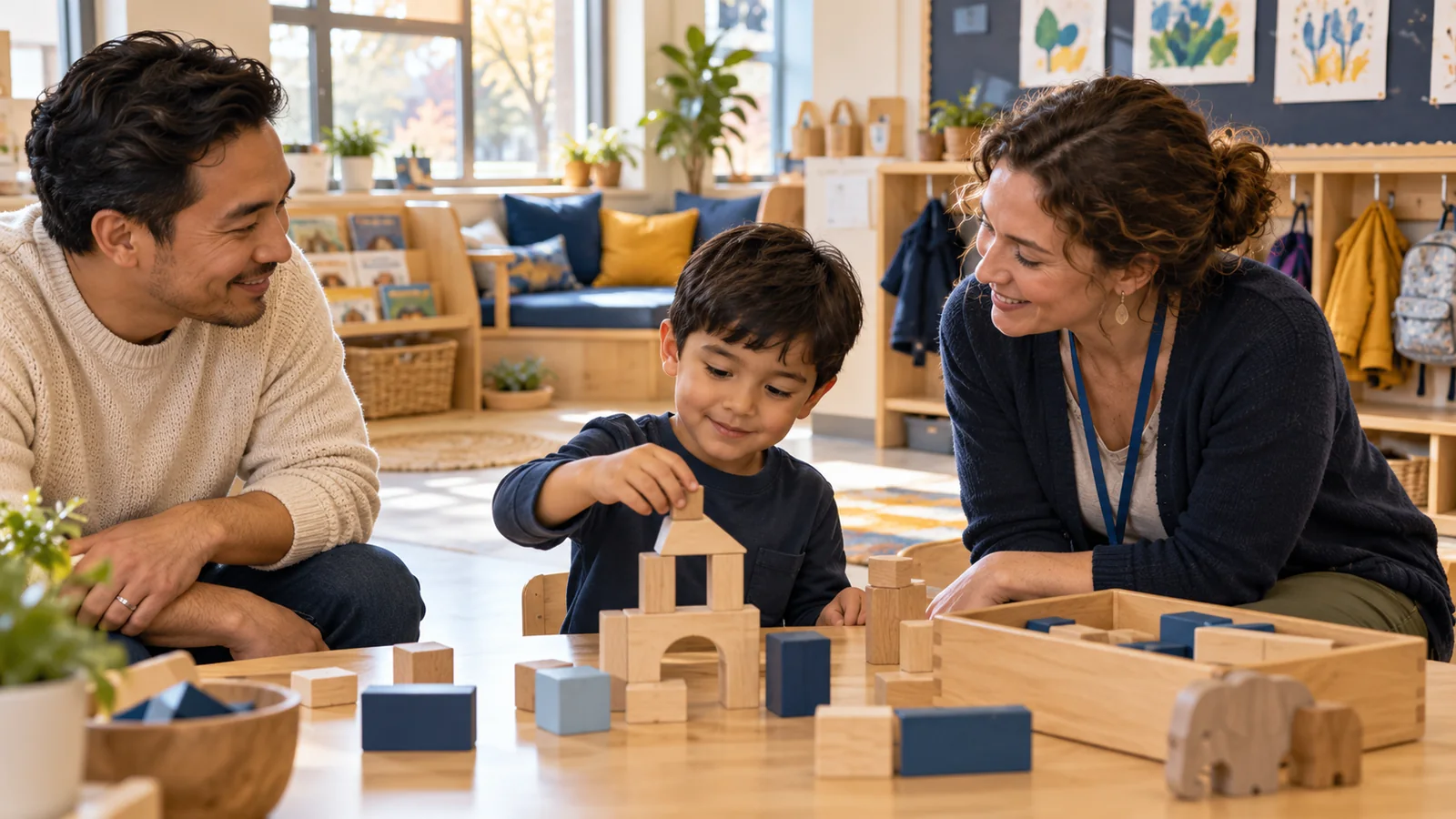
In this fictional example, Leo enjoys building and understands familiar picture choices. His parent and preschool educator explain that noisy handovers are difficult and that he often points to a picture when he needs help. The receiving school arranges a short visit focused on the entrance and building area.
The team records who will meet Leo and how his communication materials will be available during the day. After school begins, staff notice that the lunch transition needs more explanation. They discuss this with the family and adjust that part of the plan instead of interpreting a difficult lunchtime as failure of the entire transition.
Review after entry, while the details are fresh
Agree on a reasonable check-in date and how routine updates will be shared. Ask about participation, communication, comfort and access, not only whether the child appeared quiet. A child may need help even when they are not interrupting the classroom.
Use specific observations from school and home. Note what happened before a difficult moment, which support was available and what helped afterwards. Avoid diagnosing the cause from a single event. If a concern involves health, safety or substantial distress, seek the appropriate professional or school help rather than relying on a generic checklist.
Common questions
When should I contact the school?
As soon as the intended entry is known, ask about registration and support planning. If entry is close, identify the essential first-day arrangements and a prompt follow-up.
Do all provinces use the same kindergarten age?
No. Check the current rules with the province and local school authority. Do not use another province’s age or registration timetable as your own.
Should I bring the preschool’s full file?
Ask what information is relevant and how it should be shared. A focused summary can start the discussion, with additional records provided through the appropriate process.
What if my child does not use speech?
Describe their communication methods and how adults recognize messages. Plan access throughout the day and involve relevant communication professionals when needed.
Does a difficult school visit mean my child is not ready?
Not by itself. Examine the setting, timing and support. The visit can identify what the environment and adults need to prepare differently.
Can I ask for help with toileting or personal care?
Raise the need directly and ask for the school’s planning process, responsible staff and privacy arrangements. Avoid relying on an informal assumption about who will help.
Will community services continue at school?
Do not assume they transfer automatically. Ask each provider and the school about their roles, referral arrangements and information-sharing requirements.
Must every child have a gradual start?
No single approach fits everyone. If a different schedule is proposed, clarify its purpose, local requirements, duration and review arrangements.
What should the first check-in cover?
Discuss access to routines, communication, learning and peer participation. Ask the family and child, where possible, what is working and what needs adjustment.
What if support is still unclear just before school starts?
Contact the named school lead with the specific unresolved question. Ask what can be arranged immediately, who is responsible and when the remaining issue will be reviewed.
Sources and scope
British Columbia and Ontario sources support the labelled examples. The checklist and fictional scenario are original editorial planning aids. No placement, eligibility, staffing or clinical outcome is guaranteed.
- TDSB: Entry to School — local contact and planning route.
- Ontario: Support for students with autism — family, school and community transition planning.
- British Columbia: Full day Kindergarten — familiarization and discussion of support needs.