Inclusive Education
Fire Drills and Other School Drills: Preparing Accessible Information
Prepare understandable drill information and discuss individual access with the school.

School drills can involve unfamiliar announcements, loud alarms, changed routes and a sudden interruption to the day. Accessible preparation helps students understand the information they need and lets staff identify support before it is required.
Use this guide to prepare questions for the school. The school’s current emergency procedures, trained staff and emergency responders determine what happens during an incident. A family-made visual explanation should accurately reflect those procedures, rather than create a separate response plan.
Begin with the school’s current information
Ask the classroom teacher or designated school contact which types of drills are used and how families receive information. Do not assume that a fire drill, lockdown and another emergency practice have interchangeable instructions. Local terminology and procedures matter.
For a Canadian example, Durham District School Board’s safety procedure addresses staff assignments, accounting for students and current evacuation plans for students and staff with additional needs. That illustrates the importance of school-led planning; it does not establish the requirements for a different board.
Ask what the student already understands, which parts are uncertain and how they prefer to receive an explanation. Some students want a brief description; others need a sequence, photographs or a chance to ask questions individually. Do not assume that more detail is always more reassuring.
Make essential information understandable
Keep preparation factual and suitable for the student’s age. Explain that a scheduled drill is practice when that is confirmed. Avoid graphic scenarios, threats or promises that an emergency could never occur. Give the student a way to say that an explanation is confusing or overwhelming.
New York City Public Schools’ emergency-readiness page describes tailoring training to grade levels and sharing information with families. This is a US example of communication planning, not a procedure to copy into a Canadian school.
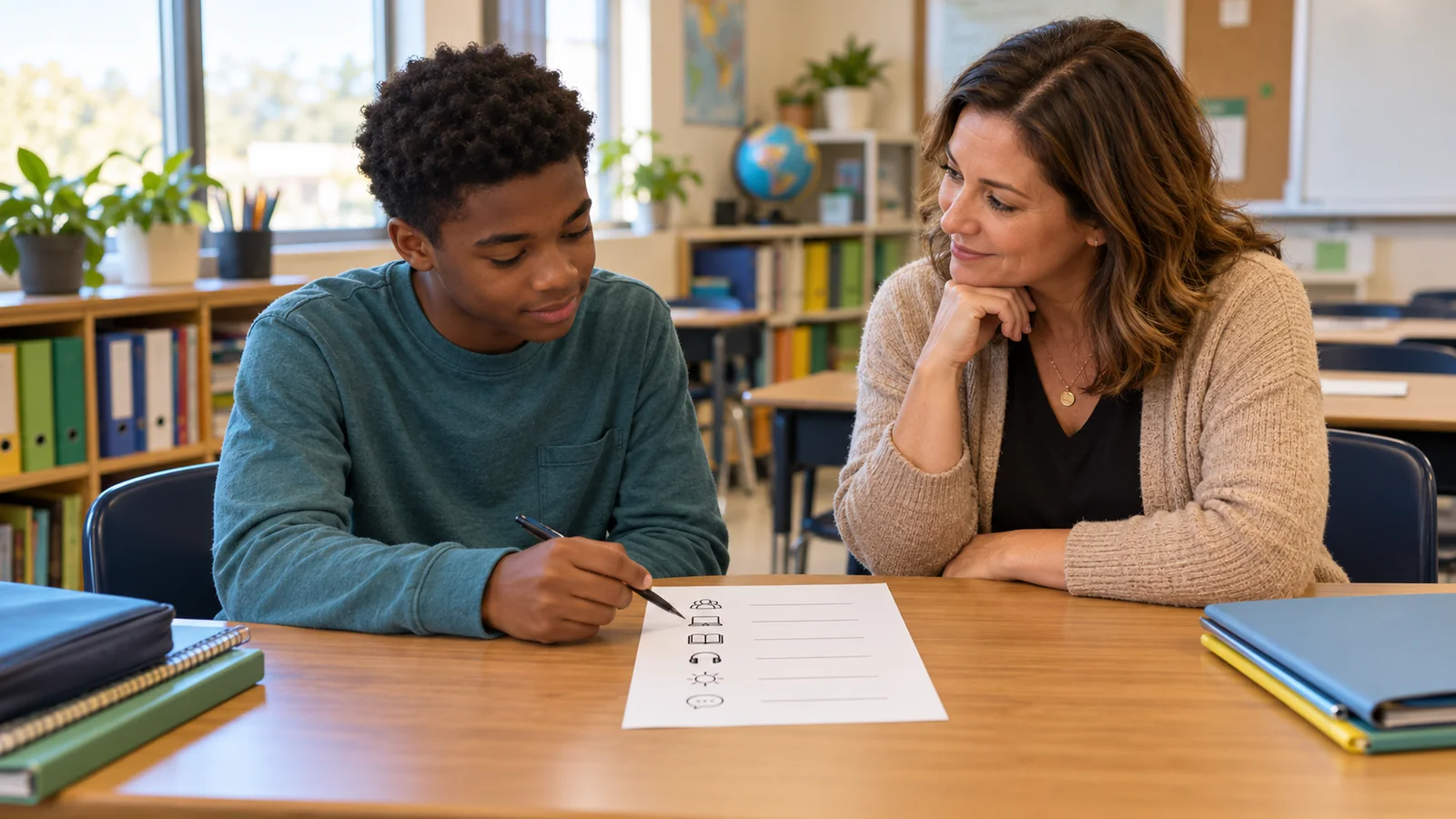
A written or visual explanation should use the same terms as the school. Ask staff to check it for accuracy. A picture of an old classroom or an outdated meeting location can create confusion. Keep detailed building or security information in the school’s approved materials rather than posting it publicly.
- Clarify. Ask the school what information and arrangements apply.
- Prepare. Provide an understandable explanation and confirm individual support.
- Review. Identify barriers after practice and agree on corrections.
Discuss access beyond the written explanation
A student may understand the words but still need help accessing a signal, moving with the group or communicating with staff. Ask the school to consider the complete situation, including lessons outside the usual room, break times and an absent support person.
| Access area | Question to confirm |
|---|---|
| Instructions | How will essential information reach the student in a form they can understand? |
| Communication | How can the student ask for help and continue using necessary communication supports? |
| Movement | What assessed arrangements and trained staff are needed for accessible movement? |
| Sensory needs | Which supports are suitable without preventing awareness of essential instructions? |
| Staff cover | Who takes responsibility when the usual teacher or support person is absent? |
CAST’s guidance on perceiving information supports offering information through accessible forms. Applying that principle to drill preparation means asking whether an audio-only explanation is sufficient. It does not authorise altering alarms, signs or emergency systems.
Any hearing protection, mobility assistance or other individual arrangement needs to fit the school’s assessed plan. Do not improvise equipment or teach a different route from an online article. Ask the relevant staff to explain how the arrangement works, who supports it and how it will be reviewed.
Agree on preparation and follow-up
If advance notice would help, ask what notice the school can provide and how it will reach the student. Where appropriate, discuss a supported explanation or familiarisation activity before a full drill. The school must determine arrangements consistent with applicable requirements and safety planning.
After practice, offer a low-pressure opportunity to comment. “Could you understand the announcement?” may reveal more than “Were you good during the drill?” Ask about timing, staff availability and unclear instructions. Students may need time before they can describe what happened.
Record practical changes with a responsible person and review date. If a student experienced significant distress, raise it with the school and relevant support professionals rather than simply repeating the same experience. The goal is usable preparedness, not testing how much discomfort a student can tolerate.
Common questions
Can I write a visual explanation at home?
Yes, as a draft to check with school staff. Use the school’s actual terminology and current information. Ask the student which format helps them understand. The explanation should support the school’s procedures and should not introduce a separate route, signal or instruction that staff have not approved.
Should every student receive the same amount of advance detail?
No single amount will suit everyone. Ask what the student wants to know and give factual, age-appropriate information. Some prefer a short explanation with a chance to ask later questions. Coordinate notice with the school rather than promising a timetable or exemption that has not been agreed.
Can a student wear hearing protection?
Discuss the particular equipment and context with the school before relying on it. Staff need to consider sensory access alongside the ability to receive essential instructions and signals. This article cannot confirm that a device is safe for a particular drill, building or student’s emergency arrangements.
What if the student uses a communication device?
Ask how communication access is included in the school’s plan and what happens if the usual device is unavailable. Include staff who understand the student’s methods. Do not assume that speech will become available during stress or that an unfamiliar adult will automatically understand a student’s help signal.
Does this guide explain what to do in an actual fire?
No. It helps families discuss accessible preparation with the school. Actual responses depend on the incident, building procedures and trained personnel. Follow current school and emergency-responder instructions. Avoid using a general article as a replacement for the school’s assessed evacuation and emergency arrangements.
What should we ask about mobility support?
Ask who assesses the arrangements, which trained staff are responsible and how cover is provided during absences or room changes. The school should explain the relevant plan. Do not improvise lifting, equipment or evacuation methods from a general checklist; those decisions require appropriate expertise and local procedures.
Can the student be excused from a drill?
Ask the school about applicable requirements and individual arrangements. This guide cannot promise an exemption or determine whether one is suitable. Explain the barrier and discuss how preparedness can be taught accessibly. Any agreed arrangement should be documented with clear staff responsibilities and a way to review it.
What if the student becomes distressed afterward?
Offer the familiar support they find helpful and give them time to communicate. Tell the school what occurred, including difficulties that appeared later. Ask for a review of preparation and support. Significant or persistent distress may warrant discussion with relevant professionals who know the student and their circumstances.
Should drill information go on a public class website?
General family communication may be appropriate through approved school channels. Individual student information and detailed security arrangements require care. Ask the school which materials are intended for families and how they should be shared. Do not publish a student’s support plan or sensitive building details as a convenience.
When should the arrangements be reviewed?
Review after practice and when relevant circumstances change, such as a new classroom, equipment, communication method or staffing arrangement. Ask who keeps the current version and informs incoming staff. A document that exists but is outdated or inaccessible to responsible staff is not a reliable handover.
Sources
- DDSB: Security and Safety Procedure
- NYC Public Schools: Emergency Readiness
- CAST: ways to perceive information
Sources checked 22 October 2026. This discussion guide does not replace a school’s emergency plan or professional safety assessment.