Family & Everyday Life
Creating a Comfortable Space at Home With the Person Who Uses It
Ask what the person wants to do in the space, identify the barrier and try one reversible change.
Archive edition: 24 September 2026 · assigned for archive organisation
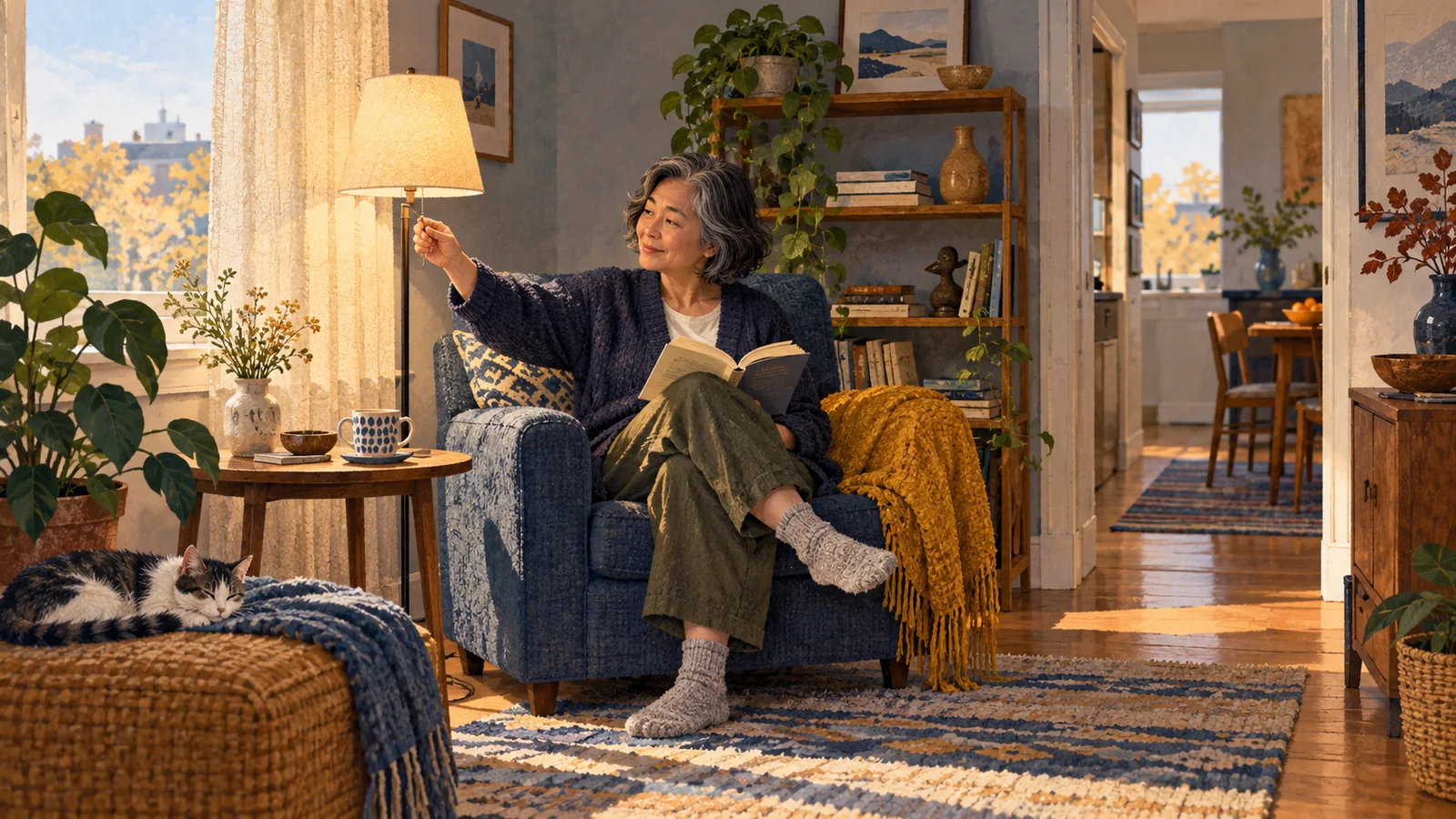
A comfortable space at home starts with the person who will use it. A room can look peaceful to a visitor and still feel unpleasant to its occupant. Before buying equipment or rearranging belongings, ask what the person wants to do there and what currently gets in the way.
You do not need a dedicated room to begin this conversation. A chair, part of a bedroom or an agreed period in a shared room may be the available starting point. This guide offers ordinary environmental planning ideas, not a therapeutic room specification or a guarantee that particular colours or products will help.
At a glance
- Ask about the activity and the person’s preferences before choosing a design.
- Look at light, sound, smells, surfaces and how other people use the space.
- Try a reversible change and ask whether it improves the experience.
- Keep access, communication and the person’s ability to leave the space intact.
Begin with the person’s description
Ask a concrete question: “What makes it difficult to read here?” or “Which place would you choose when you want a break?” The answer may concern the chair, a humming appliance, interruptions or the expectation to talk. Avoid assuming that all discomfort has a sensory cause or that a quieter room solves every problem.
The National Autistic Society describes autistic sensory experiences as varied: people may seek some sensations and avoid others. Read its sensory-processing overview. Use that as a reason to ask, rather than as a checklist of preferences to assign to someone.
Give the person a way to compare options. They might try two existing chairs, describe a preferred place, point to something they want moved or send a written note. Ask before moving familiar possessions. If a person does not use speech, support their existing communication and pay attention to what they choose, while checking interpretations rather than treating them as certainty.
What the Canadian research can and cannot tell us
A qualitative study in Quebec City interviewed six autistic adults about their home environments. Participants described different, sometimes opposing responses to the same kinds of colours, textures and spatial features. Relationships with other people and control over the home also mattered in their accounts. Read the study’s findings and limitations.
The small interview sample did not represent the full range of autistic support and communication needs, and the study did not test a standard room design. Its findings offer questions to explore with a person; they do not establish a universally calming paint colour or a product that every home should contain.
Walk through one activity in the existing space
Pick a normal activity, such as reading, getting dressed or having a short break. Consider the whole sequence: reaching the space, finding what is needed, doing the activity and leaving. A comfortable seat is less useful if the preferred book, communication device or light switch is out of reach.
Notice when the difficulty happens. A window may be comfortable in the morning but cause glare in the afternoon. A room may work until someone starts a nearby appliance. This helps you choose a change that addresses the actual situation rather than replacing furniture without a clear reason.
| Part of the space | Question to ask | Small option to discuss |
|---|---|---|
| Light | Which light is useful, and when is glare a problem? | Try another existing seat or adjust an available curtain. |
| Sound | Which sound is unwanted, and where does it come from? | Agree when a nearby television or appliance is used. |
| Surface | Is the chair, cushion or clothing in contact with it comfortable? | Compare familiar items before buying anything new. |
| Belongings | What needs to stay visible, reachable or in the same place? | Agree on one storage location without removing valued objects. |
| Other people | When is company welcome, and how should someone interrupt? | Choose an agreed way to ask before joining. |
The National Autistic Society’s accessible-environments guide discusses reducing environmental barriers such as lighting and background noise in public settings. Read its guidance for accessible environments. The household worksheet above adapts the question-asking approach to a home; it is not a claim that venue guidance validates these individual changes.
Negotiate shared space explicitly
In a shared home, people’s preferences can conflict. One person may enjoy music while another wants less background sound. Describe both needs without making either person the problem. Explore arrangements such as different times, separate areas where available, or a different way to enjoy the activity.
Be specific about what a break means. Does the person want company without conversation, time alone, or an invitation to rejoin later? Agree how urgent information will be communicated. Do not interpret use of a comfortable space as permission to exclude someone from family decisions or activities.
For example, two housemates might agree that the shared reading chair is available for quiet use after dinner, with the television used in another room during that period. If there is only one room, their agreement may instead concern timing. The appropriate arrangement depends on the actual home and the people living there.
Try one change and review it
- Describe. Name the activity, the unwanted feature and the person’s preferred alternative.
- Try. Make one agreed, reversible change using what is available.
- Check. Ask whether the activity feels easier and whether the arrangement works for the household.
Keep the review concrete. “I can read without the reflection on the page” is more informative than “The sensory corner worked.” If nothing improved, reconsider the original question. The problem may be interruption rather than light, or the chosen change may not affect the part that matters.
A comfortable area should remain a place the person can use by choice. Do not use it as punishment, confinement or a requirement to become quiet before returning to ordinary life. Keep the route clear and preserve access to needed communication and support.
Ordinary rearrangement is different from selecting therapeutic equipment, making structural changes or addressing persistent pain. Obtain appropriate professional advice for those decisions rather than relying on an online room checklist. This guide does not recommend weighted products, restraints or treatment devices.
Common questions
Do we need a separate sensory room?
Not to begin an everyday comfort discussion. Ask what the person needs from the available space and what can reasonably change. A separate room is not proof of accessibility, and a useful arrangement may involve an existing chair or a shared-room agreement.
Which paint colour is best for an autistic person?
There is no colour this guide can recommend for everyone. The Canadian study found differing preferences even within its small sample. Ask the person, look at examples in the actual room and avoid a major decorating decision based only on a generic autism label.
Should the room be completely quiet?
Ask the person what sound they want more or less of. Silence is not automatically comfortable for everyone. Identify particular unwanted sounds and discuss realistic changes, rather than assuming that all sound or all shared activity must disappear.
What if we have very little money?
Begin with changes that use existing space and belongings: where someone sits, when a shared appliance is used, or whether interruptions can be reduced. Identify the problem before considering a purchase. An expensive product does not guarantee a better fit.
Can we rearrange the room as a surprise?
Discuss meaningful changes first, especially when familiar objects or routes will move. A surprise makeover may remove features the person valued. Show the proposal in a form they can understand and keep an agreed way to reverse a trial arrangement.
What if two people need different things?
Describe both needs and the practical limits of the home. Look at location, timing and the activity itself. Avoid making one person responsible for tolerating every conflict. A clear, revisable agreement can be more useful than a vague instruction to compromise.
How can a child take part in choosing the space?
Offer a few real options using familiar objects and accessible communication. Ask what they want to do in the area and observe their choices without assuming every interpretation is correct. Adults remain responsible for appropriate supervision and ordinary household safety.
Should we remove all decoration?
Only if that is an agreed change that addresses a problem. Some objects may be important, enjoyable or useful as landmarks. “Less clutter” can mean different things to different people, so identify which items cause difficulty before removing valued belongings.
What if the person stops using the area?
Ask whether the purpose, preferences or circumstances changed. There may be a new noise, an uncomfortable expectation or simply a better place to spend time. Use is voluntary; the effort spent creating the space does not create an obligation to use it.
How should we record what works?
A short note about the preferred arrangement is usually enough for this planning exercise. Agree who needs that information and avoid collecting private details unnecessarily. Review it when the person’s needs or the household change rather than treating it as a permanent profile.
Sources
Opened and checked on 21 October 2026. The Canadian study was read in the browser, including its results and limitations. The two National Autistic Society resources are UK community guidance. Household examples and the worksheet are original editorial aids, not tested therapy recommendations.
- National Autistic Society: Autism and sensory processing — individual variation in sensory experiences.
- Louis-Delsoin and colleagues: Exploring the home environment of adults living with autism spectrum disorder — qualitative research with six adults in Quebec City.
- National Autistic Society: Accessible environments — public-environment adjustments, applied cautiously to household questions.