Inclusive Education
Library Time at School: Planning Access to Quiet and Shared Spaces
Make library visits predictable while keeping quiet and collaborative learning available.
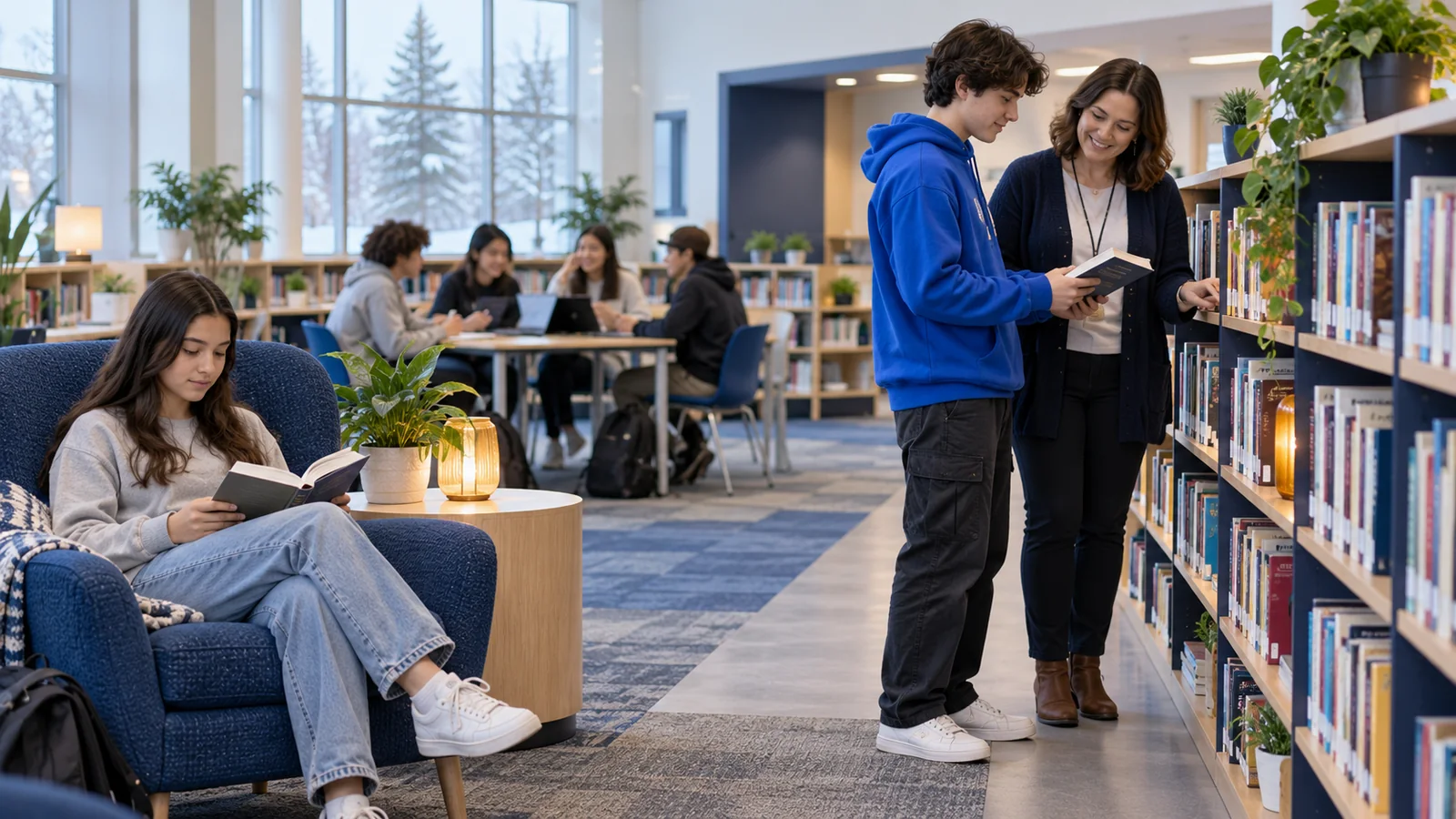
A school library may host quiet reading, class lessons, group projects, clubs and digital research in the same day. A student who finds it comfortable at one time may encounter a very different environment later. Planning access means understanding both the student’s purpose and what the library will actually be like when they use it.
Begin with the student and the teacher-librarian or staff member responsible for the space. Ask what the student wants to do, which barriers they encounter and what arrangements are possible. A library should not automatically become a place where an autistic student is sent away from learning or peers.
Clarify the purpose of the visit
Ask whether the student wants to borrow a book, read independently, research an assignment, use equipment, meet classmates or take an agreed break. These purposes may need different arrangements. A student researching a project needs access to teaching and materials; a student seeking a quieter interval may need reliable information about noise and space.
The Durham District School Board describes its library learning commons as flexible spaces supporting literacy, collaboration, curiosity and inclusive learning. This is one board’s description, not a promise about every school’s opening hours or facilities. It illustrates why “library” does not always mean a silent room.
Invite the student’s own description of the difficulty. “I cannot find the book before our class leaves” suggests a different response from “The group table is too loud.” A broad label such as “does not like library time” can hide a problem that is practical and specific.
Explore the space and its changing uses
If helpful and available, arrange a brief introduction at a suitable time. Locate the entrance, borrowing desk, relevant shelves, seating, digital resources and the person to ask for help. A simple map or photograph may be useful, with school permission and without including other students unnecessarily.
Check what changes during lessons, lunchtime or events. Are there moving chairs, announcements, crowded aisles or a club using the area? Can the student find a seat without negotiating several unwritten rules? Does the route allow access with the equipment they use?
Canadian School Libraries’ guidance on responsive learning commons asks schools to examine environments, instructional approaches and learning partnerships. It includes questions about adaptable spaces, varied learning needs and accessible navigation. These are useful prompts for reviewing the library as a learning environment rather than placing all responsibility on the student.
Agree on quiet and shared options
| Purpose | Question to discuss | Possible arrangement |
|---|---|---|
| Quiet reading | When and where is a quieter area available? | A known seat or suitable time, with a backup |
| Group research | How will roles and instructions be made clear? | A written task and agreed way to contribute |
| Borrowing | What steps and time limits does the student need to understand? | A short borrowing sequence and help contact |
| Digital resources | Can the student sign in and use the required format? | Accessible instructions and tested access |
| Agreed break | Who knows the student is there and how do they return? | A clear arrival, supervision and return arrangement |
Do not assume that an individual desk is always the preferred option. A student may want to work beside a friend, join a club or collaborate without a large group. Ask what level of interaction they want for the particular activity and whether the arrangement can change.
CAST’s guidance on choice and autonomy links meaningful options to learning goals and recognises that people differ in the choices they prefer. For a library task, the useful question is not simply “Did we offer choices?” but “Can the student understand and use the options to do the learning?”
Make the library routine understandable
- Arrive: Know the purpose, timing and starting place.
- Choose: Find the material or working area you need.
- Ask: Use an agreed way to request help or a change.
- Finish: Know what to return, borrow or do next.
Explain borrowing rules in a usable format: how to check out items, where returns go, what to do if a book is unavailable and how to ask about a due date. Do not assume that the student has absorbed these rules from watching classmates. Use the actual school’s process rather than a generic rule found online.
For digital access, check the needed login, device and format before the assignment depends on them. A resource can be technically available while the student cannot navigate it or use its text. Ask the school about an accessible alternative when needed; do not share a student’s password in a public instruction sheet.
Keep a quieter option connected to learning
If the library is part of an agreed break or sensory-support arrangement, clarify supervision, access and return. Who knows where the student is? What happens if the library is closed or a lesson occupies the usual area? How can the student request assistance without having to explain their whole support plan to unfamiliar staff?
A quiet area should not become a routine substitute for accessible teaching. Review whether the student is missing instructions, group decisions or activities they want to join. Where a task can be completed in more than one place, confirm that the materials and teacher support follow the student rather than leaving them with an empty alternative.
Prepare for changes and review the experience
Libraries may close for examinations, meetings or special events. Agree on how changes will be communicated and where the student can go instead. A backup should be genuinely available, with the necessary staffing and access, rather than simply another room named on paper.
After trying the arrangement, ask specific questions: Was the seat available? Could the student find the material? Did they know whom to ask? Were they able to take part in the activity they chose? Check the student’s experience alongside staff observations, including whether a seemingly quiet visit required a lot of effort.
Keep useful arrangements simple and record only the details needed by relevant staff. Revisit the plan when the timetable, library layout or student’s interests change. The goal is dependable access to the library’s opportunities, including both shared activity and time to read.
Common questions
Is the school library always quiet?
No. It may host lessons, clubs, group projects and other activities. Ask what happens at the time the student would use it. A quiet visit before school does not establish that the room will feel the same during a busy lunchtime or class session.
Should an autistic student automatically work alone there?
No. Ask whether they want individual work, a partner or a group for the particular activity. The student may value social participation while needing clearer roles or a less crowded table. A quiet option should add choice, not become an automatic separation from peers.
Who should help plan access?
Include the student and the staff member responsible for the library, with other relevant school-team members as needed. The person who manages the space can clarify staffing, bookings and borrowing routines. Avoid creating an arrangement without confirming that the people expected to implement it know about it.
Can the library be an agreed break space?
Possibly, if the school and student agree and practical arrangements are clear. Check availability, supervision, communication and return to class. Do not assume it is suitable merely because it is called a library, or use it to replace access to teaching the student wants to receive.
What if the preferred seat is occupied?
Agree on a realistic backup or a way to ask staff for help. Avoid promising a specific place unless the school can reserve it. The student should know the alternative before arriving, especially when finding another seat would require negotiating a busy or unfamiliar area.
How can borrowing become easier to understand?
Use a short explanation of the school’s actual steps, including checkout, returns and asking about unavailable items. A demonstration or written sequence may help. Check whether the student has enough time to choose, rather than assuming hesitation means they are not interested in reading.
Are digital books automatically accessible?
No. Access depends on the format, device, navigation and any assistive technology involved. Check the actual resource and login process with the student. If it cannot be used comfortably, ask about another format or route rather than treating the presence of an online link as sufficient.
Should all library staff receive personal diagnostic details?
Share the information needed to implement the arrangement through the school’s appropriate process. A practical note about communication or seating may be enough for some staff. Discuss privacy with the student and family as appropriate, rather than circulating a full support history unnecessarily.
What happens during library closures?
Ask how closures are announced and identify a usable alternative with the relevant staff. Consider materials, supervision and the purpose of the visit. A backup for quiet reading may differ from a backup for a group research lesson or access to specialist equipment.
How should we review the plan?
Ask whether the student could do what they came to do, obtain help and use the agreed options. Check actual availability and the student’s experience, not only whether they stayed in the room. Review again when the timetable, space or learning task changes.
Sources
Canadian school-library and board guidance, plus CAST’s learning-design guidance, checked on 22 October 2026. Board descriptions are local examples; suggested arrangements require discussion with the student’s school.